
Originally reported November 13, 2026, at 15:17 (UTC+8). In a November 12 discussion reported by Huobi HTX, its chief analyst Cloud compared U.S. Treasuries, gold and Bitcoin under four possible economic conditions. His central distinction was that Bitcoin’s scarcity does not guarantee that it will hold its value during a sell-off.
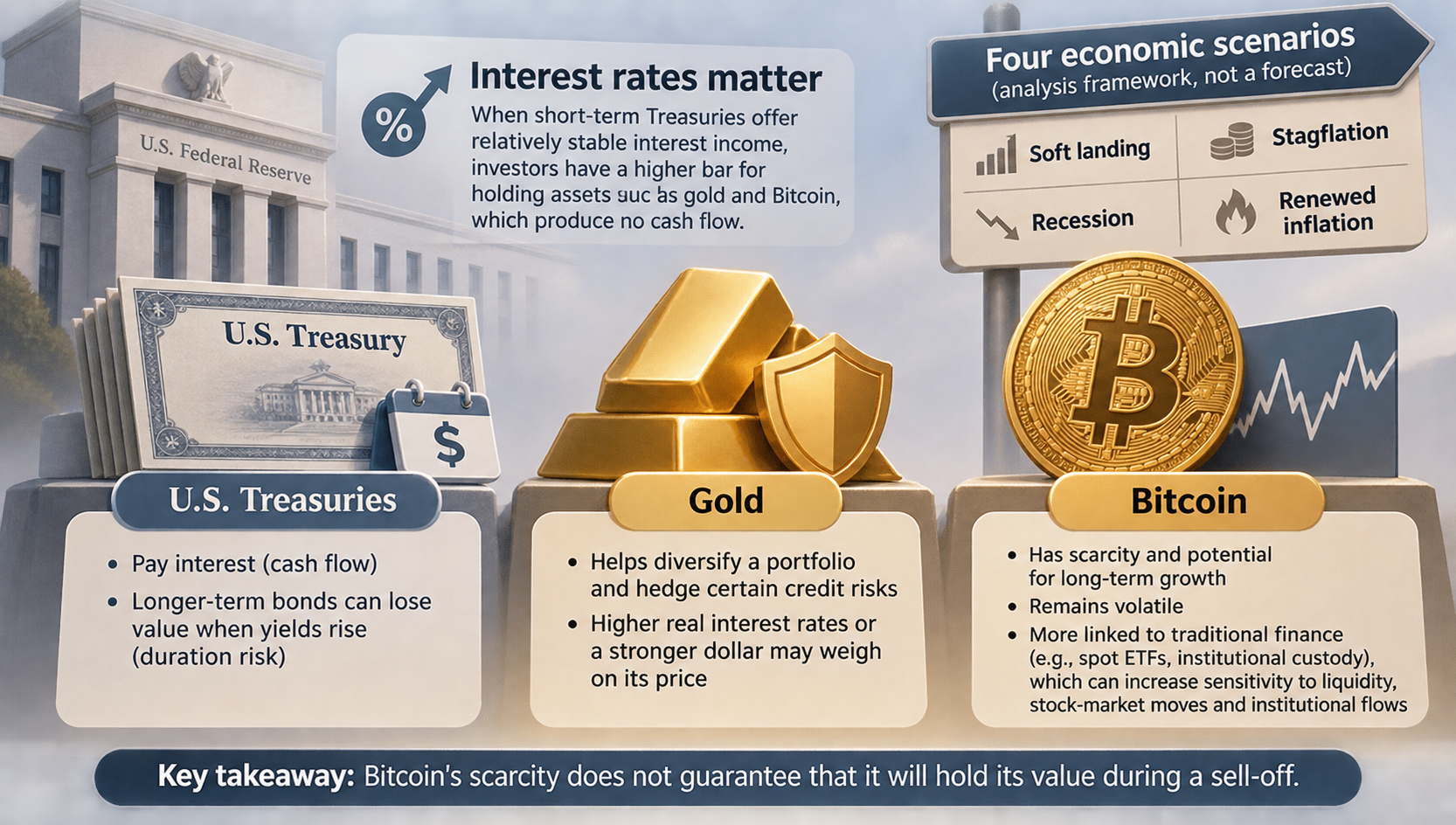
Why do interest rates matter to Bitcoin?
According to the report, the U.S. Federal Reserve raised its target rate range by 25 basis points to 3.75%–4.00% in September 2026. Cloud argued that when short-term Treasuries offer relatively stable interest income, investors have a higher bar for holding assets such as gold and Bitcoin, which produce no cash flow.
The three assets also carry different risks. Treasuries pay interest, but longer-term bonds can lose value when yields rise. Gold can help diversify a portfolio and hedge certain credit risks, yet higher real interest rates or a stronger dollar may weigh on its price. Bitcoin has scarcity and potential for long-term growth, Cloud said, but remains volatile.
Cloud described Bitcoin’s growing links to traditional finance as a two-sided change: spot ETFs, institutional custody and investment products may broaden access, while also making its price more sensitive to liquidity, stock-market moves and institutional flows. In his view, calling Bitcoin “digital gold” does not mean it will act as a safe haven in every period.
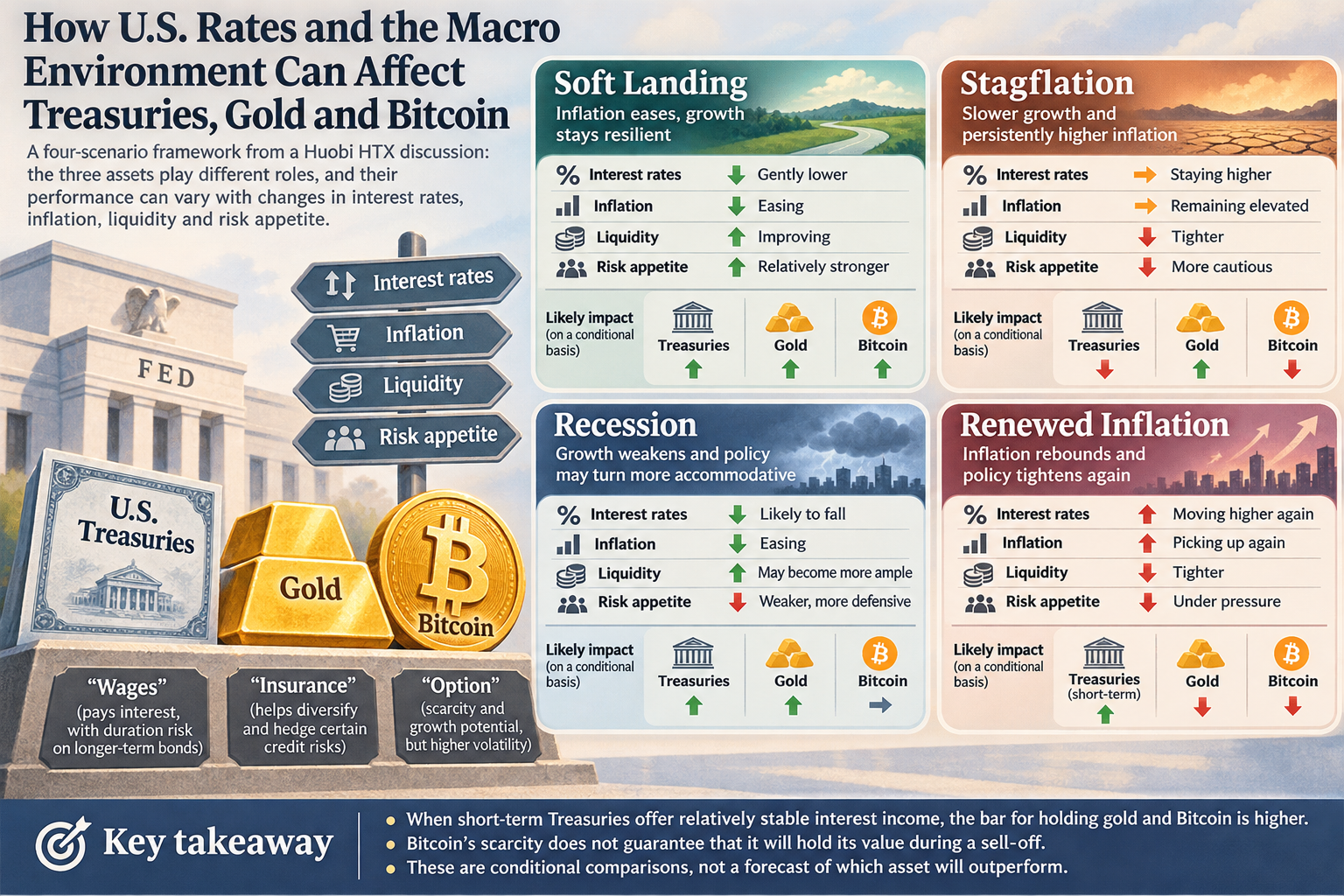
What do the four scenarios show?
Cloud used soft landing, stagflation, recession and renewed inflation as scenarios, not forecasts. He suggested that gently falling rates in a soft landing could help longer-term Treasuries, gold and Bitcoin. Under stagflation, gold’s diversification role might stand out while longer-term bonds and highly valued risk assets face pressure. In a recession, falling yields might benefit longer-term Treasuries and demand for safety might help gold; Bitcoin’s response would still depend on liquidity and risk appetite. If inflation returned and policy tightened again, short-term Treasuries might look relatively defensive, while all three other exposures could face pressure.
The limitation is that these are conditional comparisons, not a model that predicts which asset will outperform. Cloud’s views came from an HTX-hosted discussion; the scenarios do not establish that Bitcoin will follow gold—or any single pattern—through a change in rates.
Source: techflowpost.com (originally published 2026-11-13 15:17 UTC+8)