
Reported November 12, 2026. MSCI placed Strategy’s Class A shares (MSTR) on its November index-deletion list, with the change due to take effect after the November 30 close. The immediate question for Bitcoin holders is whether that decision requires Strategy to sell BTC. It does not: the index change concerns shares held by funds tracking MSCI indexes, not Bitcoin on Strategy’s balance sheet.
The review used October 20 price data. According to the November 12 report, MSCI’s final documents, released after the November 11 US market close, removed Strategy from its Global and ACWI indexes as well as the US index. Strategy was one of five previously monitored companies removed under MSCI’s non-operating-entity rules, finalized October 15. Those rules screen issuers without substantial operating assets against five financial ratios; meeting at least four disqualifies an issuer, while an existing constituent is removed after failing across two consecutive annual reporting periods. The other removals named in the report were Metaplanet, Yellow Cake, Skel and Upexi.
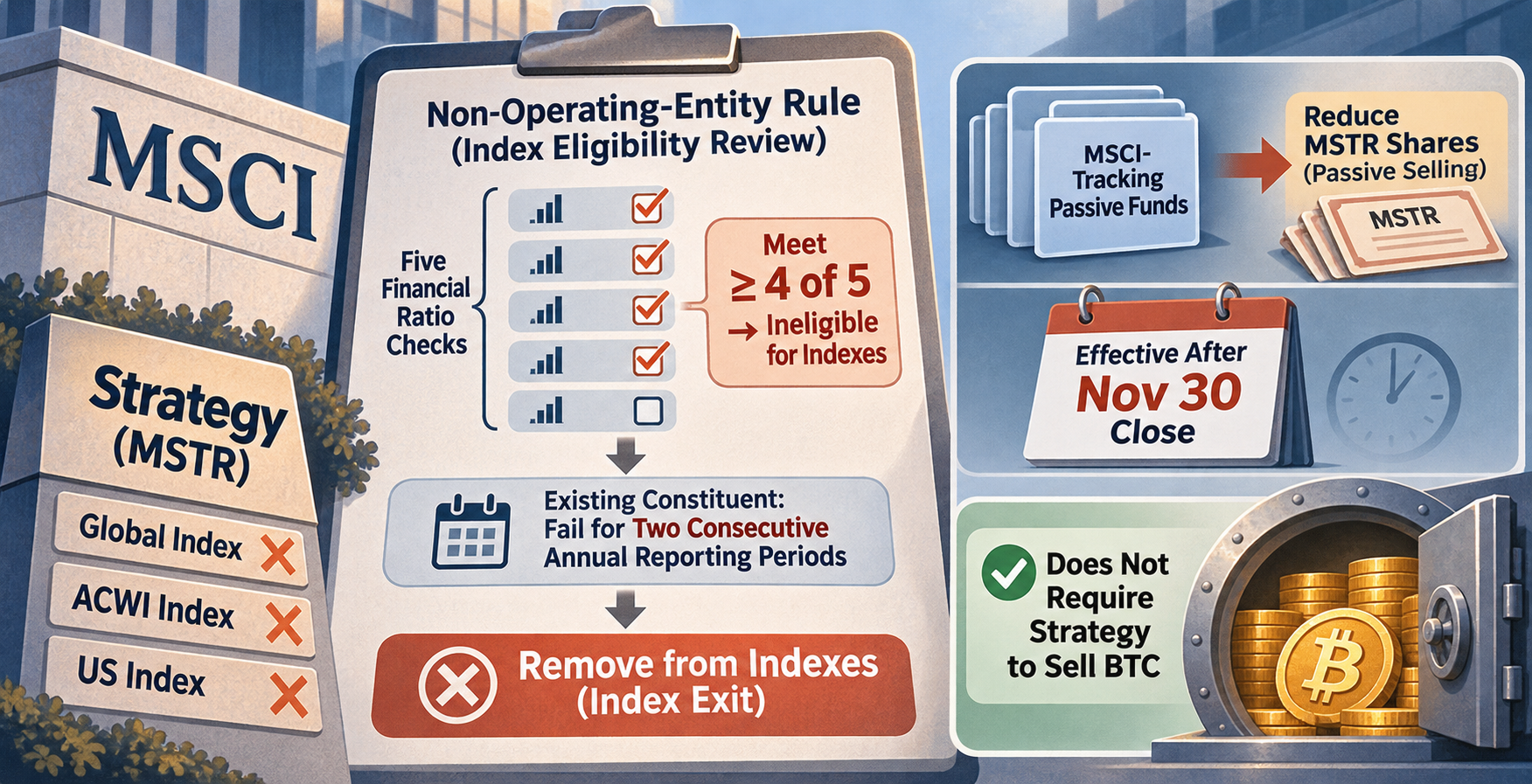
How much selling might follow? JPMorgan had estimated about $2.8 billion in potential passive selling. Strategy’s own disclosure put MSCI-tracking passive funds’ holdings at roughly 13 million shares, or 3.1% of basic shares outstanding. Valued at MSTR’s November 11 closing price of $122.35, that stake was about $1.59 billion. These are different estimates, not a confirmed amount already sold. MSTR closed the regular session up 1.06%; after the list was published, it fell as much as 1.51% in after-hours trading to $120.50, according to the market data cited in the report.
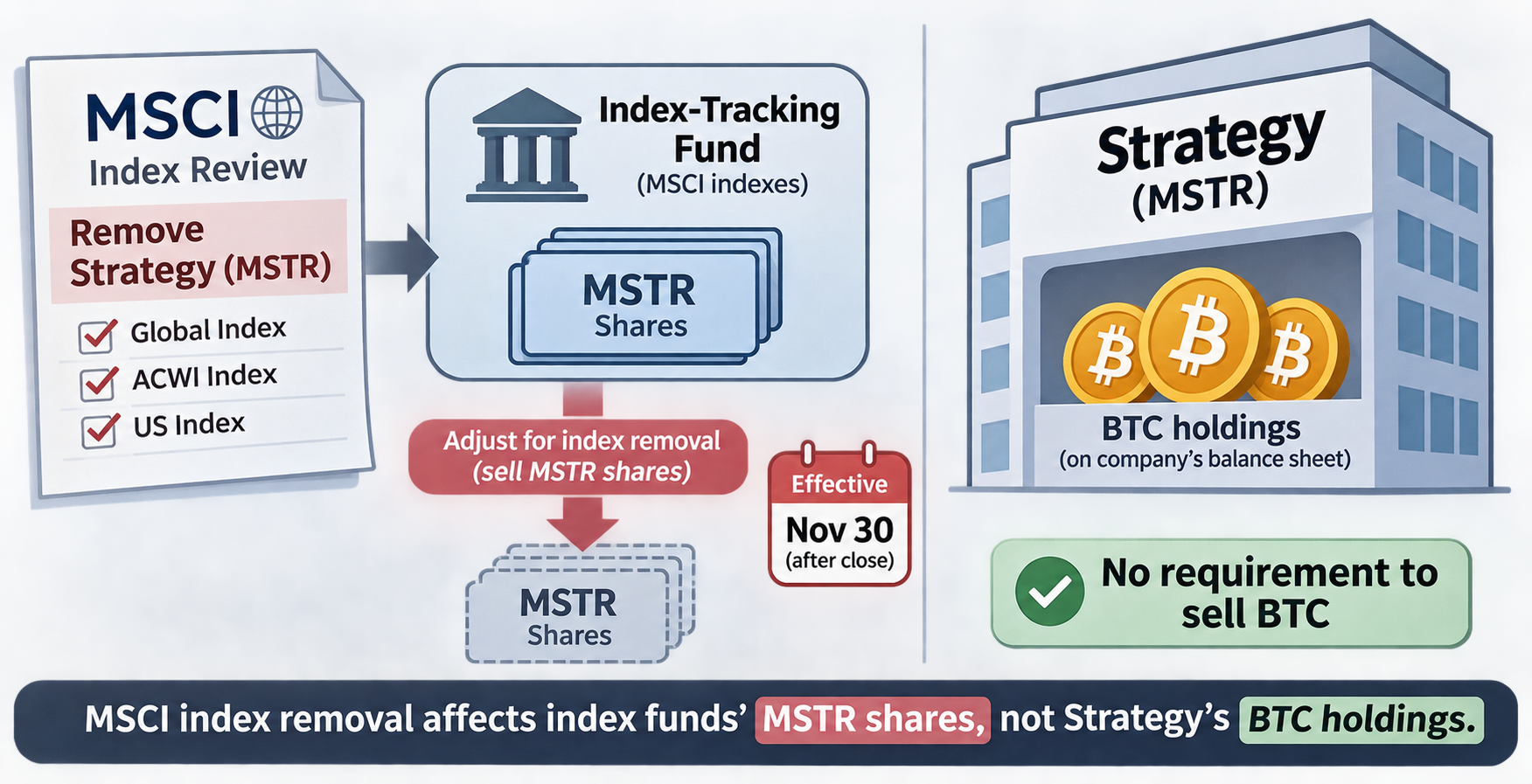
A Disruption Banking analysis cited by the report put Strategy’s holdings at 850,364 BTC as of November 8, with a total cost of $64.16 billion and an average cost of $75,456 per coin. The report said MSTR was then trading at a discount to its Bitcoin net asset value, potentially limiting the company’s ability to raise equity to buy more BTC. That financing concern is separate from the index rule: passive funds may need to reduce their MSTR shares before the November 30 effective close, but MSCI’s decision does not itself compel Strategy to sell BTC.
Source: techflowpost.com (originally published 2026-11-12 10:34 UTC+8)