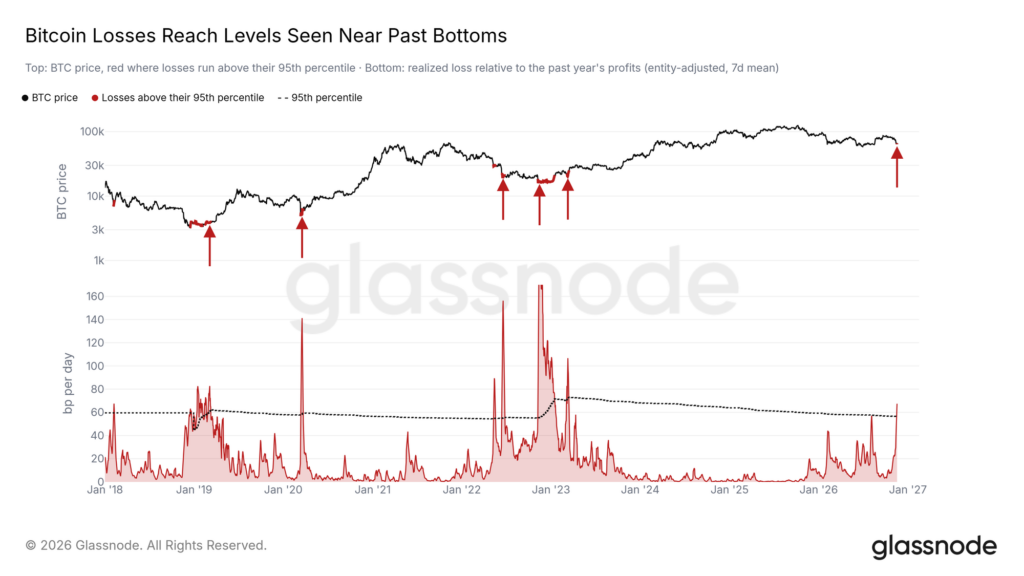
In an analysis published on November 18, 2026, Glassnode described a Bitcoin sell-off that had pushed the price to $62,000 on November 15. Its central question was whether buying around that level could absorb further selling. The evidence was mixed: buyers appeared near the low, while several measures of broader demand remained weak.
What happened near $62,000?
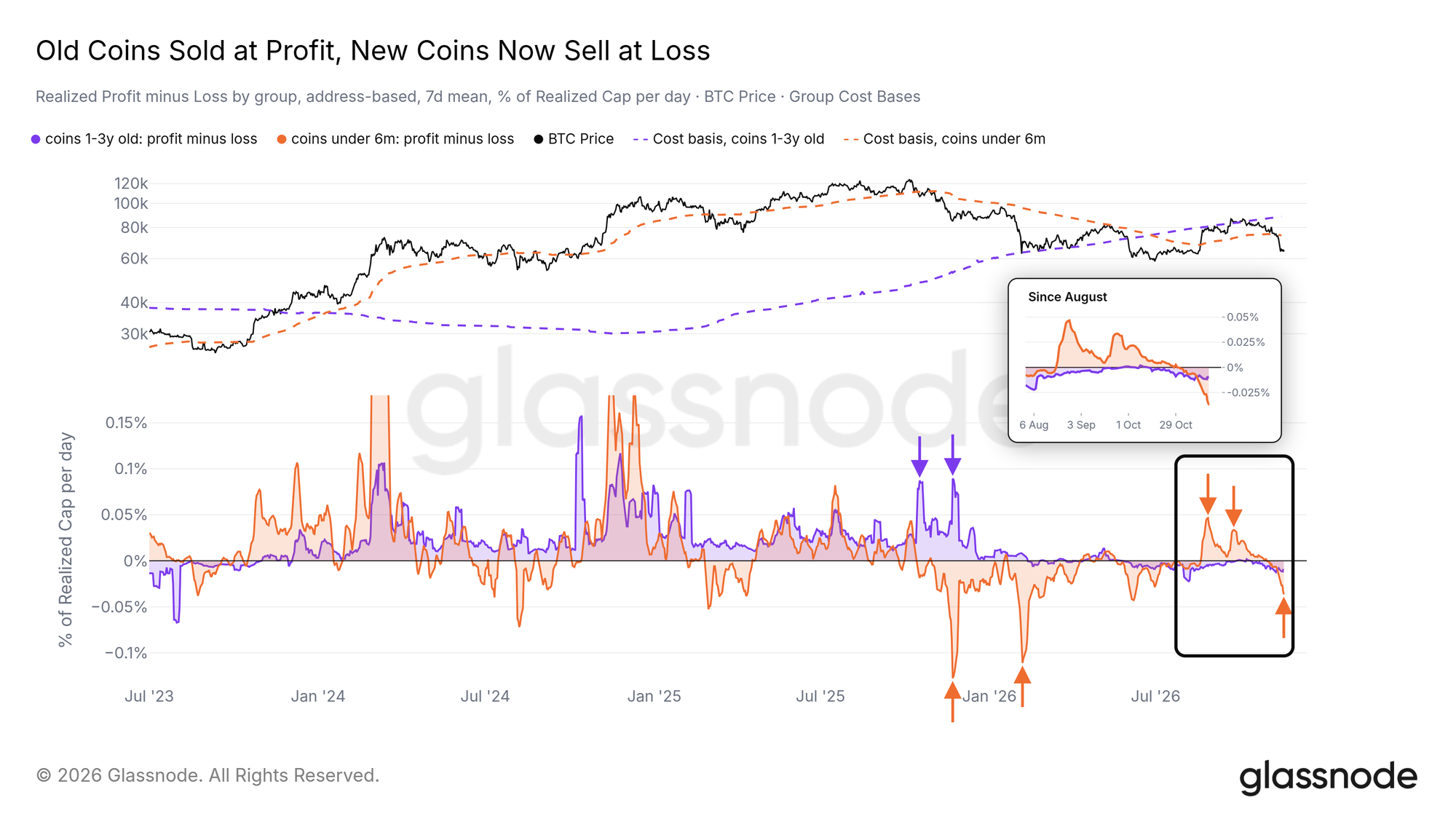
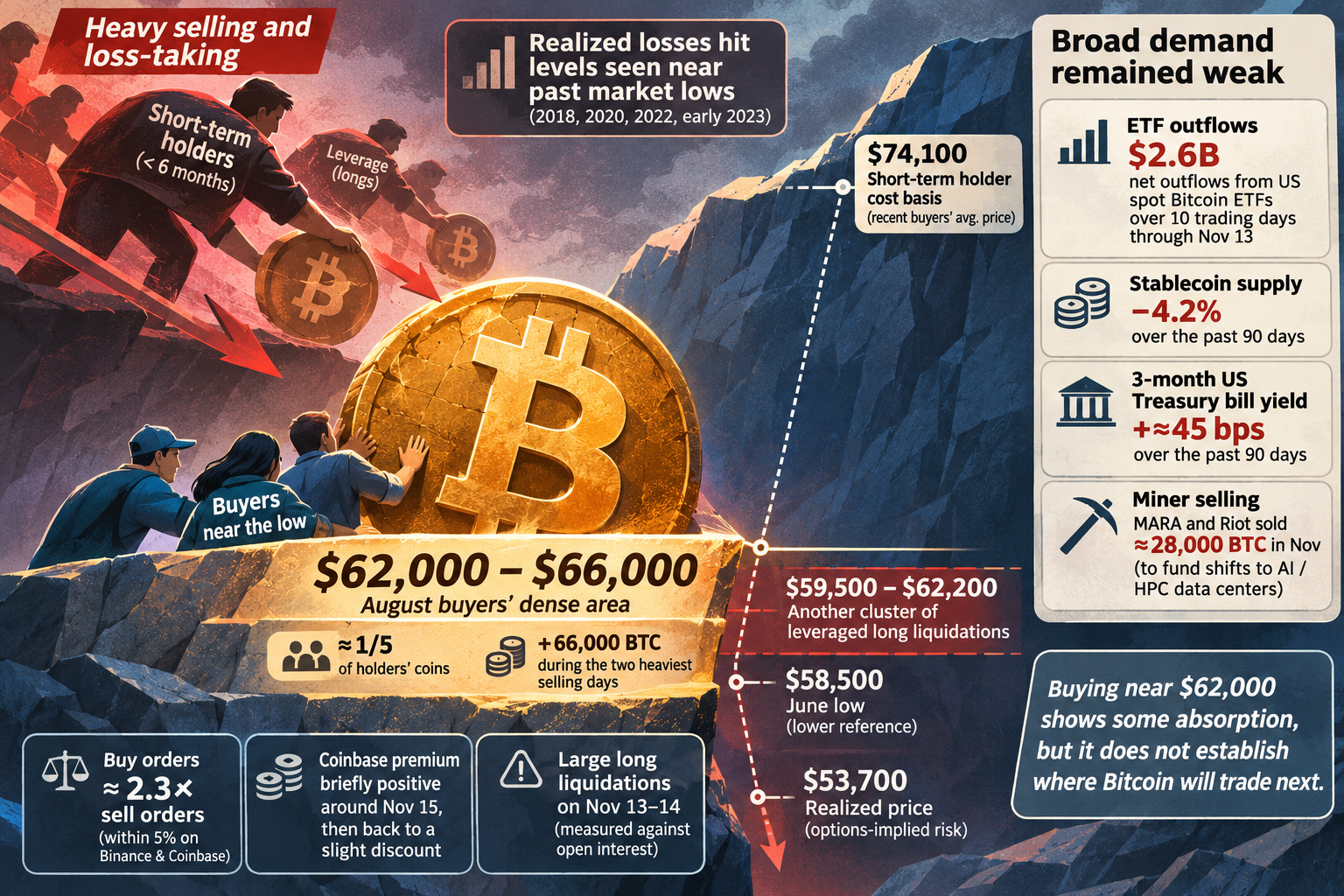
Glassnode said realized losses—losses locked in when coins sell below their purchase price—reached levels it had previously seen near market lows in 2018, 2020, 2022 and early 2023. That is evidence of heavy loss-taking, not proof that a bottom has formed. The analysis attributed much of the recent selling to coins held for less than six months.
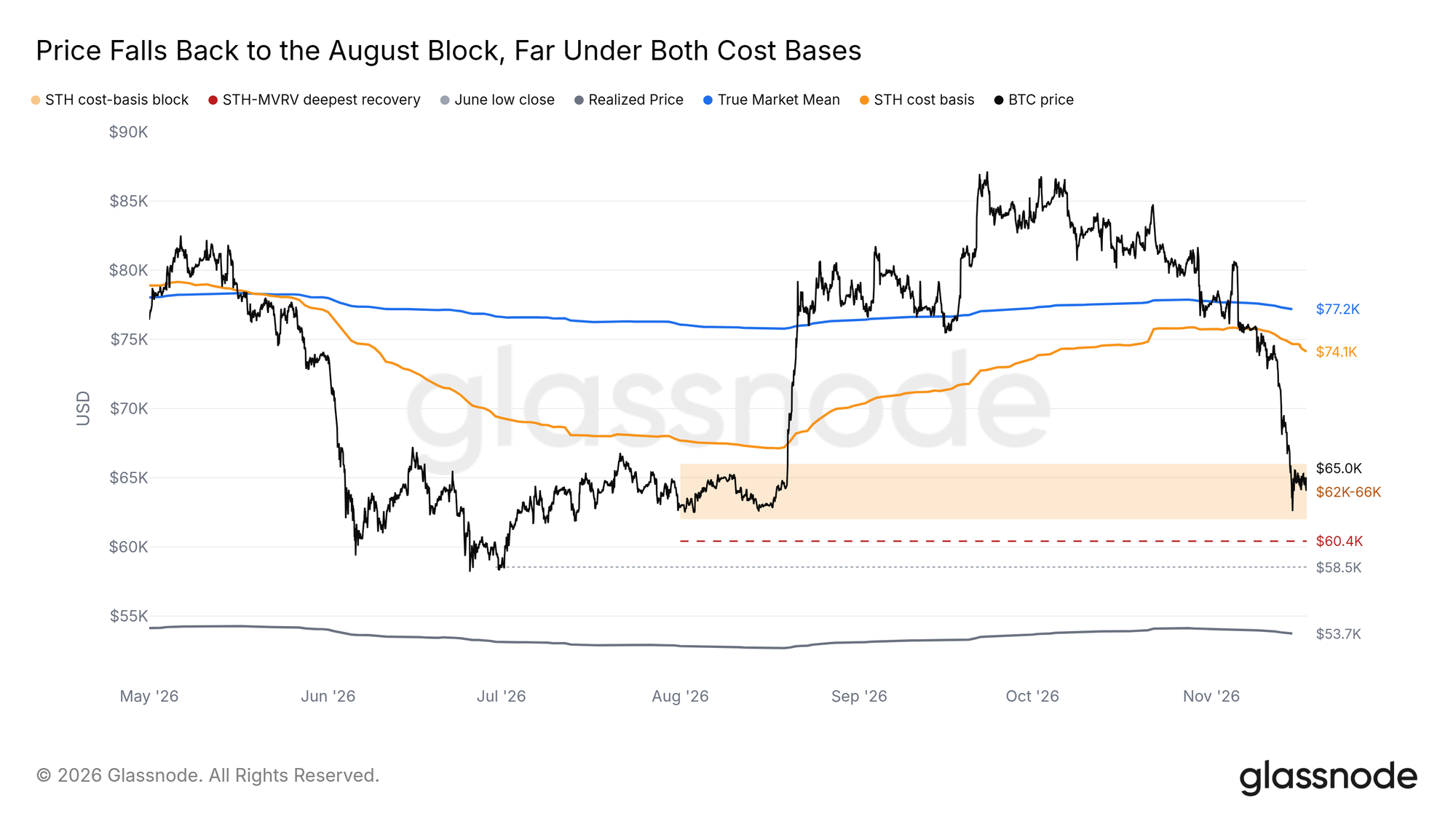
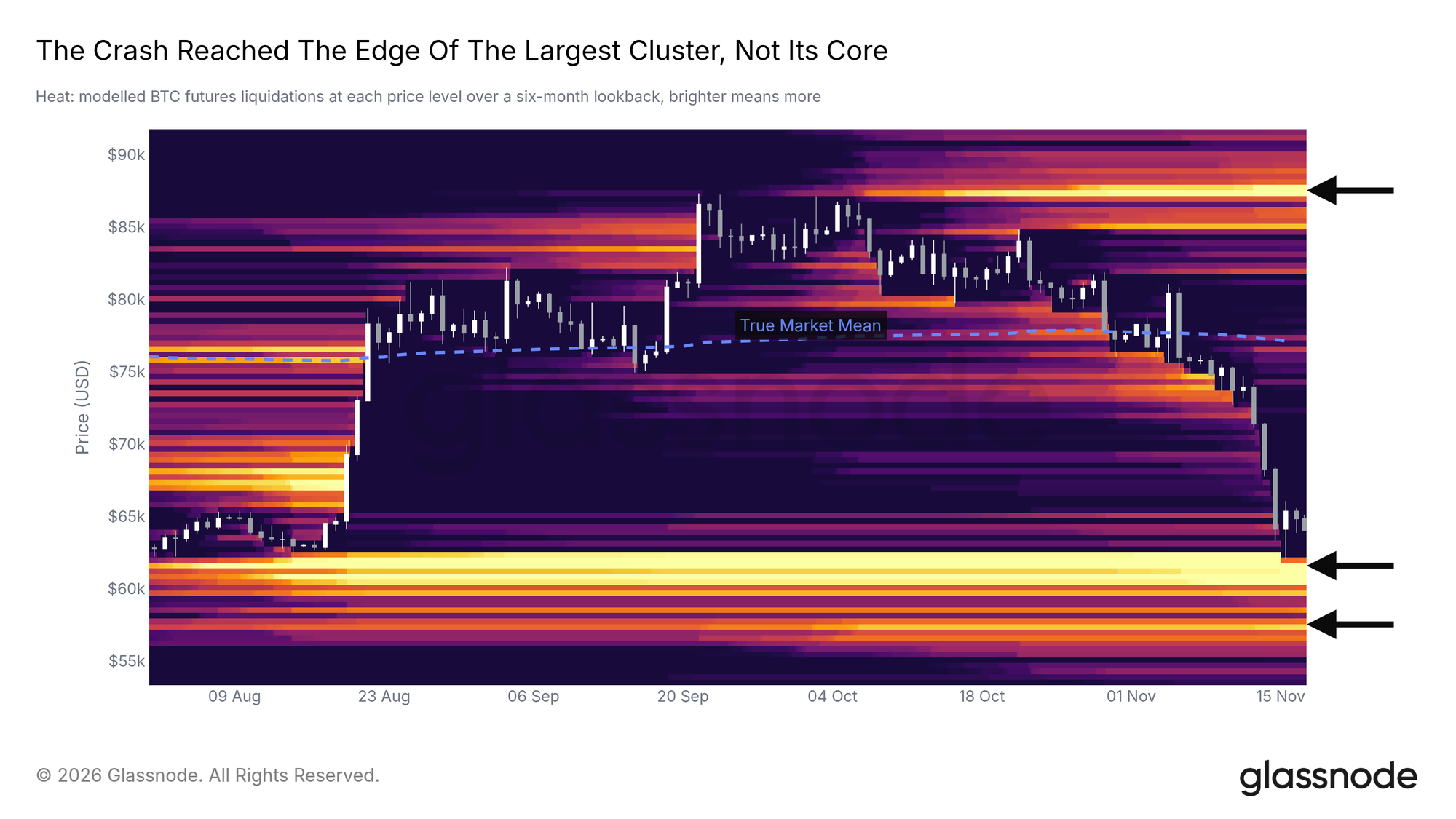
Glassnode identified $62,000–$66,000 as a dense area of recent purchases around the August low. It estimated that the area contained roughly one-fifth of holders’ coins and gained about 66,000 BTC during the two heaviest days of selling, indicating that some buyers stepped in. It also reported large long-position liquidations on November 13–14, measured against open interest.
The price levels in the analysis were conditional, not forecasts. Glassnode said a daily close below $62,000 would put the August buyers at a loss and could encounter another cluster of leveraged long liquidations between $59,500 and $62,200. It identified the June low of $58,500 as a lower reference point. Above the market, it placed the short-term holder cost basis—the group’s average purchase price—at $74,100.
Why was the rebound uncertain?
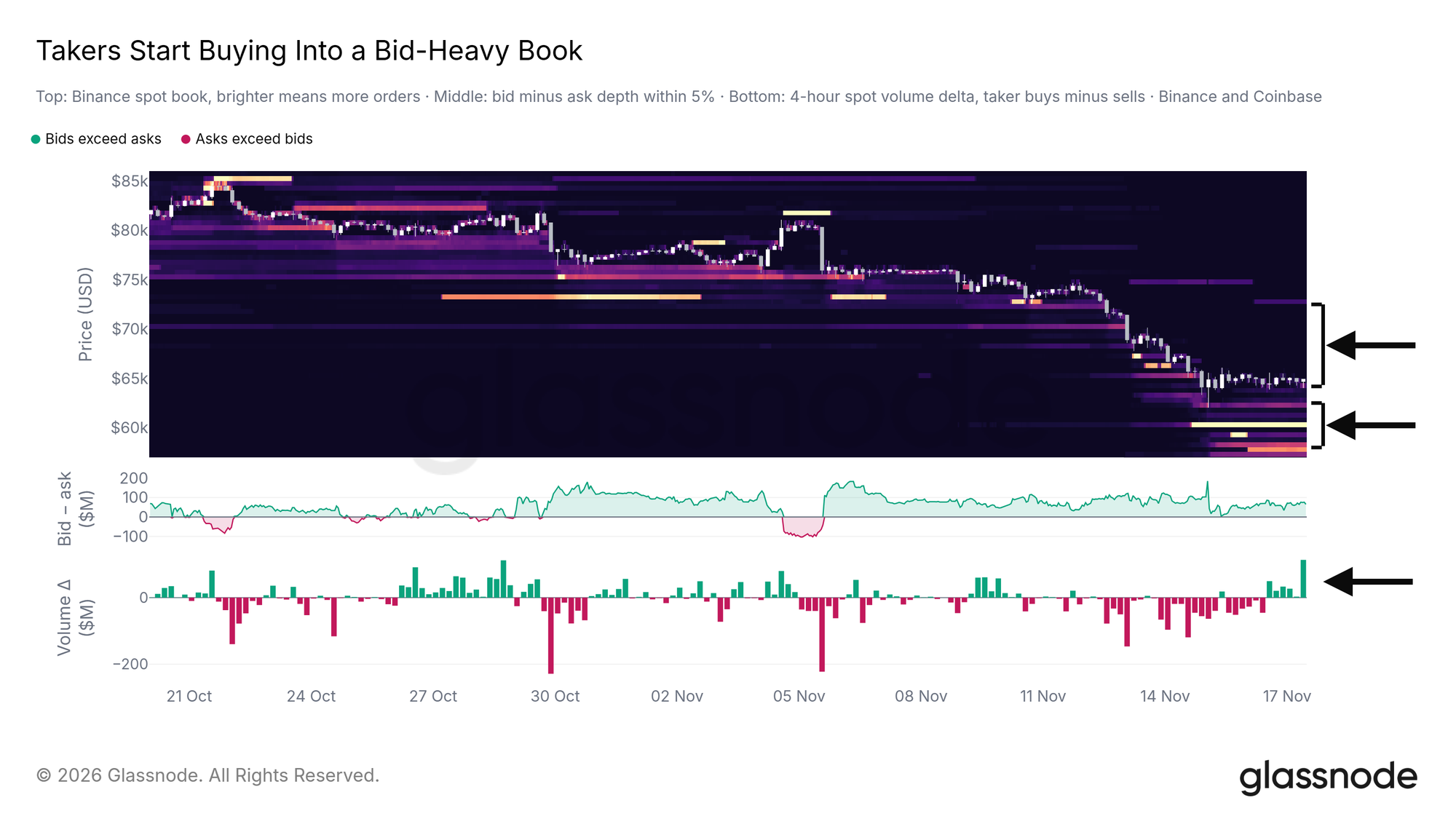
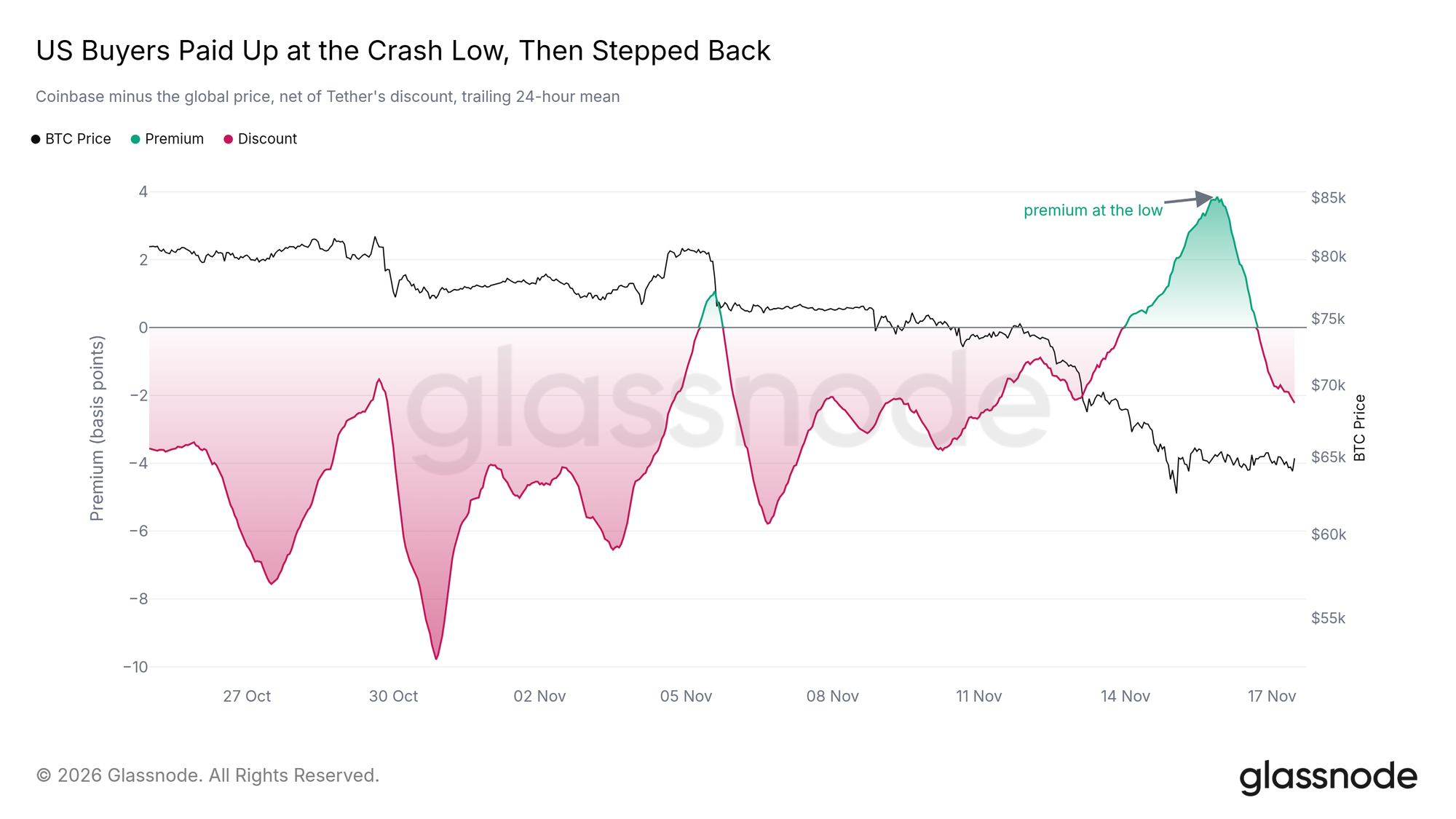
At the time of the analysis, displayed buy orders within 5% of the price on Binance and Coinbase were about 2.3 times displayed sell orders. But orders can be withdrawn before execution. Glassnode also reported that the Coinbase premium briefly turned positive around the low on November 15, then returned to a slight discount; the brief premium did not establish sustained US demand.
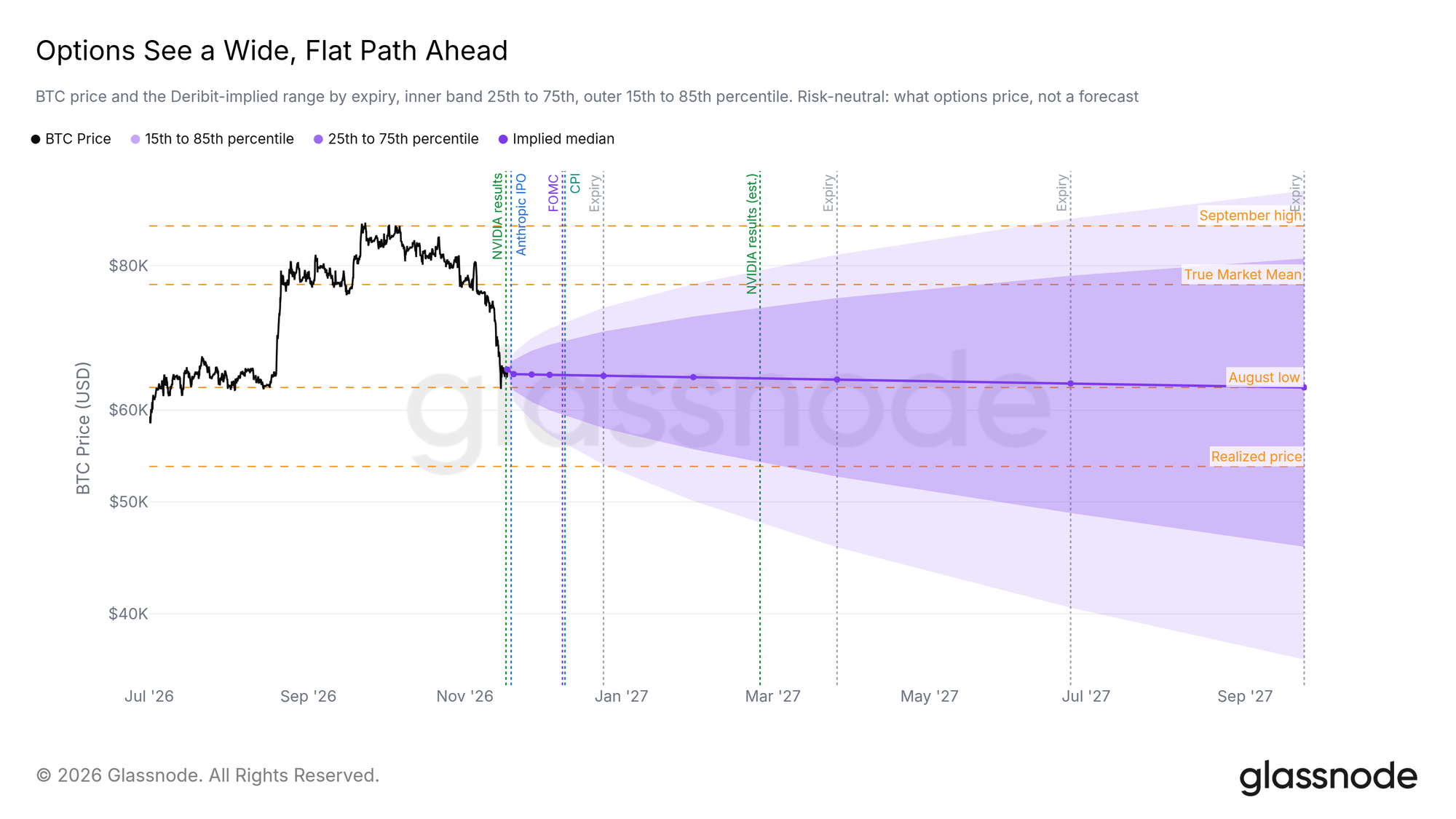
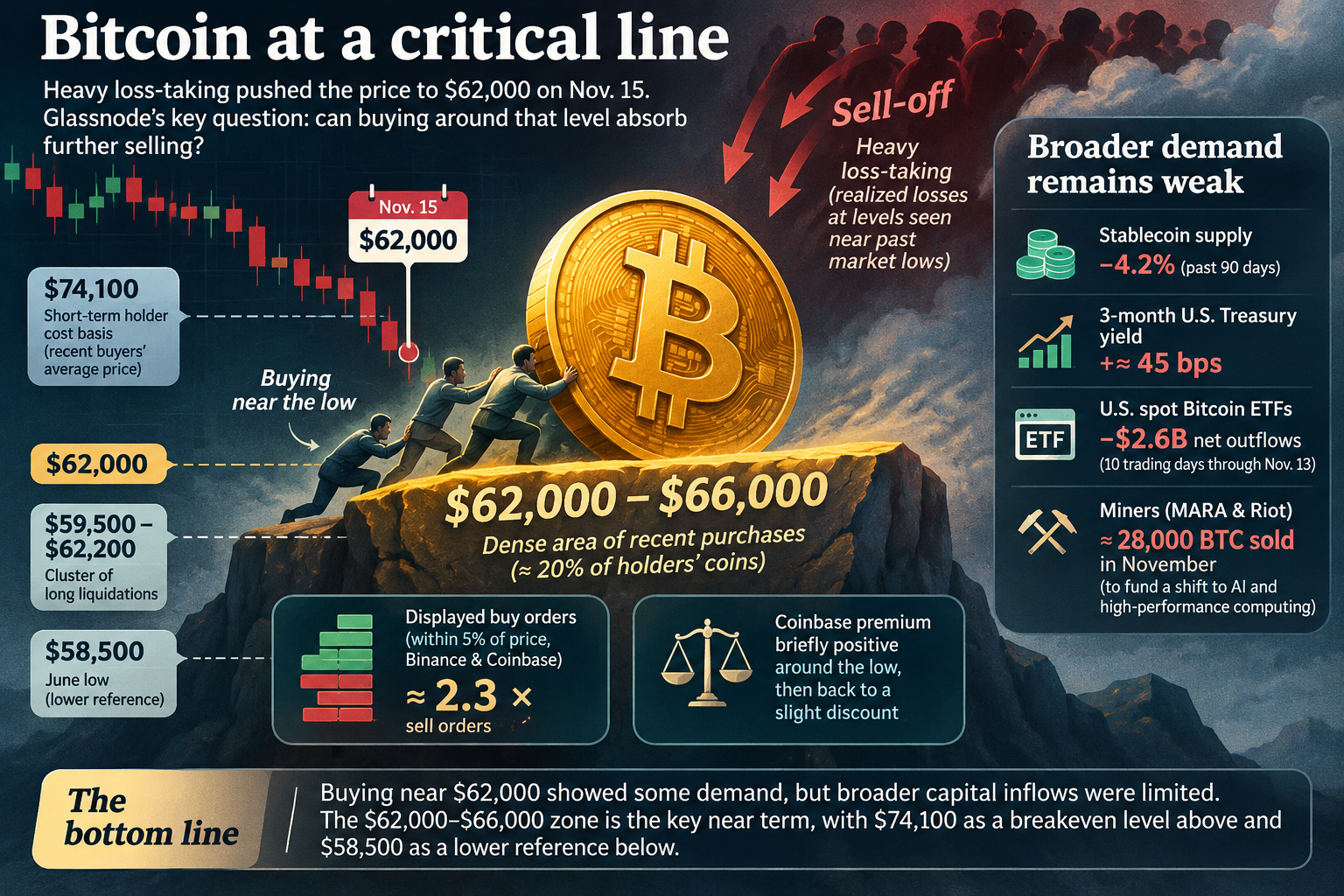
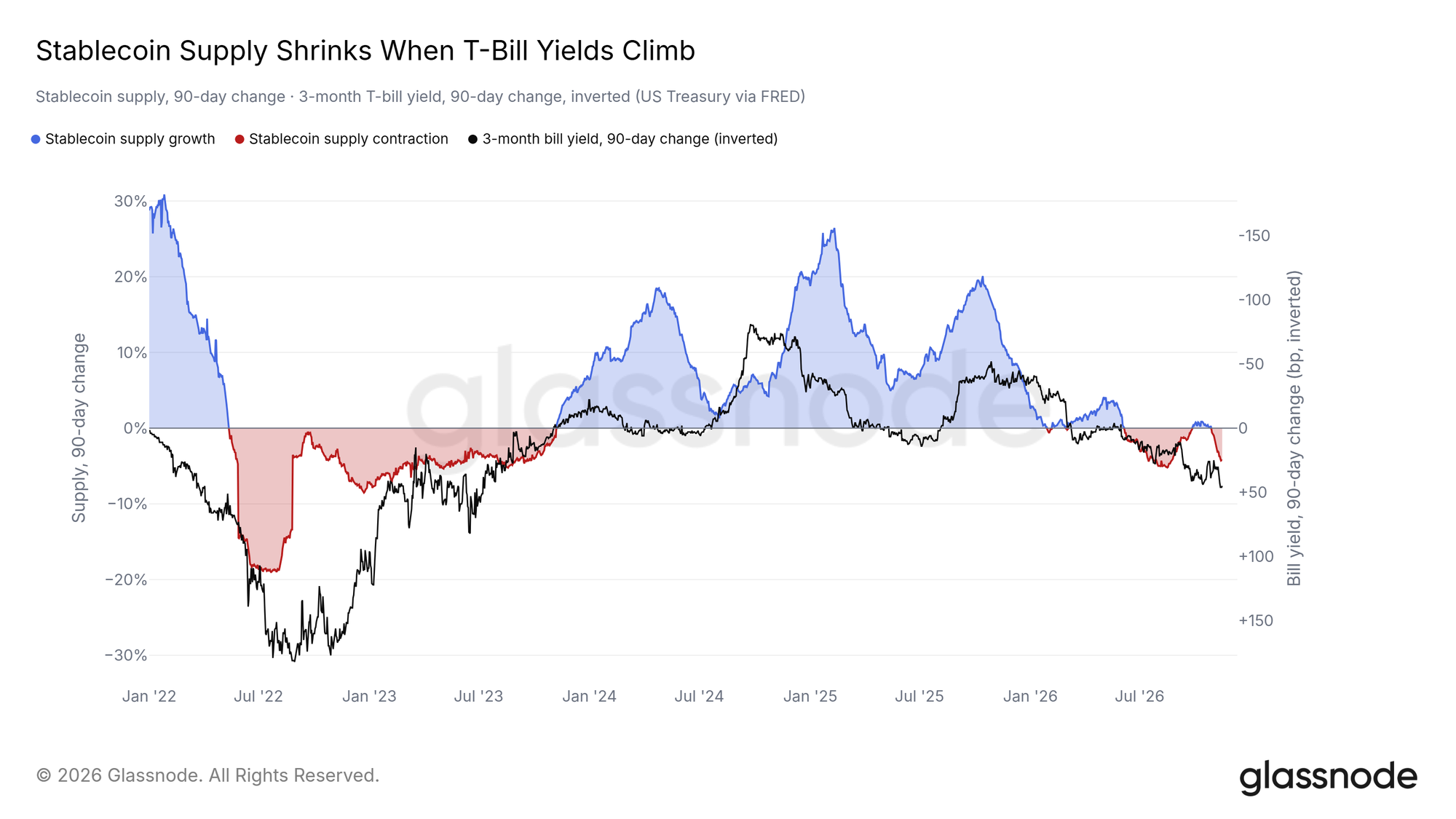
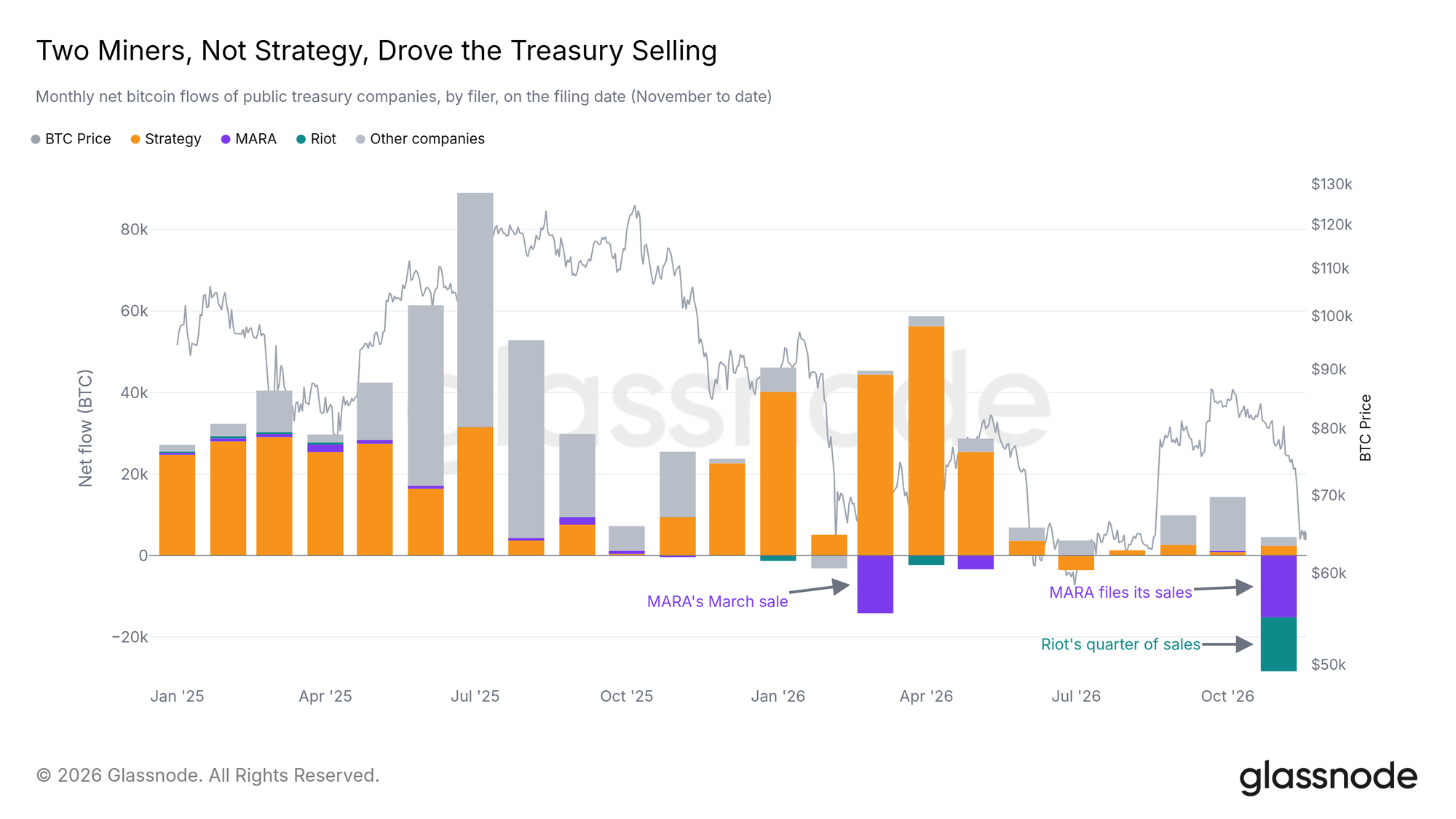
Other measures pointed to limited incoming capital. Glassnode said stablecoin supply had fallen 4.2% over the preceding 90 days, while three-month US Treasury bill yields had risen about 45 basis points. It reported $2.6 billion in net outflows from US spot Bitcoin ETFs over the ten trading days through November 13. MARA and Riot reported selling a combined roughly 28,000 BTC in November as they funded shifts toward AI and high-performance computing data centers, while Strategy continued buying.
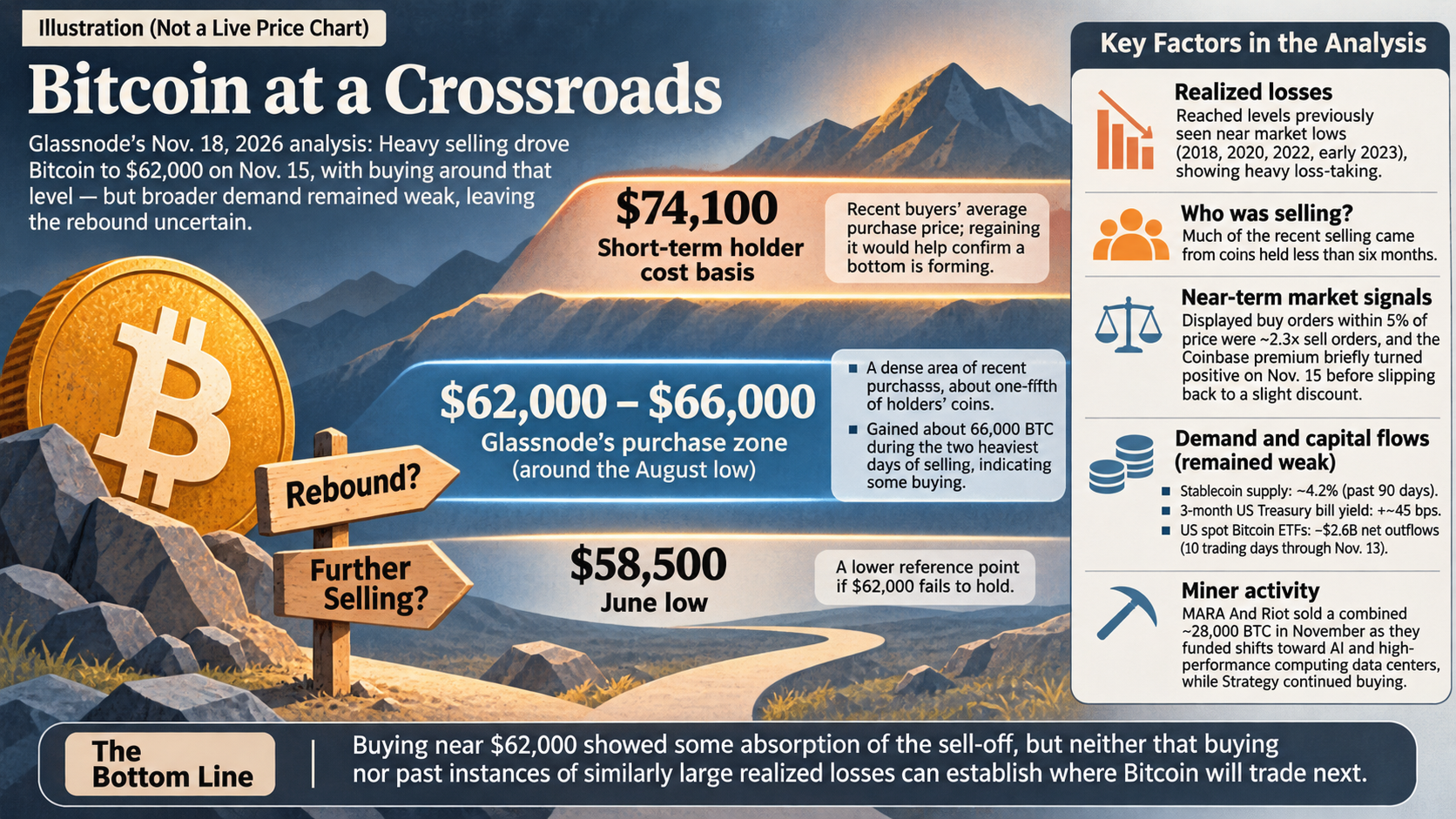
The distinction is between absorbing a sell-off and sustaining a recovery. Glassnode’s data showed buying near $62,000, but neither that buying nor past instances of similarly large realized losses could establish where Bitcoin would trade next.