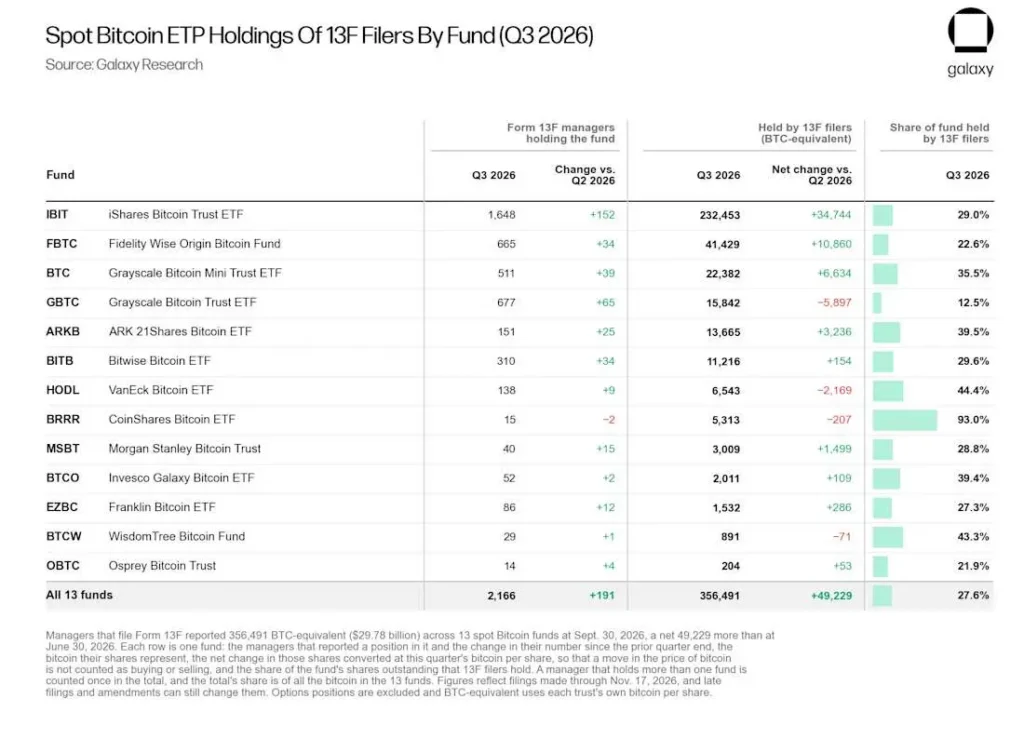
As reported on November 20, 2026, U.S. third-quarter 13F filings showed a record amount of bitcoin exposure among reporting holders of spot bitcoin exchange-traded products (ETPs). The more useful question is who held it—and whether a quarter-end filing says anything about what those institutions held weeks later.
Galaxy Research’s November 19 tally found that, as of September 30, 2,166 reporting institutions held spot bitcoin ETP shares equivalent to 356,491 BTC, worth $29.78 billion. That was a record BTC amount for the reported holdings, up 49,229 BTC equivalent during the quarter—the largest quarterly increase since Q2 2025.
The shift toward client accounts
Investment advisers and wealth-management platforms held 144,307 BTC equivalent, or 40.5% of the reported total, according to Galaxy. They accounted for roughly half the quarter’s net increase and had been net buyers for nine consecutive quarters. Hedge funds’ share of reported holdings, meanwhile, had fallen from 50.6% at the end of 2024 to 19.0%. That does not mean hedge funds stopped buying: Galaxy also recorded quarterly increases among macro and basis or relative-value funds.
The growth was concentrated rather than evenly spread. The 50 largest holders added a combined 59,578 BTC equivalent, while all other reporting holders reduced their positions by a combined 10,349 BTC equivalent. BlackRock’s IBIT accounted for 65.2% of reported institutional holdings and 34,744 BTC equivalent of the quarter’s net increase.
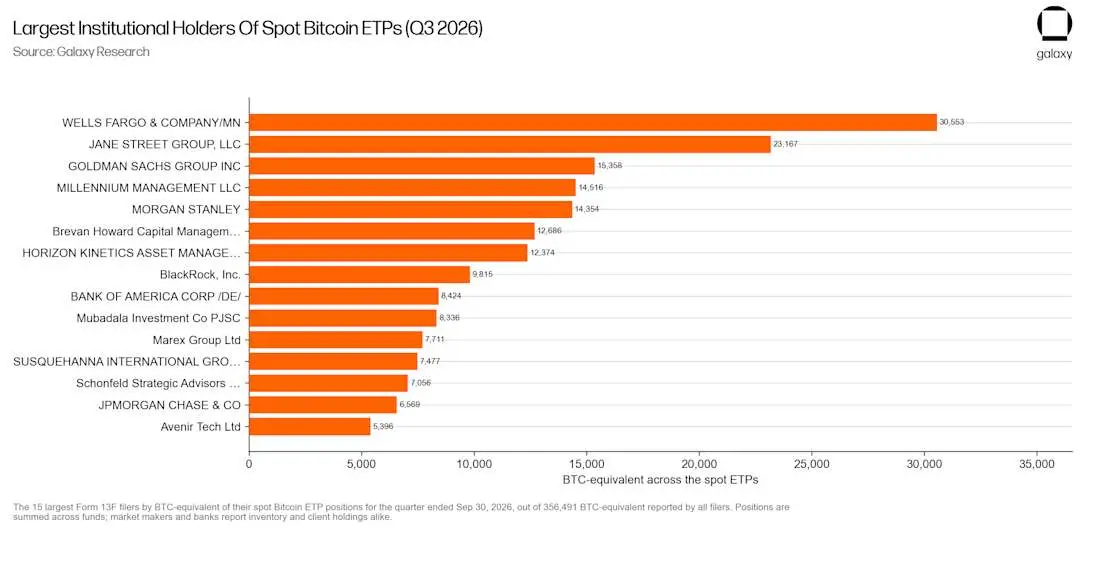
Wells Fargo became the largest reported 13F holder, with 30,553 BTC equivalent, up from about 15,900 at the end of Q2. That ranking needs care: Galaxy research head Alex Thorn said about 85% of Wells Fargo’s reported IBIT holdings came through two brokerage divisions and represented client holdings, not the bank’s proprietary or trading positions. A large filing is not, by itself, evidence of a bank buying bitcoin for its own balance sheet.
A filing is not a current position
The distinction also matters for trading firms. Millennium rebuilt its IBIT shareholding during Q3, while Jane Street reduced its IBIT shares but increased holdings in FBTC and ARKB. Both reported IBIT options positions. A 13F lists quarter-end long positions and certain exchange-traded options, but not short positions, futures or swaps; it also does not explain an option’s purpose. An ETP holding may therefore be one part of a hedged trade rather than a straightforward bet on bitcoin’s price.
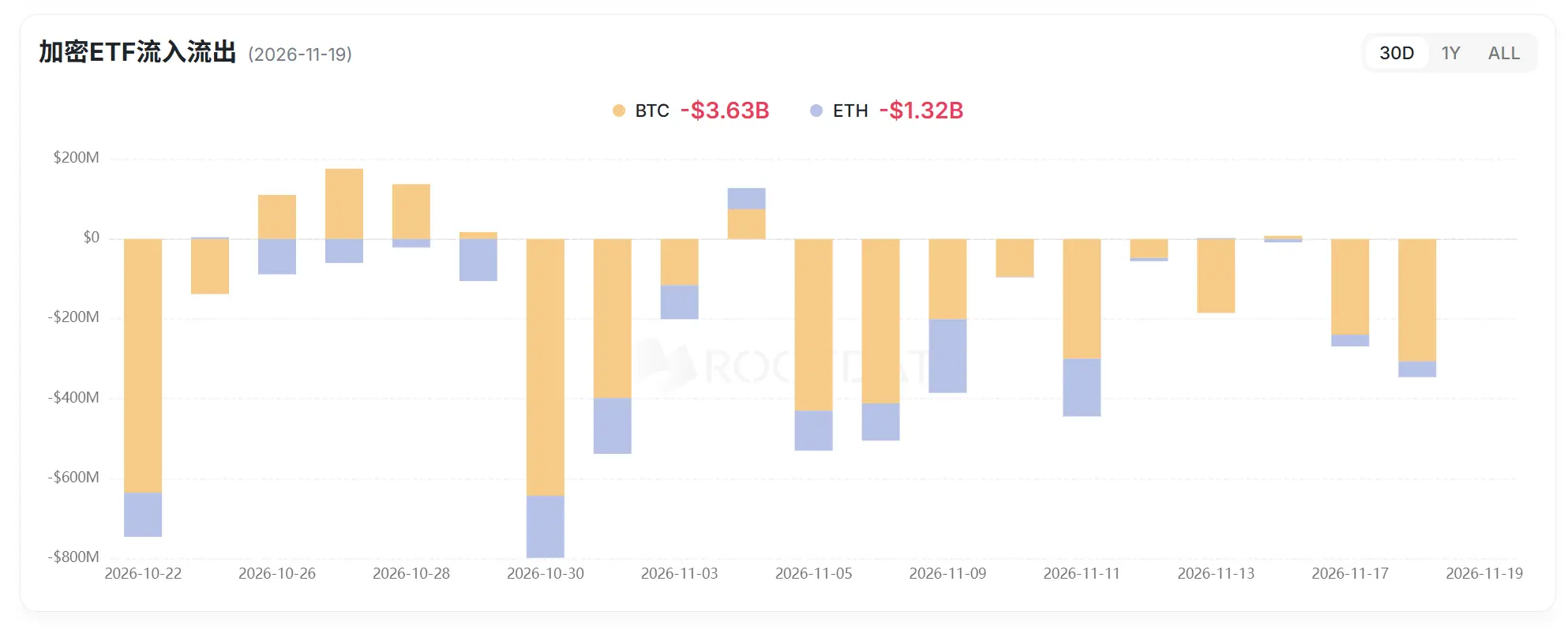
Nor should the September 30 snapshot be read as a November position. Galaxy reported that total BTC held by the relevant funds—not just the 13F-reporting holders—had fallen by 38,531 BTC to 1,252,139 BTC by November 16. It also put bitcoin’s price at about $83,580 at quarter-end and $64,943 on November 16. Those later figures cannot establish whether Wells Fargo, Goldman Sachs or Millennium sold in Q4.
The filings show bitcoin ETPs reaching more reported institutional and wealth-management accounts: 13F reporters held 27.6% of the BTC in the funds, up from 24.8% at the end of Q2. They do not show that client allocations will remain steady through redemptions. The next filing round, expected in mid-February 2027, was still needed to see how reported positions changed after September.