November 25, 2026, 20:29:59 (UTC+08:00)
An agent with permission to trade can change a user’s position even if it cannot withdraw funds. On November 14, automated trading service HyprEarn reported unauthorized trades in a small number of Hyperliquid accounts whose users had previously approved its Agent Wallet. HyprEarn asked those users to revoke the old authorization and reconnect.
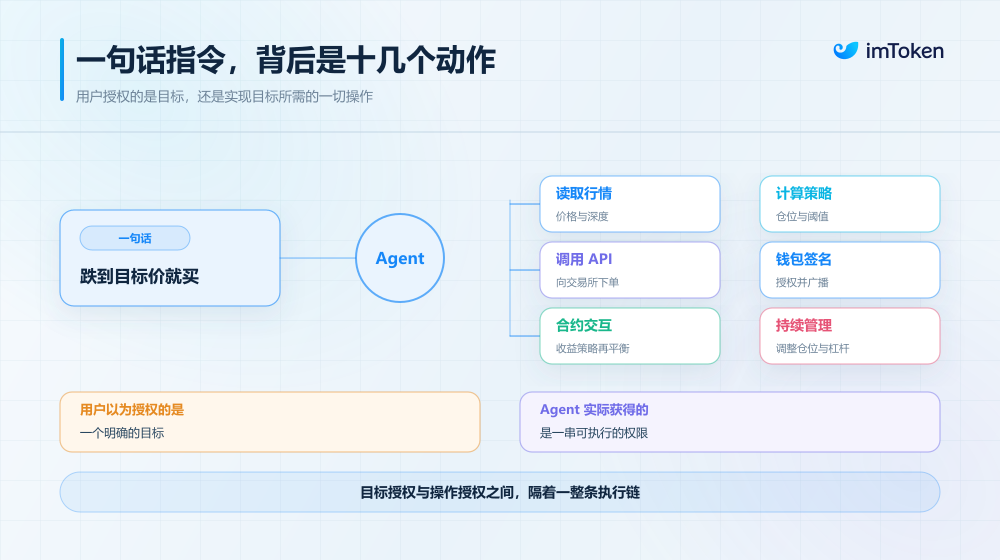
Hyperliquid’s Agent Wallet cannot withdraw funds directly or send them to an external address. It can, however, place trades on a user’s behalf. An unwanted trade can therefore cause a loss without any assets leaving the account. HyprEarn’s disclosure did not put a figure on losses.
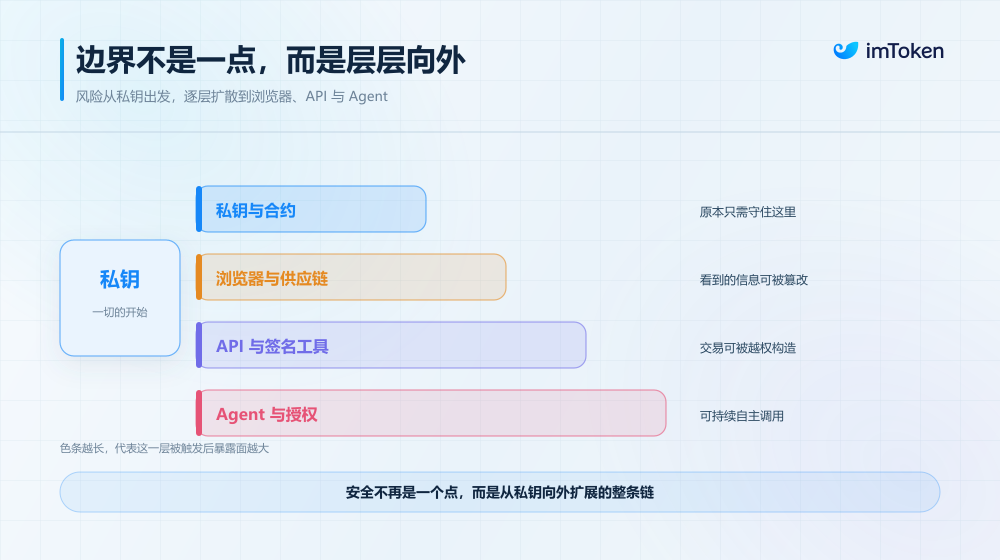
What a private key does not protect
Two other incidents illustrate different limits of private-key protection. In the Optimizely incident, attackers used the service’s official content delivery network to distribute malicious scripts to more than 100 corporate websites worldwide. The scripts altered cryptocurrency addresses copied in the browser and collected data including payment card details and cookies. A wallet could sign a transaction correctly even though the address was no longer the one the user had copied.
At Lighter, the exposed credential was an API signing key. According to the account of its November 16 incident, a custom signing program used by an affected account reused a value that should have been unique to each signature. This exposed the API private key. The attackers then used the account’s existing public-pool permissions to move funds. About 10.39 million USDC in outflows was observed on-chain. Lighter paused withdrawals and the creation of new pools, and its Security Council helped recover about 5 million USDC. The observed outflow was not a measure of final losses.
How much authority does the task require?
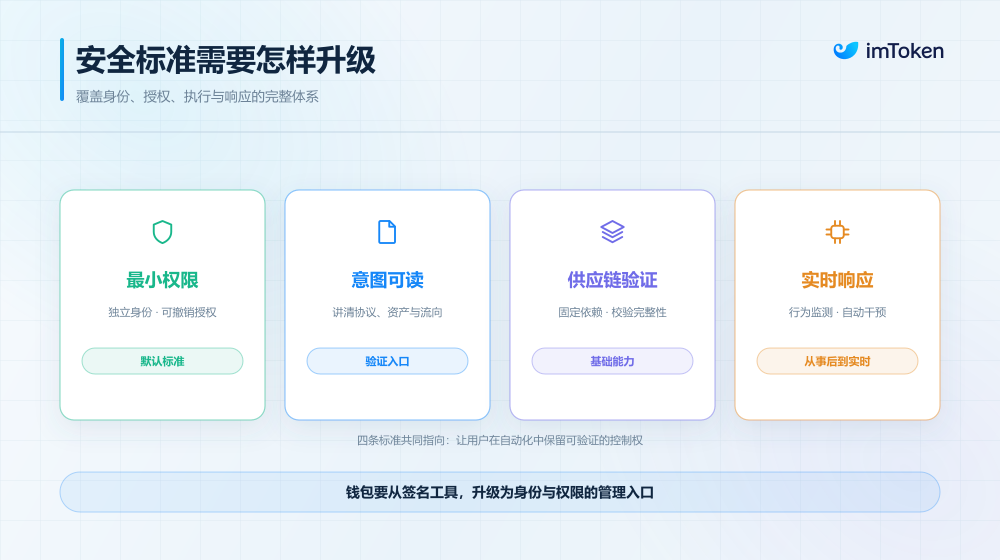
AI agents did not create these risks. What changes with an agent is that one approval can cover many future decisions. An agent assigned to buy ETH periodically, for example, does not need permission to increase leverage, move other assets or call unrelated protocols. A separate agent identity would let a wallet limit the assets, amounts, actions and time period covered by an approval. Any tool the agent calls should receive no broader authority, and the user should be able to revoke access without waiting for the service provider.
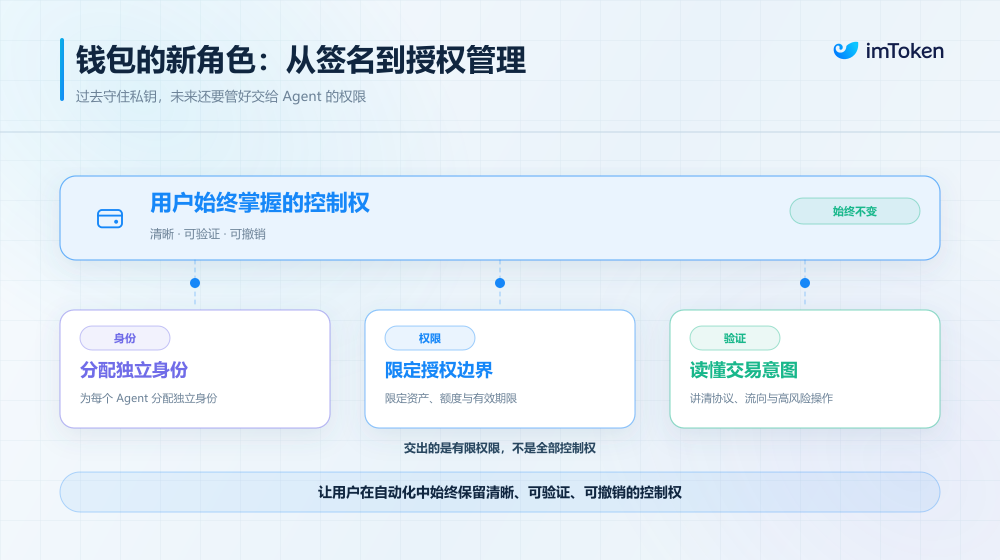
Those are proposed safeguards, not protections users can assume are already in place. Before signing, a wallet could independently decode the actual transaction and show the asset, amount, destination and any change in permissions. The agent’s own summary is not an independent check. Verifying and isolating third-party tools would address a different risk: a tool could change the transaction while assembling it.
Monitoring is most useful before execution. If an agent assigned to occasional spot purchases starts opening leveraged positions, a platform could pause the task rather than merely record what happened. Requiring human approval for larger transactions or expanded permissions would give up some automation at the point where the user’s exposure changes. Revocation can stop the next action; it generally cannot undo a completed on-chain transaction.