Historical-source note: Biteye’s analysis was published on November 16, 2026. The prices, fund flows and forecasts below reflect that reporting period, not current conditions.
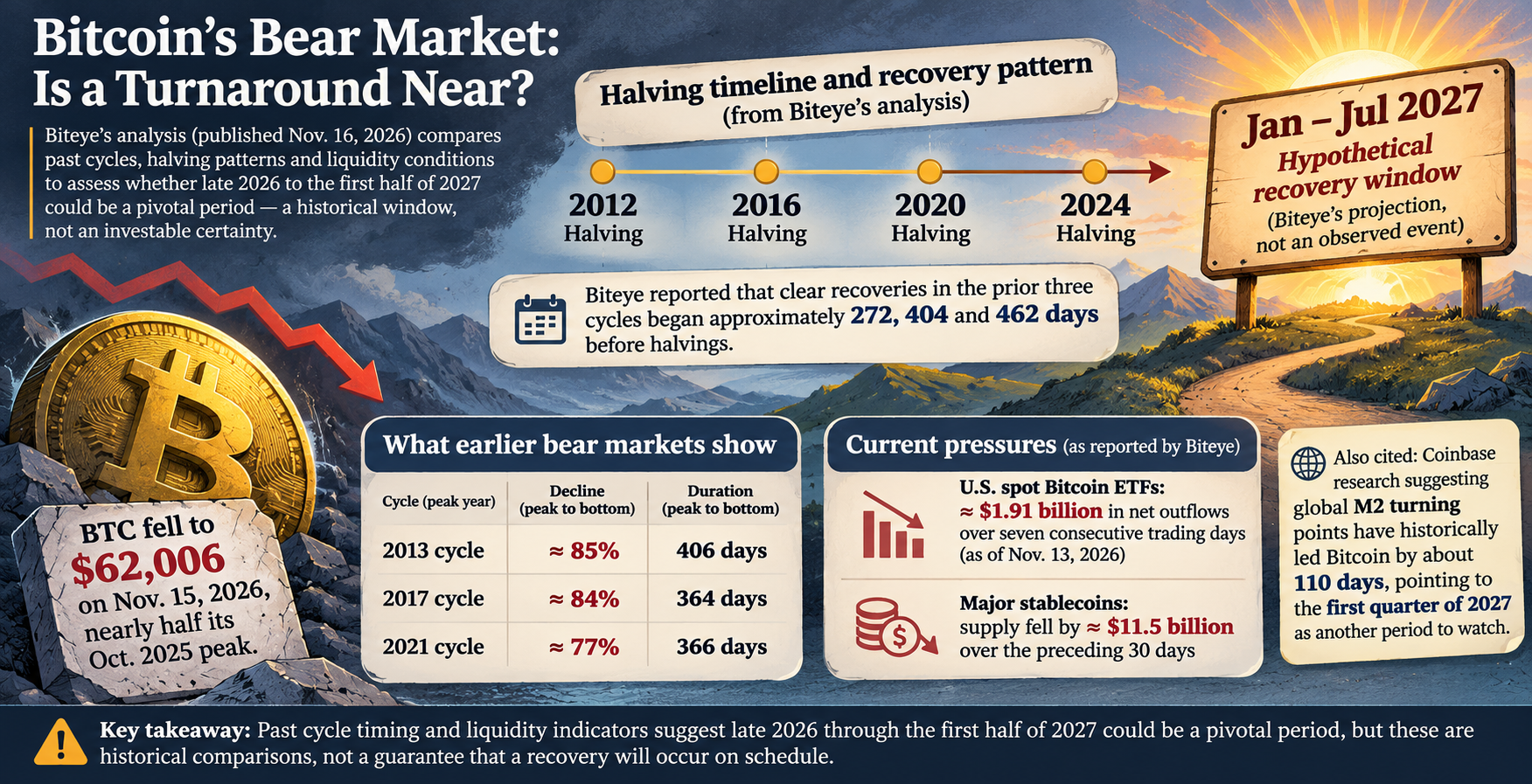
Bitcoin fell as low as $62,006 on November 15, 2026, according to Biteye—nearly half its October 2025 peak. The question is whether the length of that decline says anything reliable about a bottom.
What the earlier bear markets show
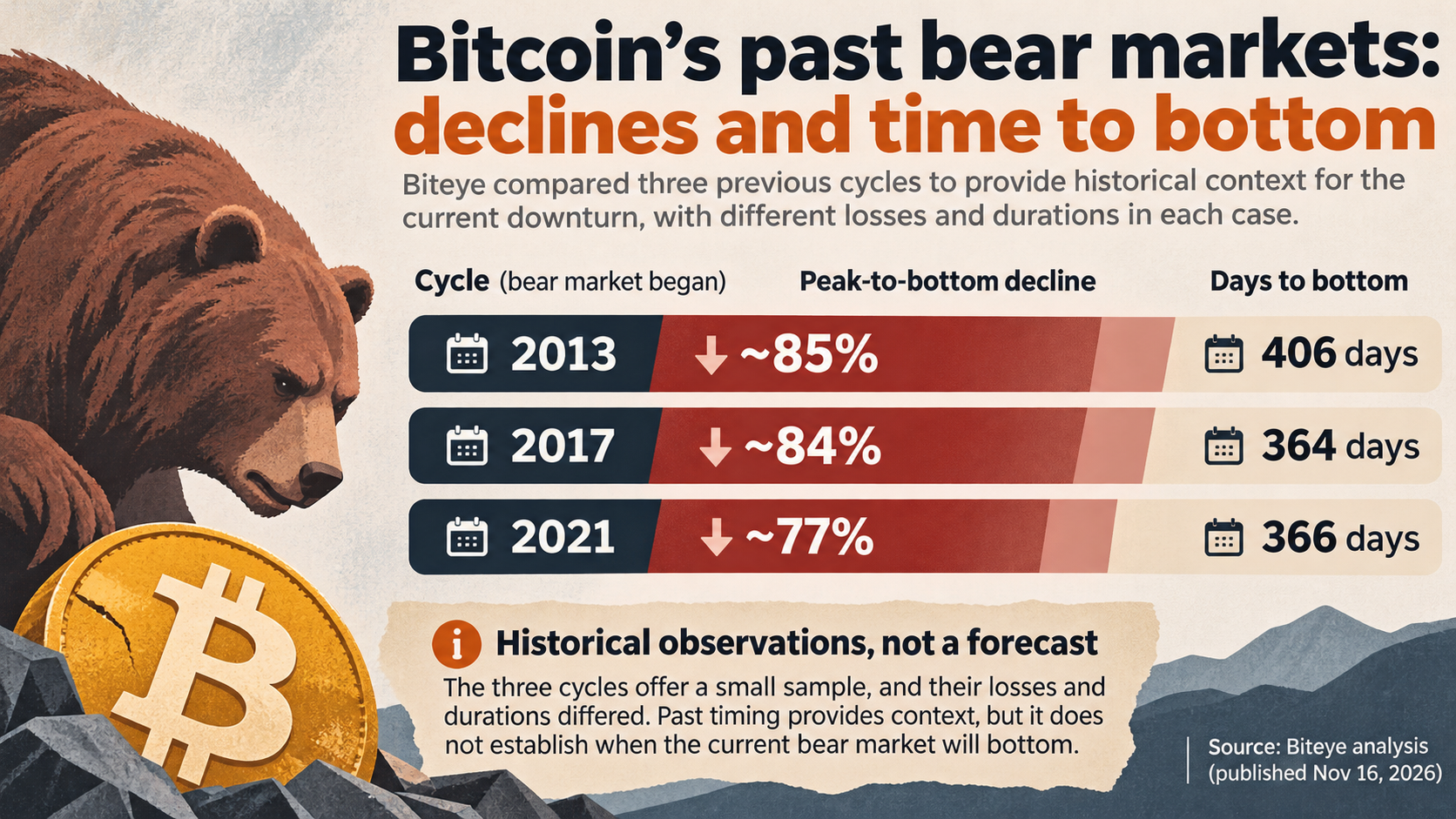
Biteye compared three previous declines from peak to bottom: roughly 85% over 406 days in the cycle beginning in 2013, 84% over 364 days in the cycle beginning in 2017, and 77% over 366 days in the cycle beginning in 2021. On that basis, the article argued that the decline from the October 2025 peak had reached a historically relevant period for a bottom.
That is a comparison, not a bottom signal. Three cycles offer a small sample, and their losses and durations differed.
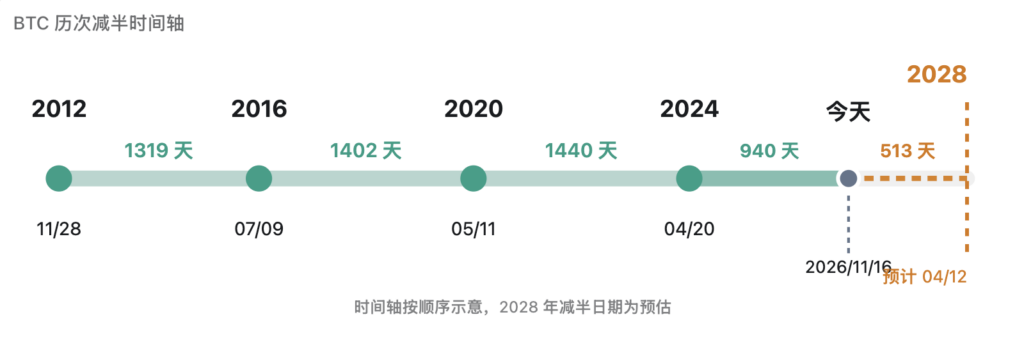
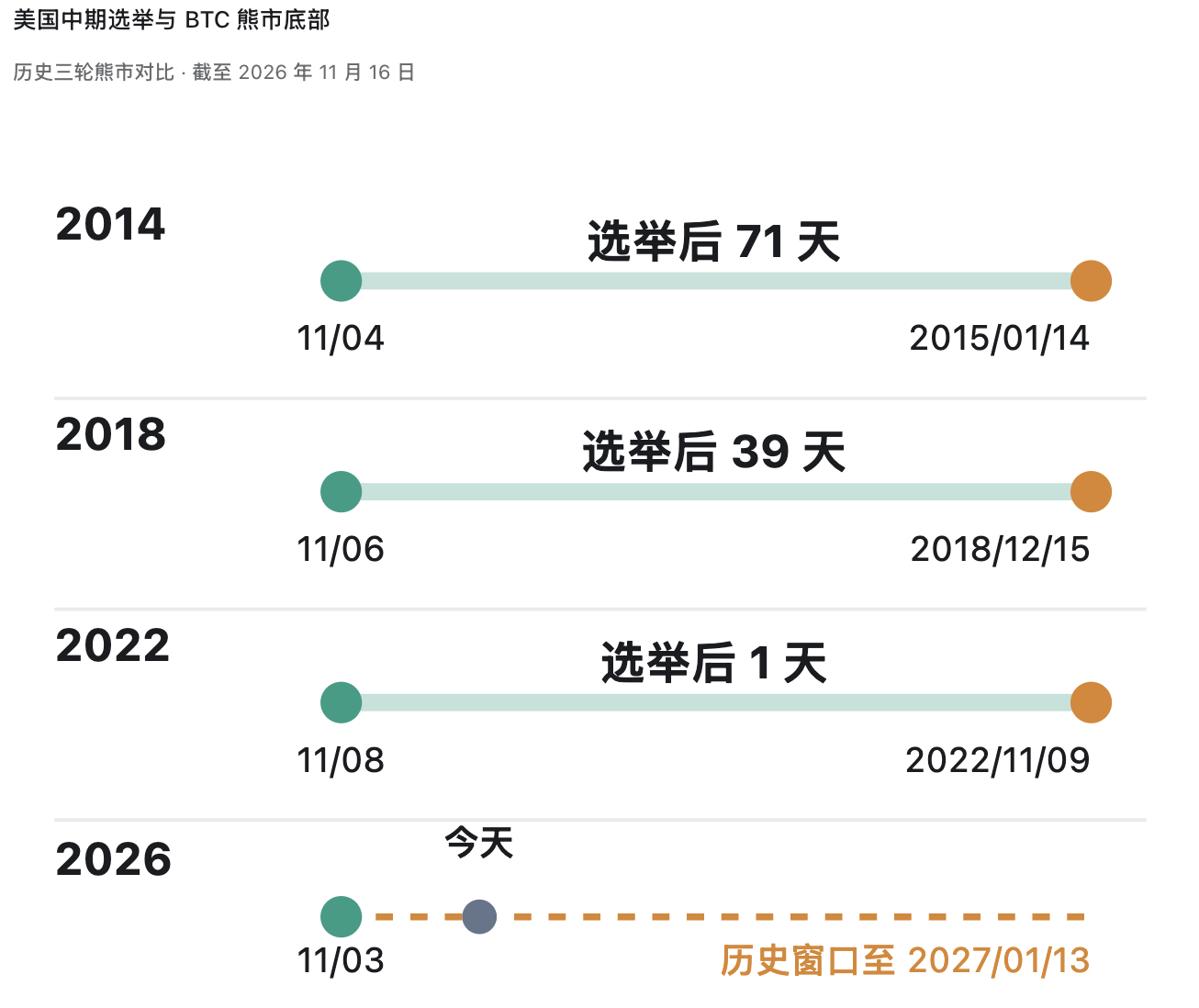
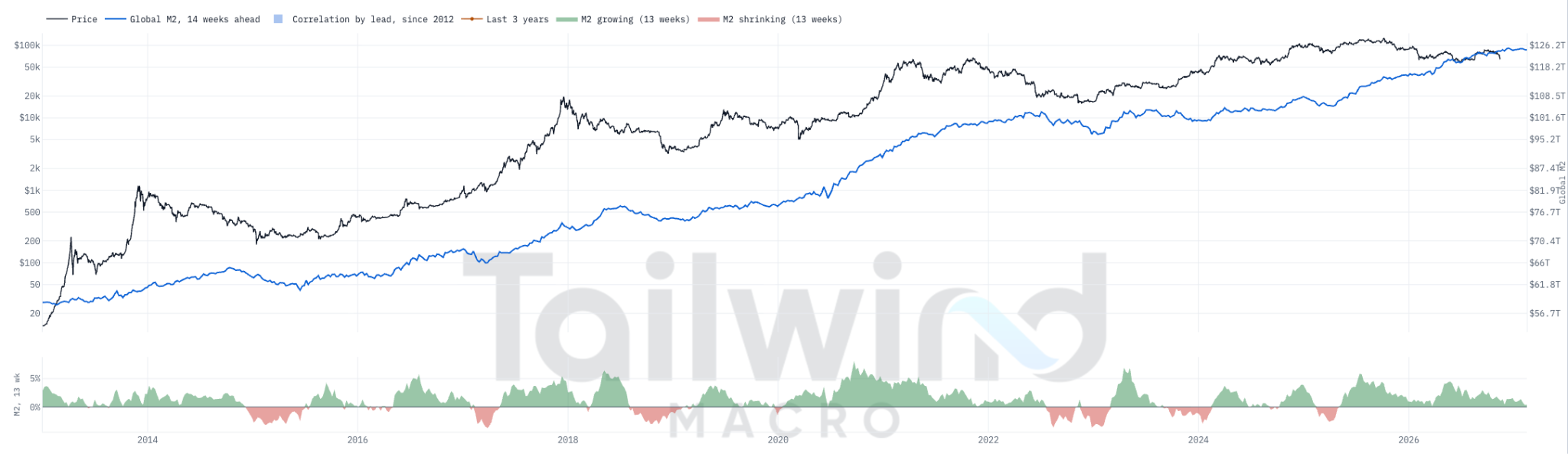
Biteye also examined recovery timing around Bitcoin halvings. It said clear recoveries in the prior three cycles began about 272, 404 and 462 days before a halving. Extending that pattern led it to propose January–July 2027 as a possible recovery window. The article separately cited Coinbase research suggesting global M2 turning points have historically led Bitcoin by about 110 days, pointing to the first quarter of 2027 as another period to watch. Neither relationship establishes that a recovery will occur on schedule.
What could interrupt the pattern?
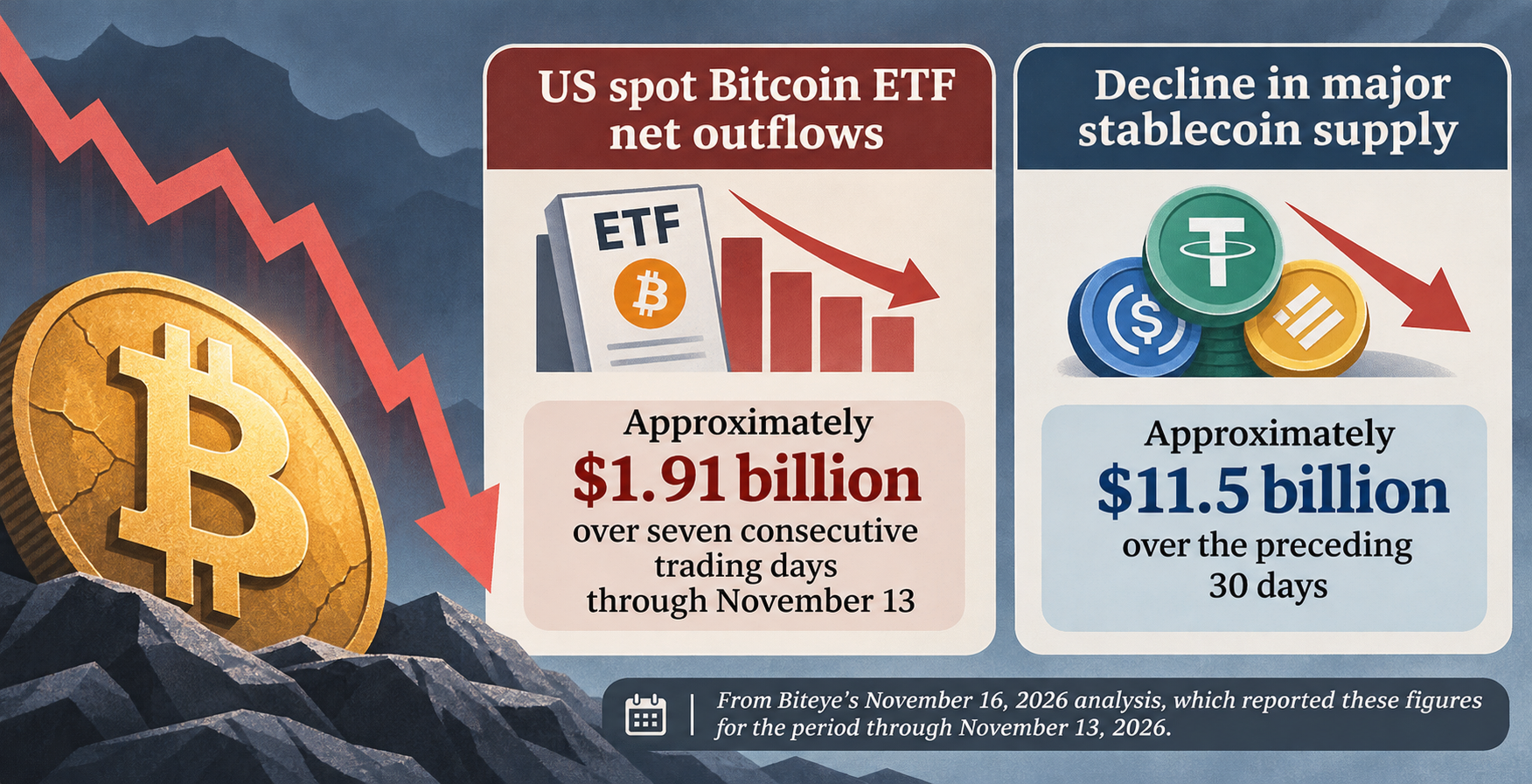
The reported funding picture was less encouraging. As of November 13, U.S. spot Bitcoin ETFs had recorded about $1.91 billion in net outflows across seven consecutive trading days, according to the article. It also reported that the supply of major stablecoins had fallen by about $11.5 billion over the preceding 30 days. Biteye described tighter monetary conditions and weaker demand for volatile assets as further constraints; these are its assessment of possible pressures, not confirmed explanations for the price decline.
The useful distinction is between a historical window and an investable certainty. Biteye’s conclusion was that late 2026 through the first half of 2027 could be a pivotal period for this bear market. Its own account of ETF outflows and liquidity pressure also shows why past cycle timing alone cannot establish when a lasting bottom has formed.
Source: techflowpost.com (originally published 2026-11-16 18:06 UTC+8)