
Why was Bitcoin struggling to hold a rebound? In an analysis published on October 29, 2026, Glassnode described a market with little fresh demand but also limited selling pressure. Its price and order-book observations ran through October 27; some ETF and on-chain measures ended on October 25 or 26. The figures describe that period, not current market conditions.
Demand was thin on both sides of the market
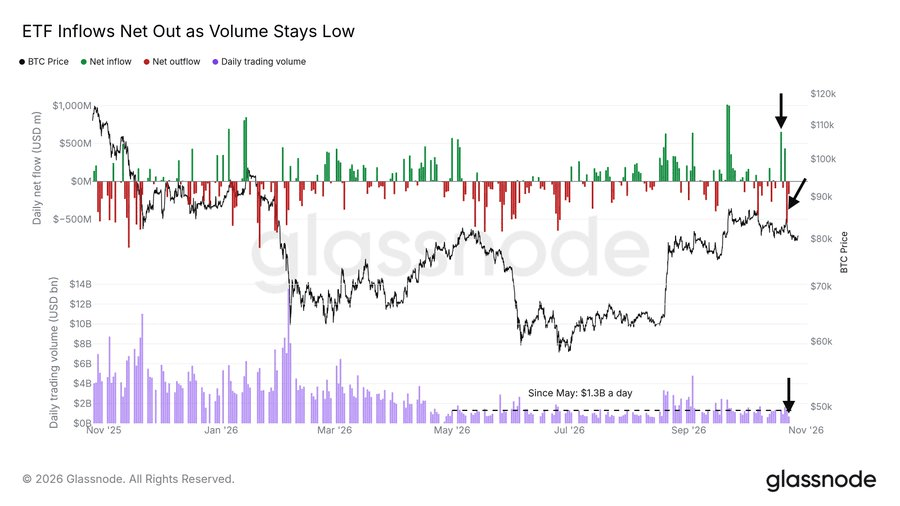
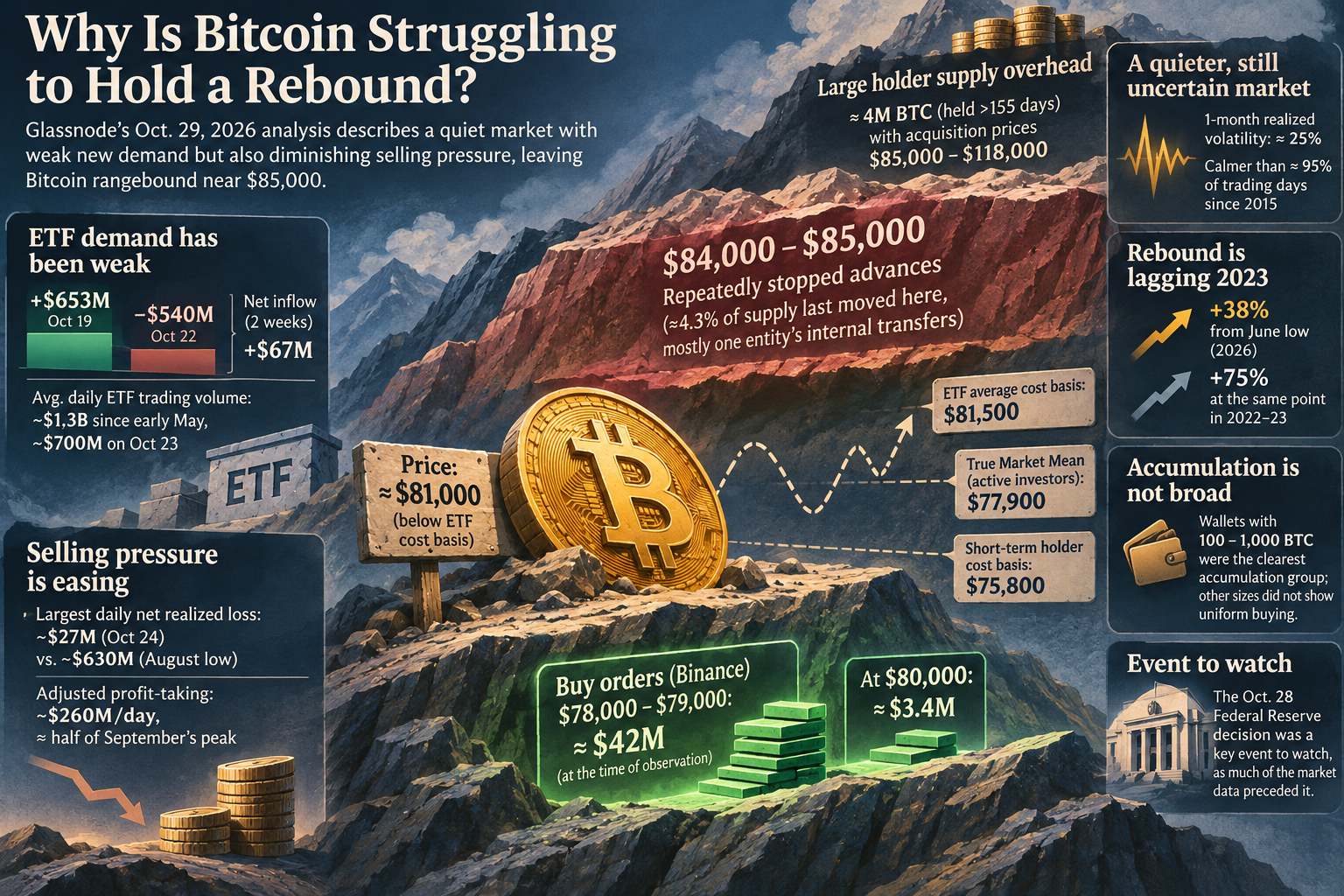
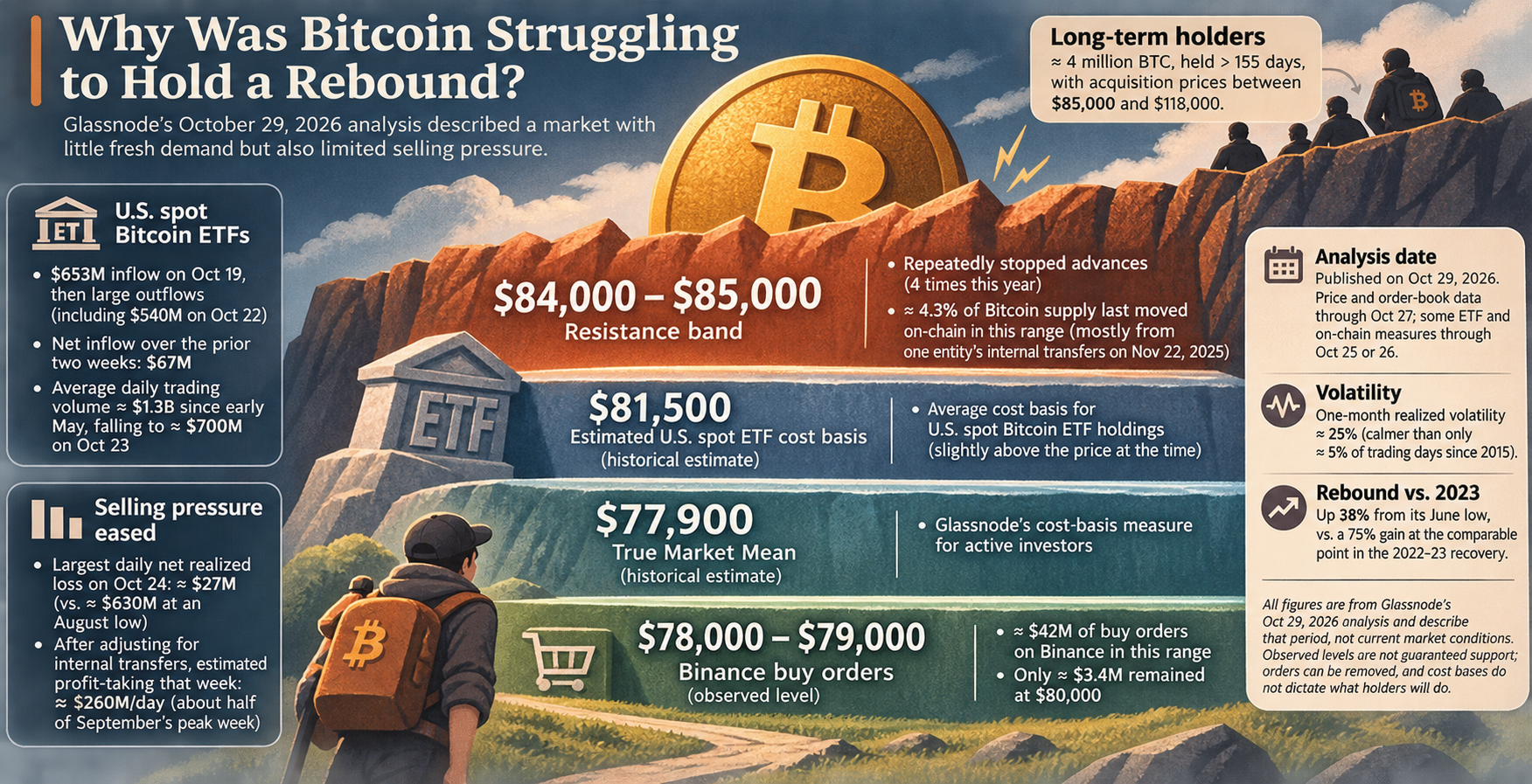
Glassnode reported a $653 million inflow to U.S. spot Bitcoin ETFs on October 19, followed by substantial outflows, including $540 million on October 22. Net inflows over the preceding two weeks totaled just $67 million. Average daily ETF trading volume had been about $1.3 billion since early May, well below earlier months, and fell to roughly $700 million on October 23.
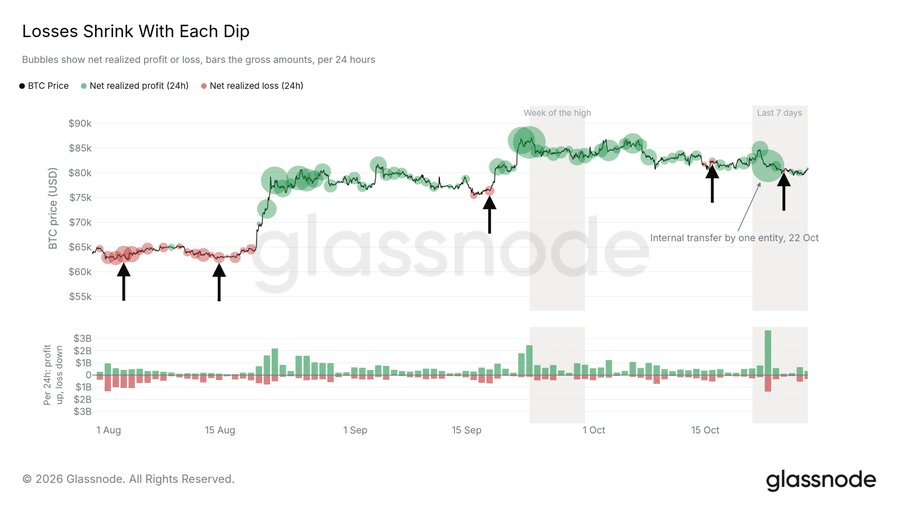
Selling pressure also appeared to be easing. Glassnode said the largest daily net realized loss during the October 24 price dip was about $27 million, compared with roughly $630 million at an August low. An apparent spike in gains and losses on October 22 was largely caused by one entity moving coins between its own wallets, not by equivalent market sales. After adjusting for such transfers, Glassnode estimated profit-taking that week at about $260 million a day—roughly half the level in the week of September’s peak.
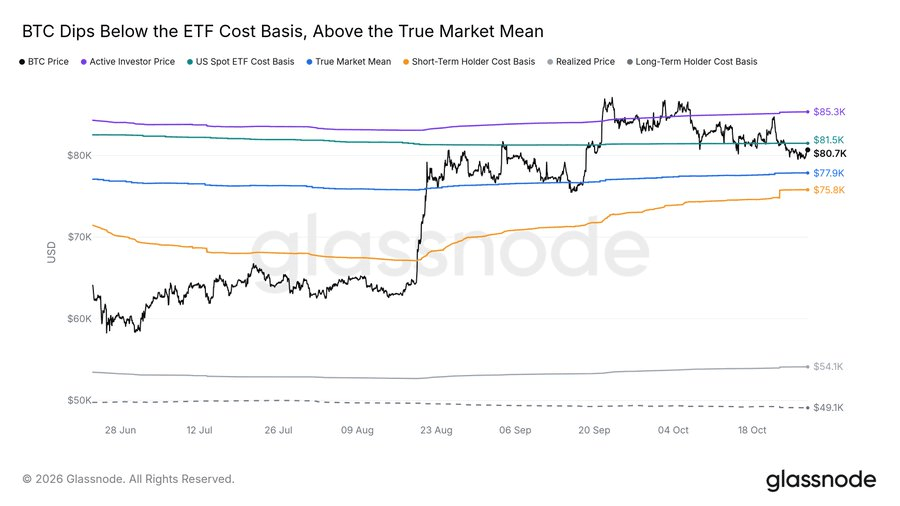
Why did $85,000 matter?
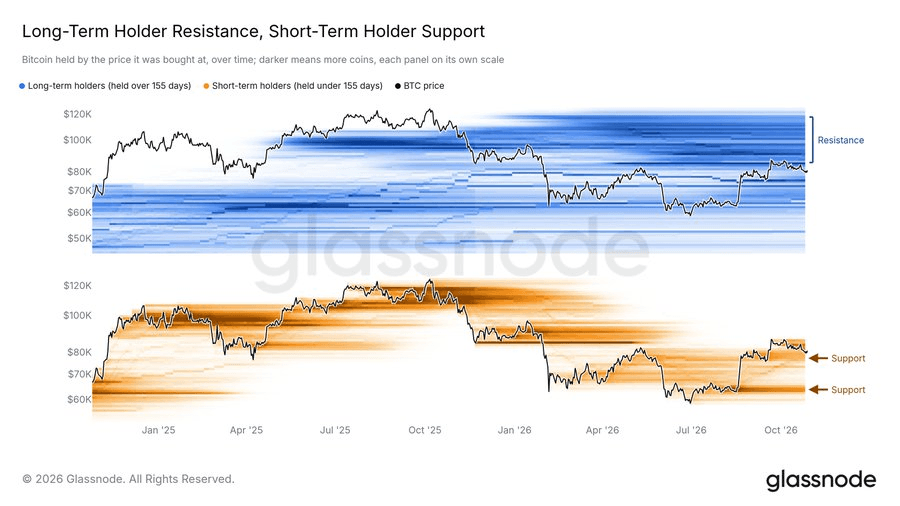
Glassnode placed a large concentration of long-term holders’ coins—about 4 million BTC, held for more than 155 days—with acquisition prices between $85,000 and $118,000. It suggested that some holders might sell if a rebound brought them back toward their purchase price. That is a possibility, not a measure of orders they had placed.
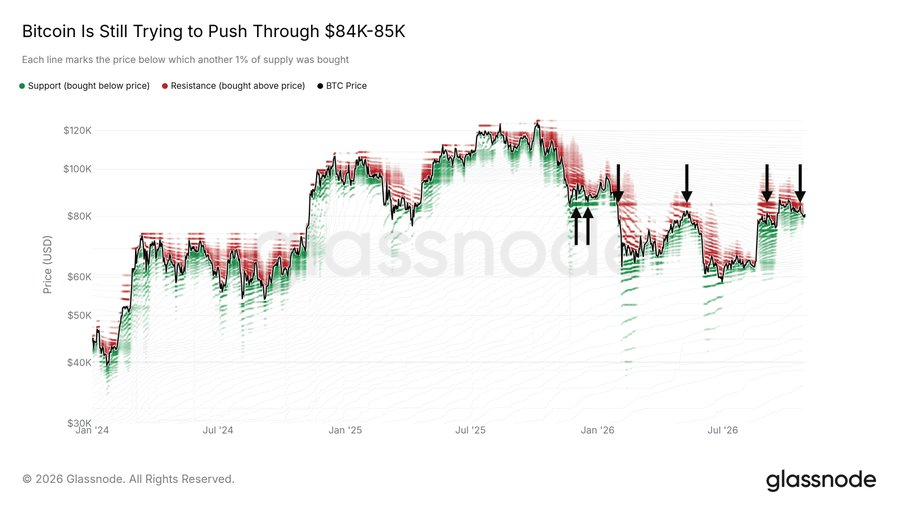
The $84,000–$85,000 band had also repeatedly stopped advances. About 4.3% of Bitcoin supply last moved on-chain in that range, though Glassnode said most of those transfers came from a single large entity moving coins among its own wallets on November 22, 2025. On-chain transfer prices therefore should not all be read as purchases.
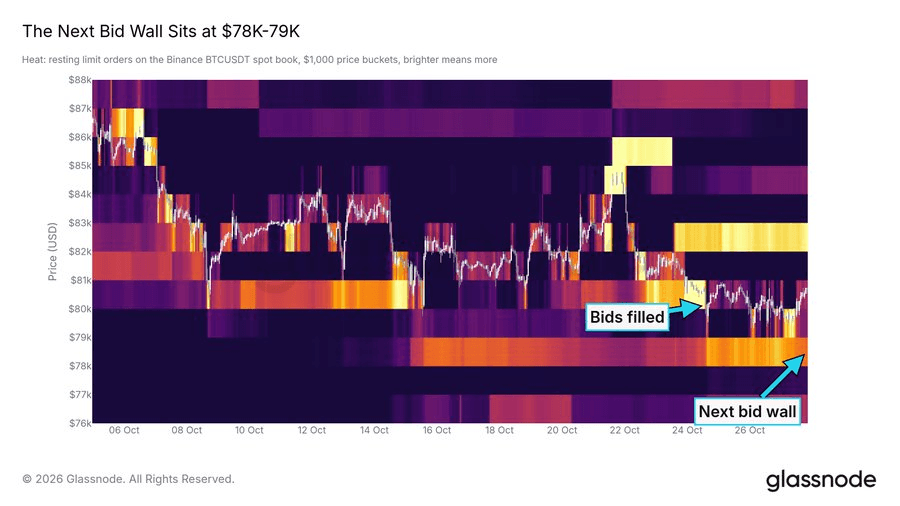
Below the market, Glassnode identified roughly $42 million of buy orders on Binance between $78,000 and $79,000 as of its observation, while only about $3.4 million remained at $80,000. Its estimated True Market Mean, a cost-basis measure for active investors, was $77,900. The average cost basis it calculated for U.S. spot ETF holdings was $81,500, slightly above the price at the time. These are observed levels, not guaranteed support: orders can be removed, and cost bases do not dictate what holders will do.

A quiet market, not a resolved one
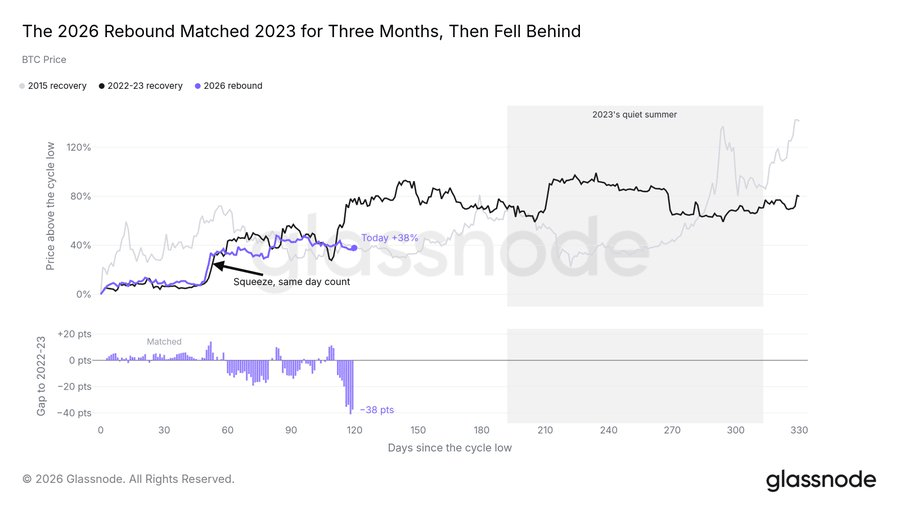
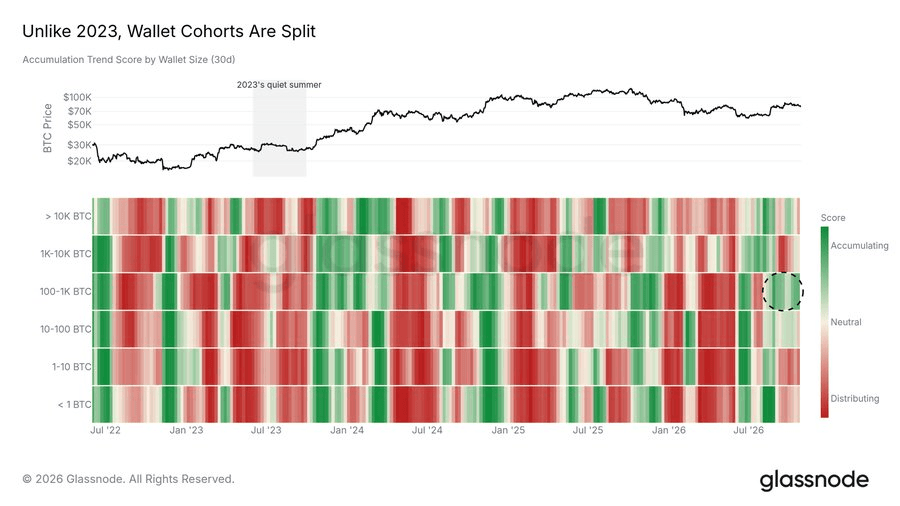
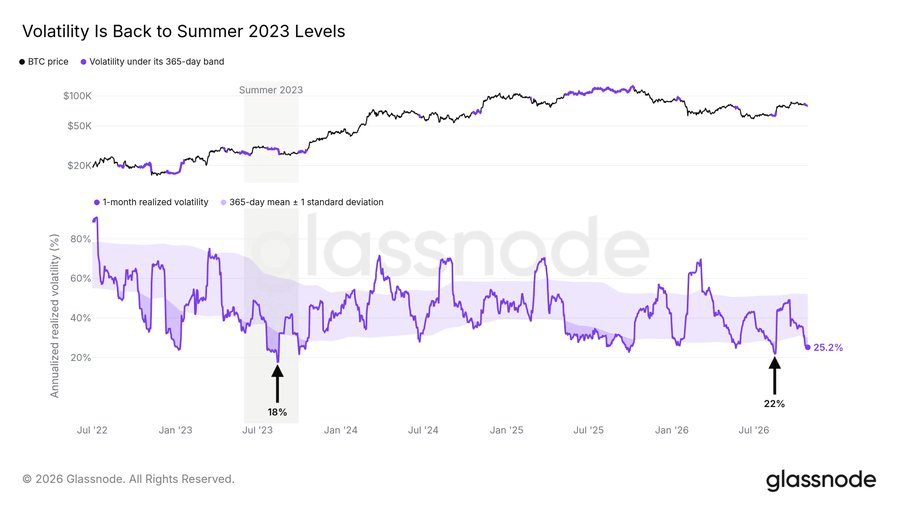
Glassnode put one-month realized volatility at about 25%. By its calculation, Bitcoin had been calmer on only around 5% of trading days since 2015. It also found that the rebound was up 38% from its June low, versus a 75% gain at the comparable point in the 2022–23 recovery. Wallets holding 100–1,000 BTC were its clearest accumulation group that month, but other wallet sizes did not show uniformly broad buying.

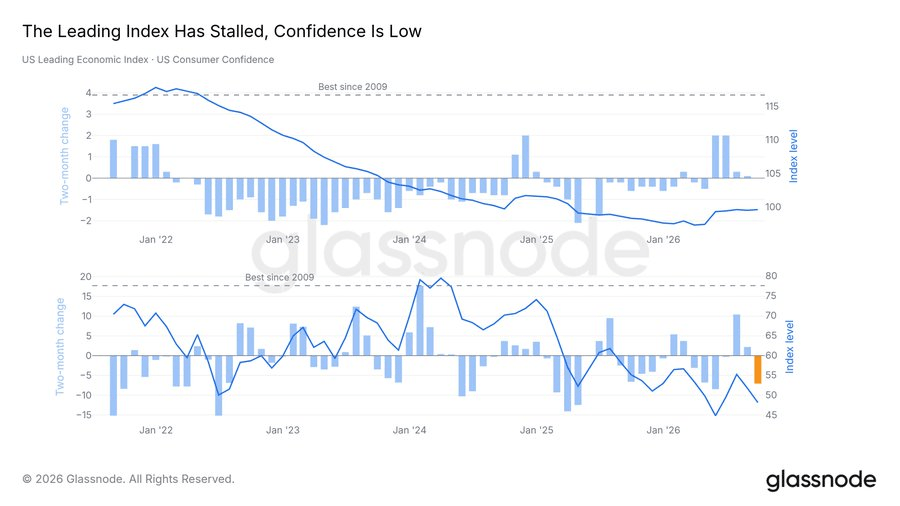
The report treated the October 28 Federal Reserve decision as an event to watch because much of its market data preceded it; it did not establish what the decision would do to Bitcoin. Glassnode’s central trade-off was narrower: weak ETF demand left the rebound struggling near $85,000, while diminishing realized losses suggested sellers were not pressing as hard on each dip. Neither observation, nor the comparison with 2023, could establish the next direction.