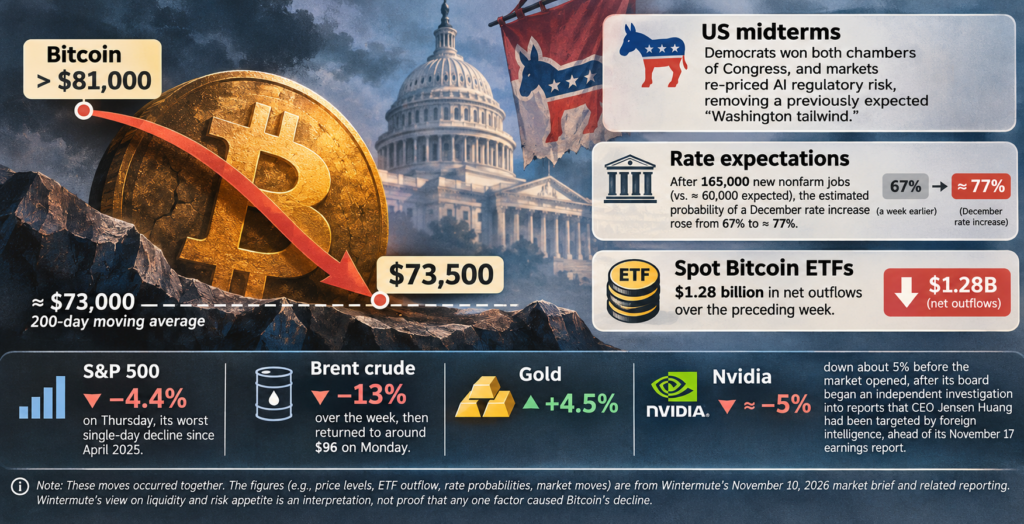
In a November 10, 2026 market brief, Wintermute described a difficult mix for Bitcoin: falling appetite for risk, growing expectations of a December US rate increase, and outflows from spot Bitcoin ETFs. That is its reading of the market, not proof that any one factor caused Bitcoin’s decline.
Bitcoin briefly rose above $81,000 on Wednesday alongside a rebound in oil stocks, then gave back the gain by Friday. By Sunday, it had fallen to $73,500—just above its roughly $73,000 200-day moving average—and closed below its 50-week moving average. Spot Bitcoin ETFs recorded $1.28 billion in net outflows over the preceding week.
Wintermute linked the broader shift in sentiment to the Democrats winning both chambers of Congress in the US midterm elections. It said markets began pricing in AI regulatory risk again, removing what it called a previously expected “Washington tailwind.” The S&P 500 fell 4.4% on Thursday, its worst single-day decline since April 2025.
Rate expectations added another pressure. Friday’s US jobs report showed 165,000 new nonfarm jobs, well above expectations of about 60,000. According to Wintermute, the estimated probability of a December rate increase rose from 67% a week earlier to about 77%. It argued that a rate increase during an AI-led market decline would be particularly hard for crypto assets because both liquidity and appetite for risk could weaken.
Other markets moved differently: Brent crude fell 13% over the week before returning to around $96 on Monday, while gold rose 4.5%. Nvidia was down about 5% before the market opened. The brief said its board had begun an independent investigation into reports that CEO Jensen Huang had been targeted by foreign intelligence, ahead of its November 17 earnings report. The reported targeting was an allegation, not an established finding.
The limitation is that these moves occurred together; the brief does not isolate how much each contributed to Bitcoin’s decline. The ETF outflow and price levels show what happened, while Wintermute’s liquidity explanation remains an interpretation.