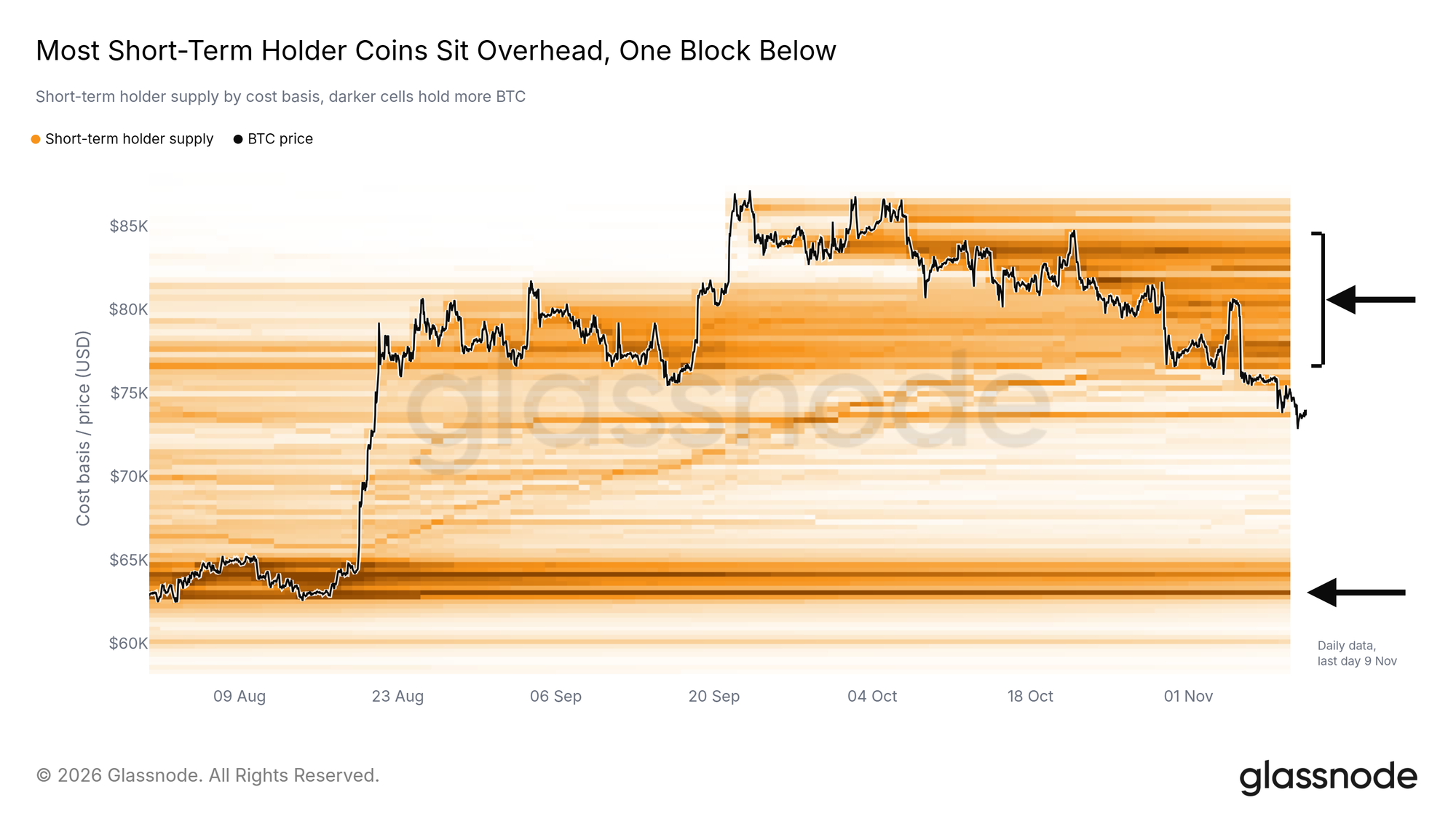
As reported on November 12, 2026, Bitcoin was trading near $74,000, below the roughly $75,600 average cost basis of short-term holders—investors who had bought within the previous 155 days. Glassnode’s data showed that only about 35% of those holdings were then in profit. The central question was whether demand could absorb selling from recent buyers while fresh capital appeared to be leaving the market.
Where demand was weakening
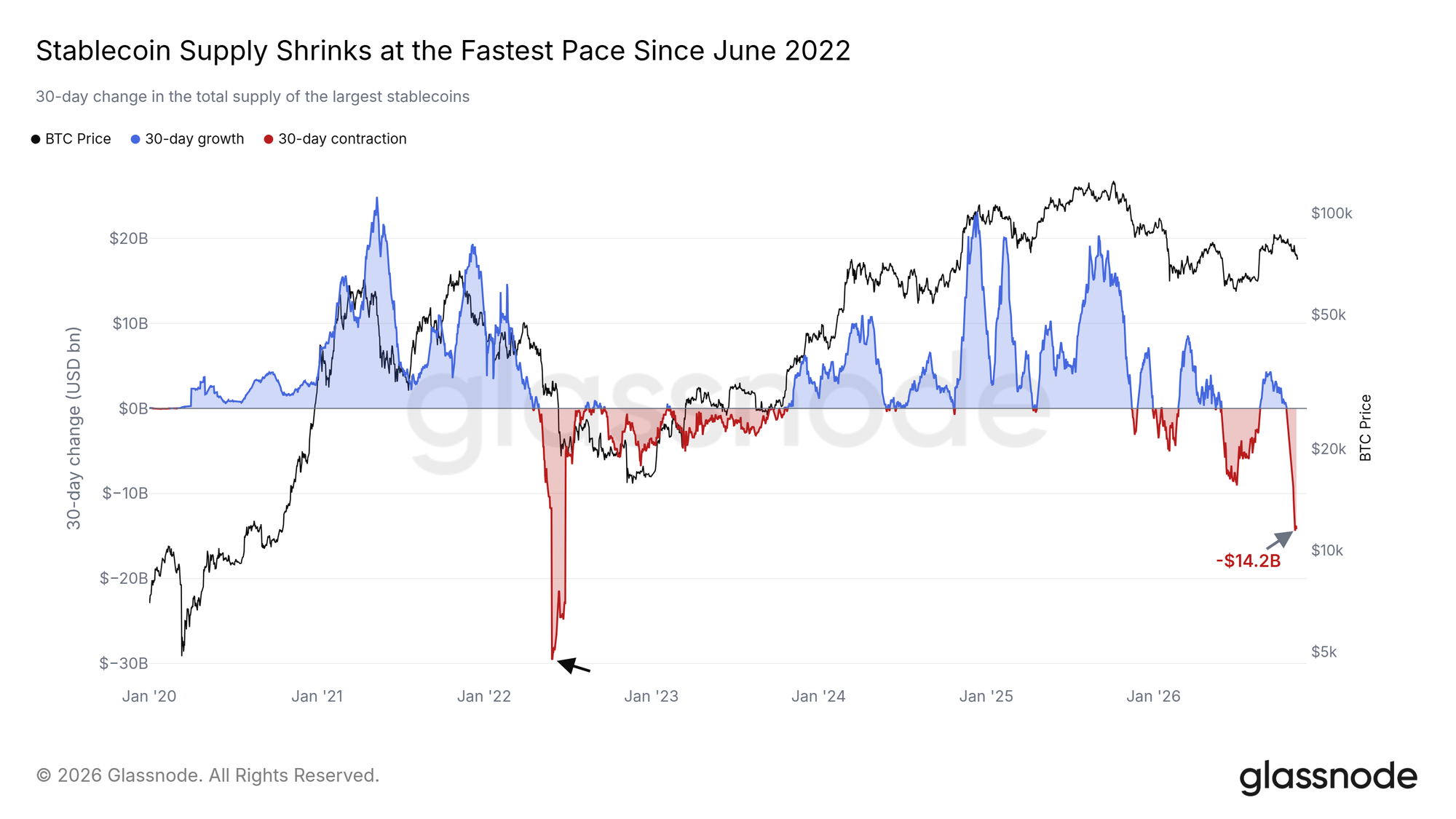
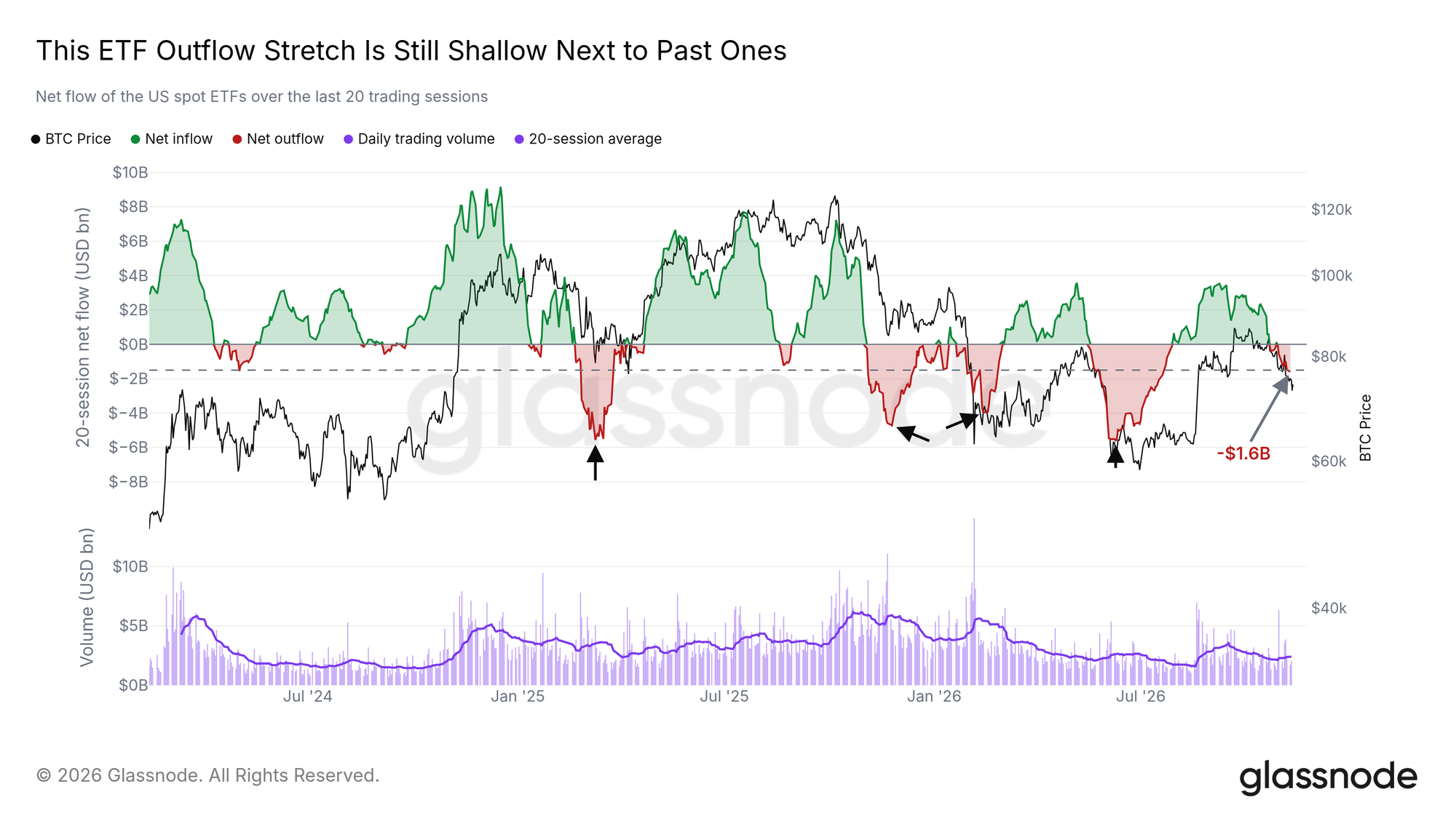
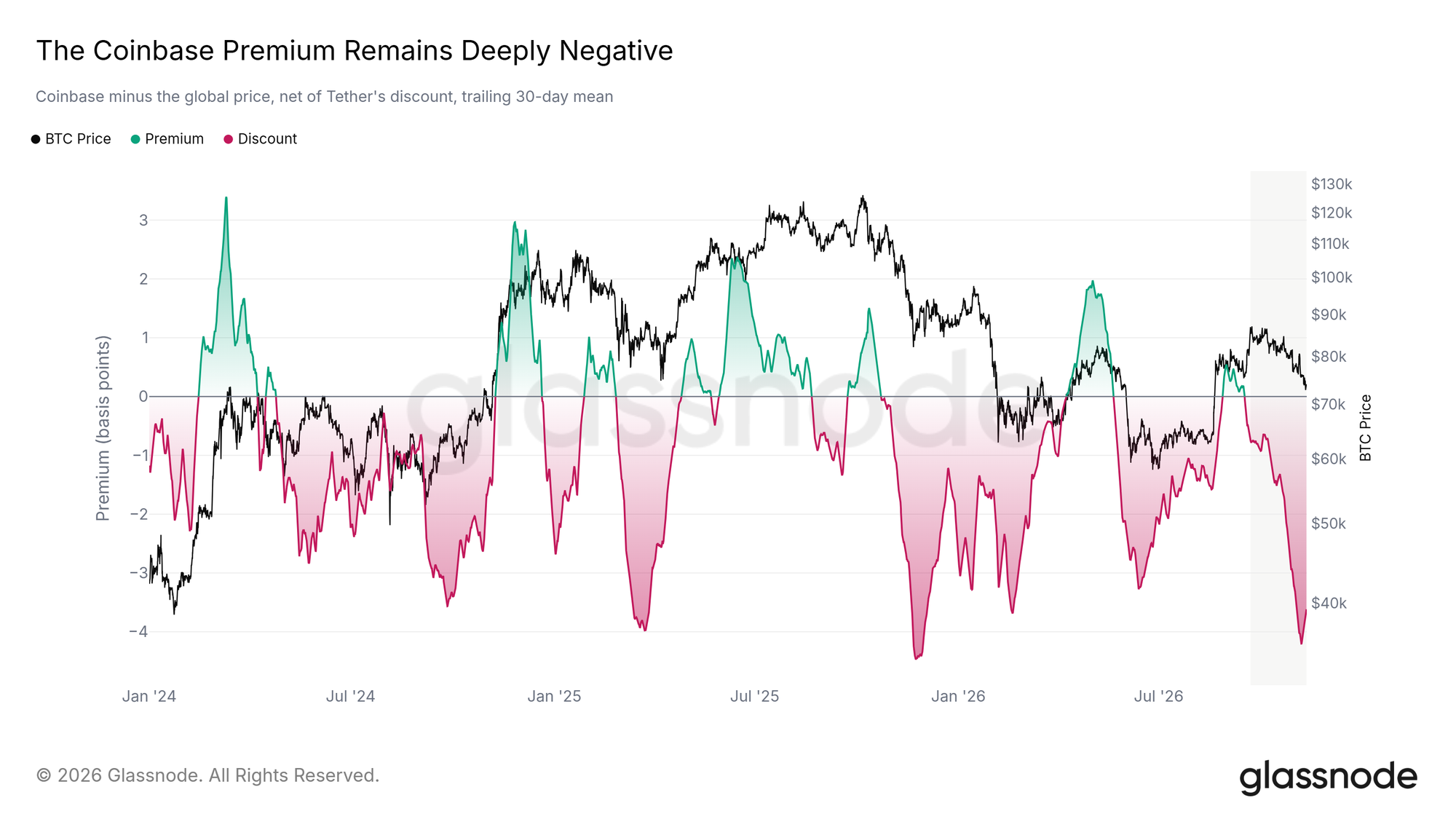
Glassnode reported a $14.2 billion decline in total stablecoin supply over the preceding 30 days, the fastest contraction since June 2022. U.S. spot Bitcoin ETFs had recorded $1.6 billion in net outflows over 20 trading days. Bitcoin also traded at a discount on Coinbase relative to a global composite price; Glassnode said its measure adjusted for the effect of Tether trading slightly below $1.
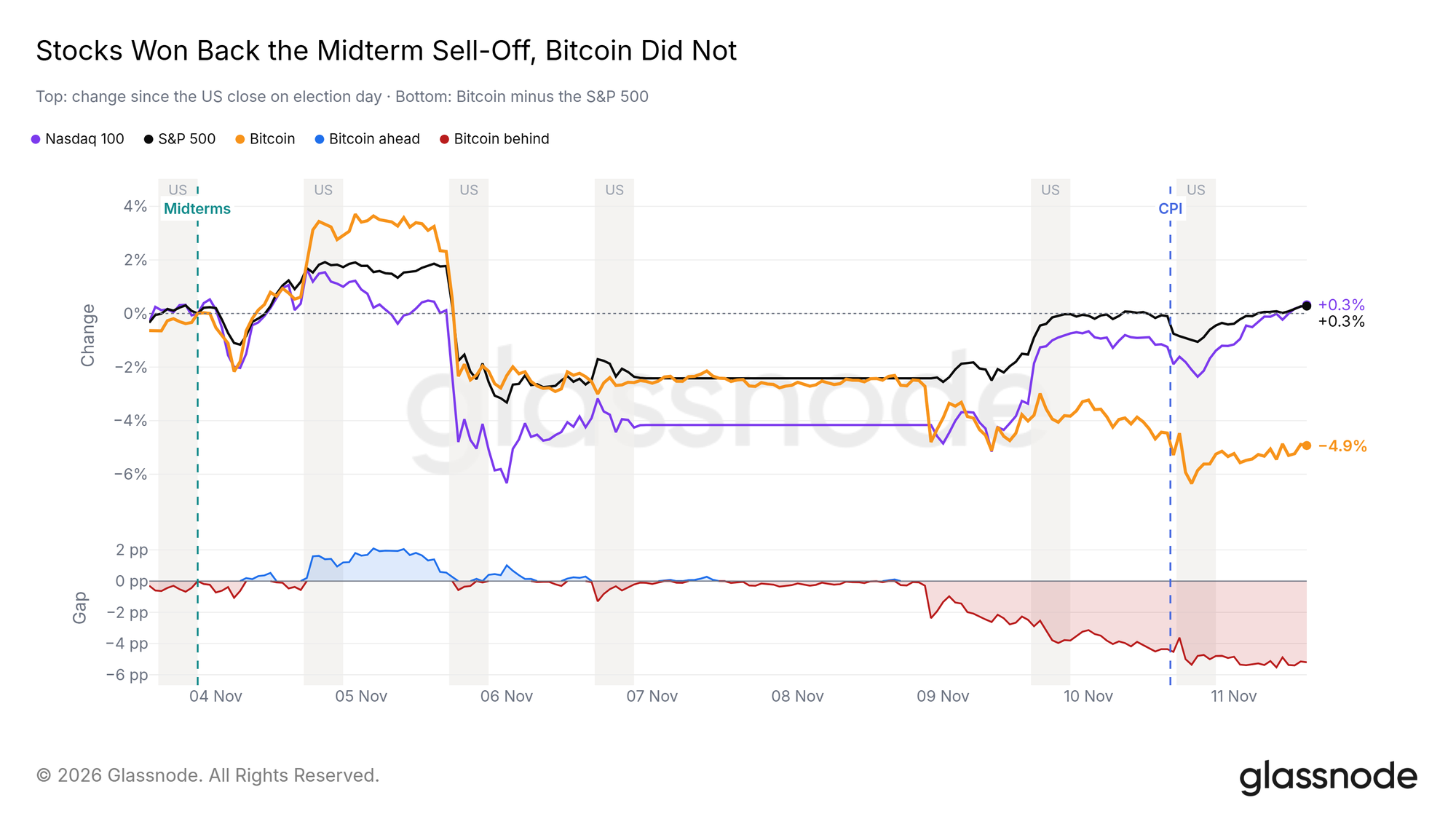
Those measures point to weaker available buying power, but none establishes when demand might return. Bitcoin had also lagged U.S. equities after the midterm election: by the report’s data cutoff, the S&P 500 and Nasdaq 100 had regained their election-day closing levels, while Bitcoin remained about 5% lower.
What might cushion a further fall?
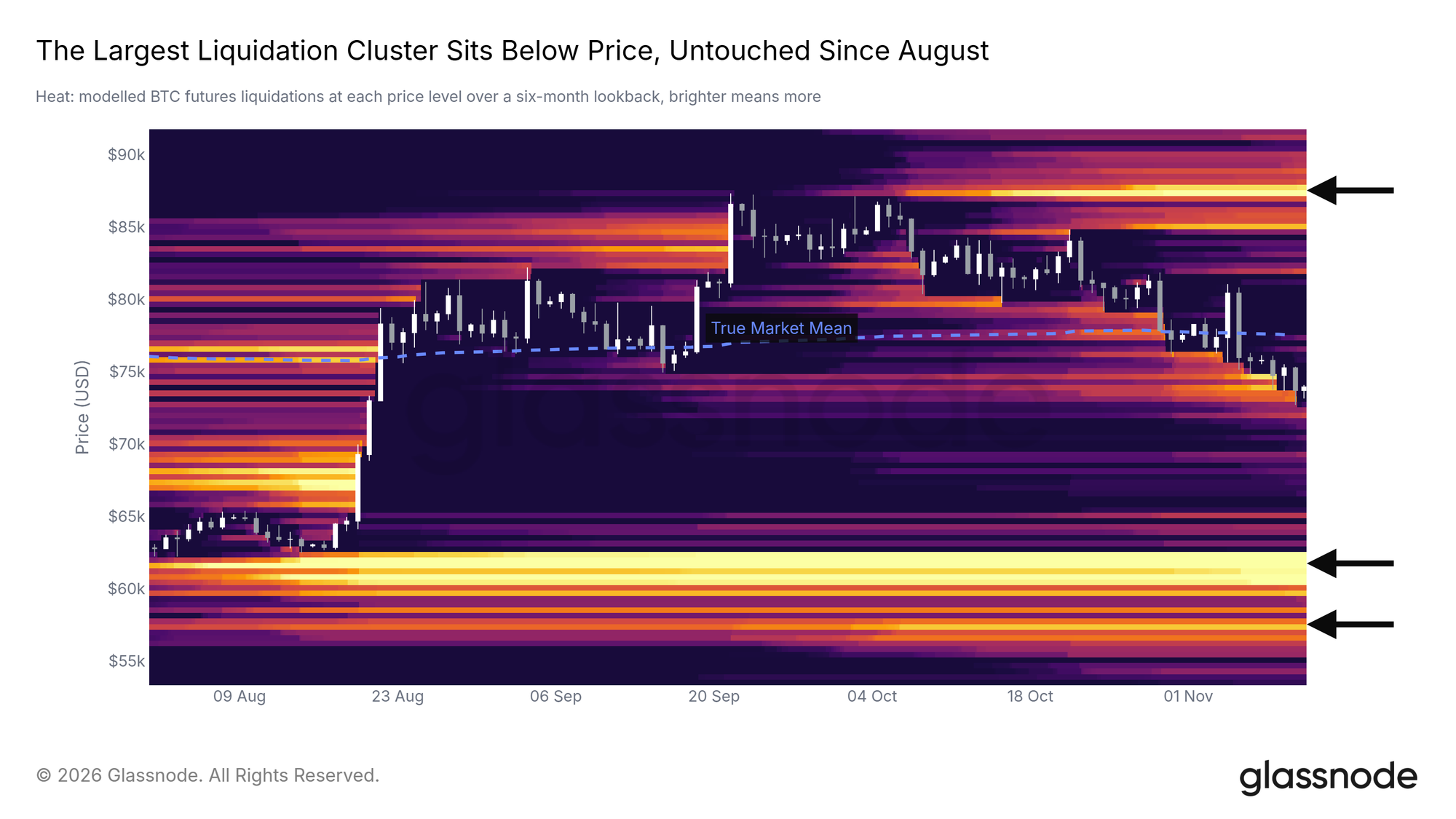
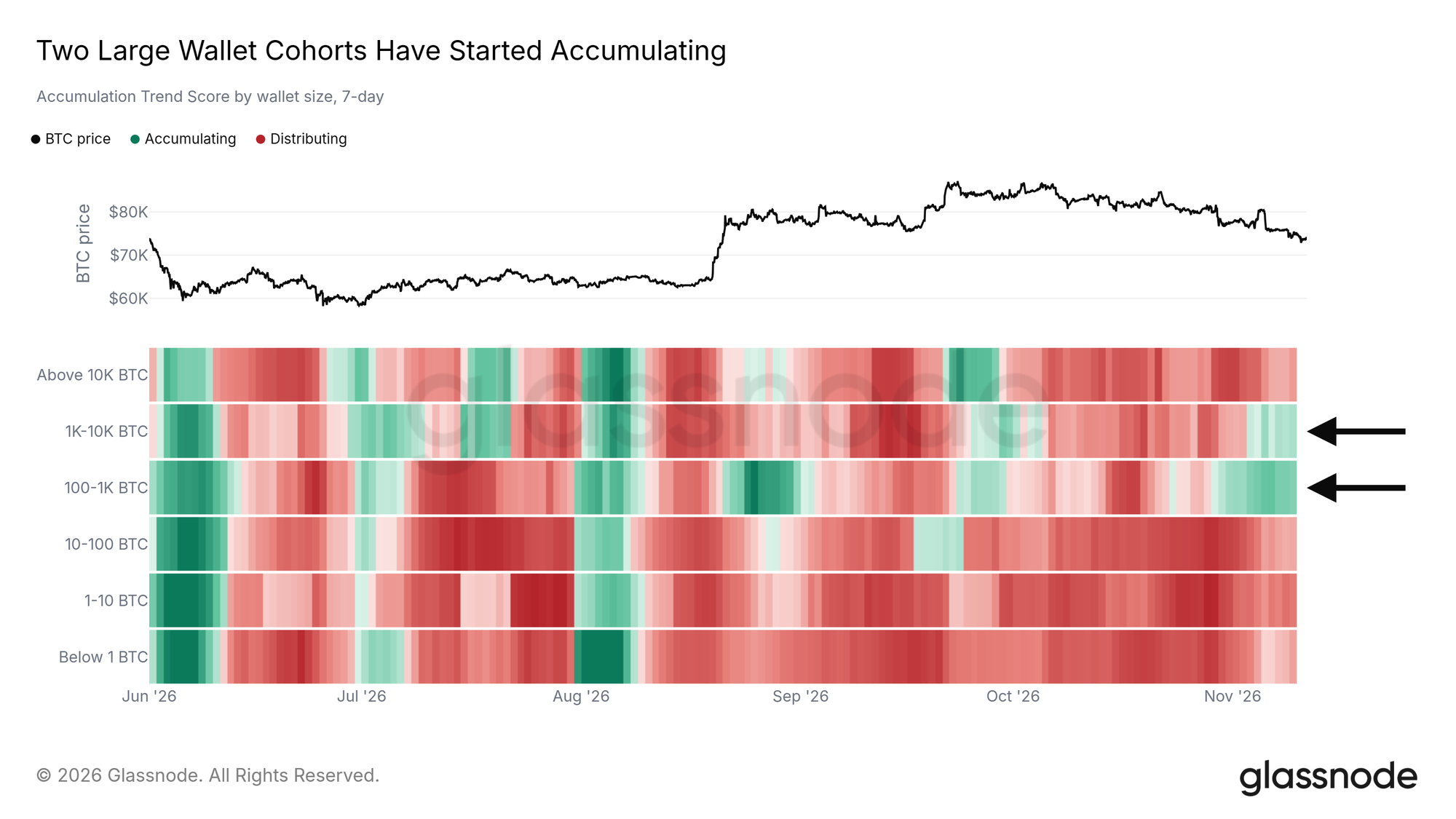
Glassnode found that much of the long-position liquidation exposure near the current price had been cleared during the decline from September’s high. Since the November 5 sell-off, buy orders within 5% of the market price on Binance and Coinbase had exceeded sell orders in every hourly observation, with the largest concentrations of bids between $68,000 and $72,500. Two wallet groups—those holding 100–1,000 BTC and 1,000–10,000 BTC—had also shifted toward accumulation over the preceding week.
These are limited signs of support, not a confirmed reversal. Orders can be withdrawn, as some bids briefly were during the early-November decline. The two wallet groups had also briefly bought in late September without sustaining the shift; other wallet-size groups were still reducing holdings.
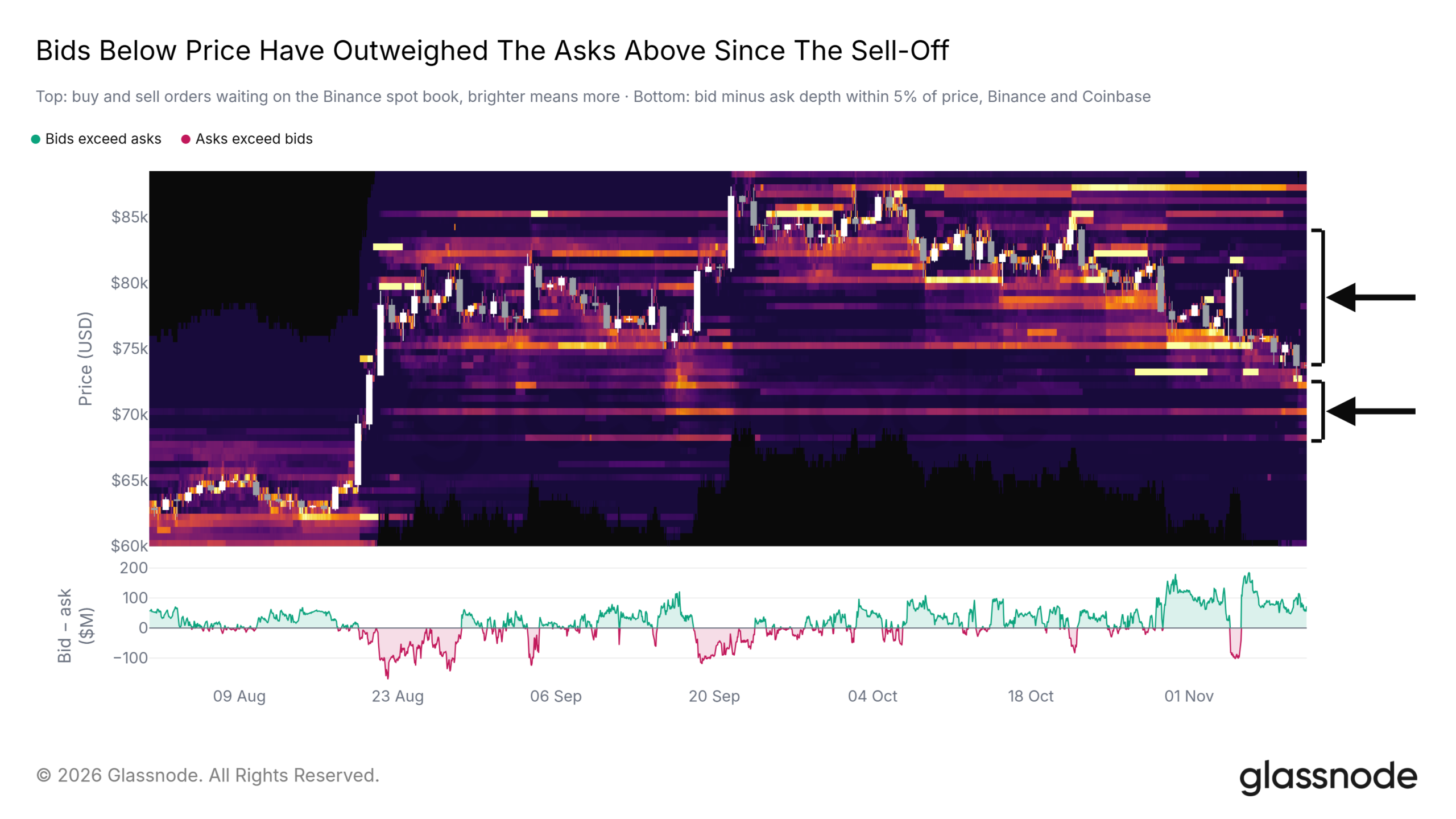
Glassnode identified $75,600 as a level to watch for a recovery in recent buyers’ position. Roughly two-thirds of short-term-holder coins had been acquired above the prevailing price, creating potential selling pressure on a rebound. Its broader upward market structure, dating from August, remained above the June low of $58,500; a substantive close below that low would invalidate that reading. These levels describe the report’s model, not a forecast.
Data timing: Price and derivatives figures were current to November 11, 2026, at 11:00 UTC; order-book figures to 09:00 UTC. ETF flows, stablecoin supply, cost-basis data and wallet accumulation scores were current to November 9.