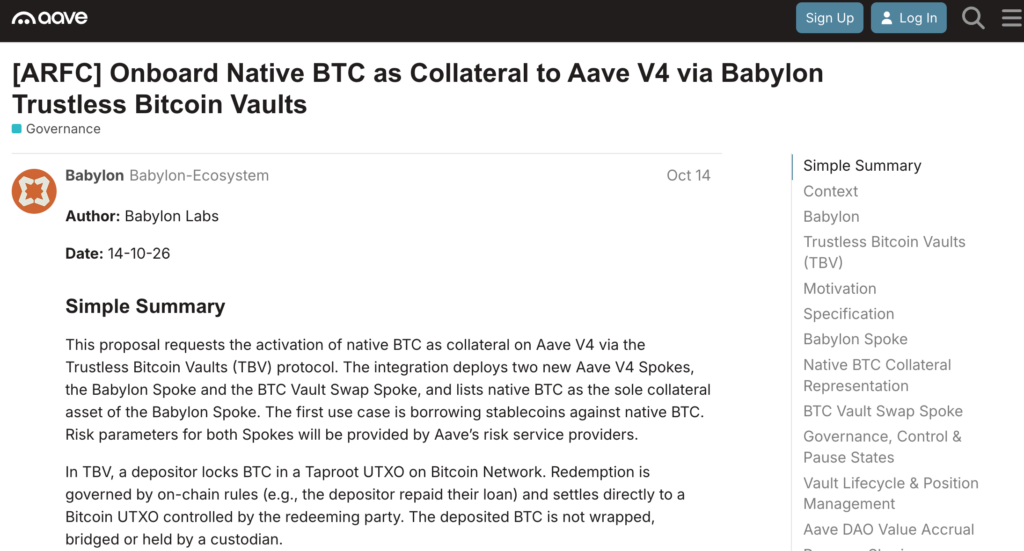
As reported on November 10, 2026, Aave DAO had approved an initial proposal to accept native BTC as collateral through Babylon’s Trustless Bitcoin Vaults. It had not yet completed the final on-chain vote or launched the service.
Babylon said the November 9 ARFC vote passed with 100% support. The proposal was next due to enter the AIP stage, which requires a final on-chain execution vote. Its target was a mainnet launch by the end of 2026, with participation and capacity limited at first.
How would the BTC collateral work?
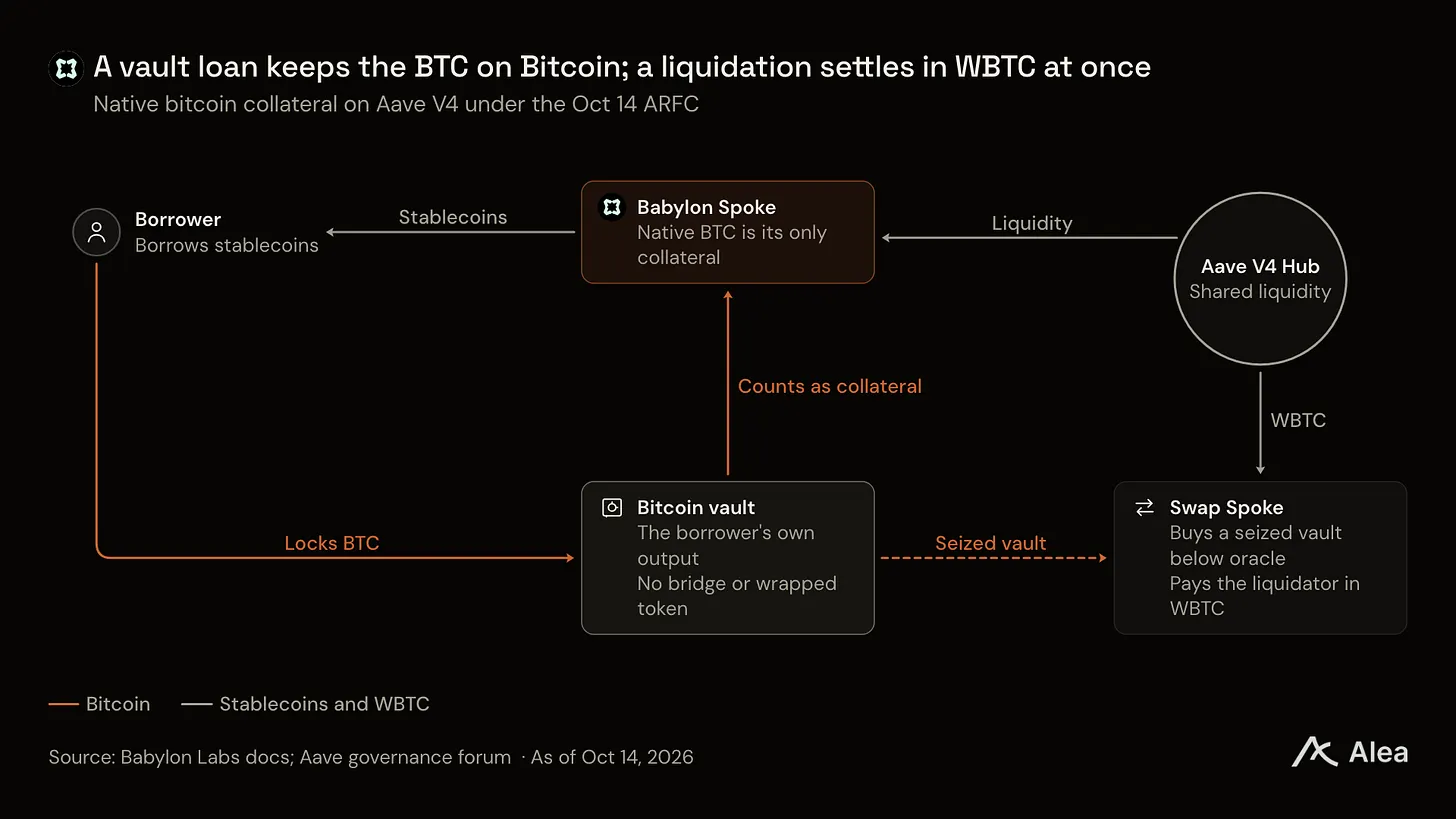
Under the proposal described on Aave’s governance forum, a borrower would lock BTC in a Taproot vault on Bitcoin while retaining control of their private keys. A non-transferable accounting token on Ethereum, matching the amount locked, would represent that collateral in Aave V4. The borrower could then seek to borrow assets such as USDT or USDC without first wrapping the BTC or handing it to a custodian.
LlamaRisk proposed a 78% collateral factor and a maximum 5.55% liquidation bonus for native BTC. Those are proposed risk parameters, not evidence that borrowing is already available. The initial plan also capped native-BTC collateral at 300 BTC and set roughly $21 million in credit limits across USDT, USDC, USDG, RLUSD and GHO. Any later increase would require Aave DAO approval.
Where does the custody trade-off remain?
The design aims to remove a custodian from the collateral step. It does not remove wrapped Bitcoin from the whole process. According to the proposal, a liquidator would use WBTC to buy a seized vault; an arbitrageur could then redeem its BTC on Bitcoin. Liquidation would therefore still depend on a custodial asset.
The proposal also gives a three-of-five multisignature group including Aave Labs, LlamaRisk and Babylon emergency pause authority without a time lock. A pause would block repayments and liquidations as well; the group would not have authority to transfer users’ BTC.
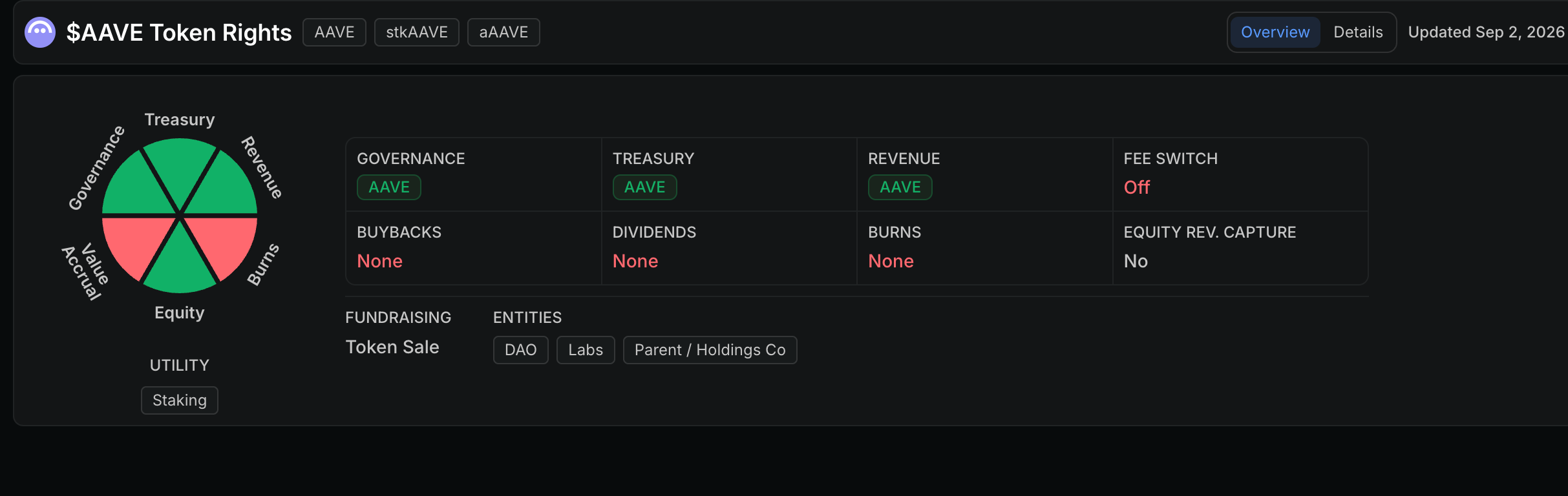
The commercial terms were likewise still part of a proposal. Aave DAO would receive the first $500,000 in specified annual fees. Above that threshold, revenue would be split with Babylon, with 4%–7% allocated to AAVE and BABY buybacks depending on the revenue tier. Those terms describe a potential business model, not realized revenue.
The central distinction is simple: the November vote advanced a way to borrow against BTC without wrapping it at deposit, but did not make the system live or eliminate every dependency on wrapped assets.
Source: techflowpost.com (originally published 2026-11-10 20:53 UTC+8)