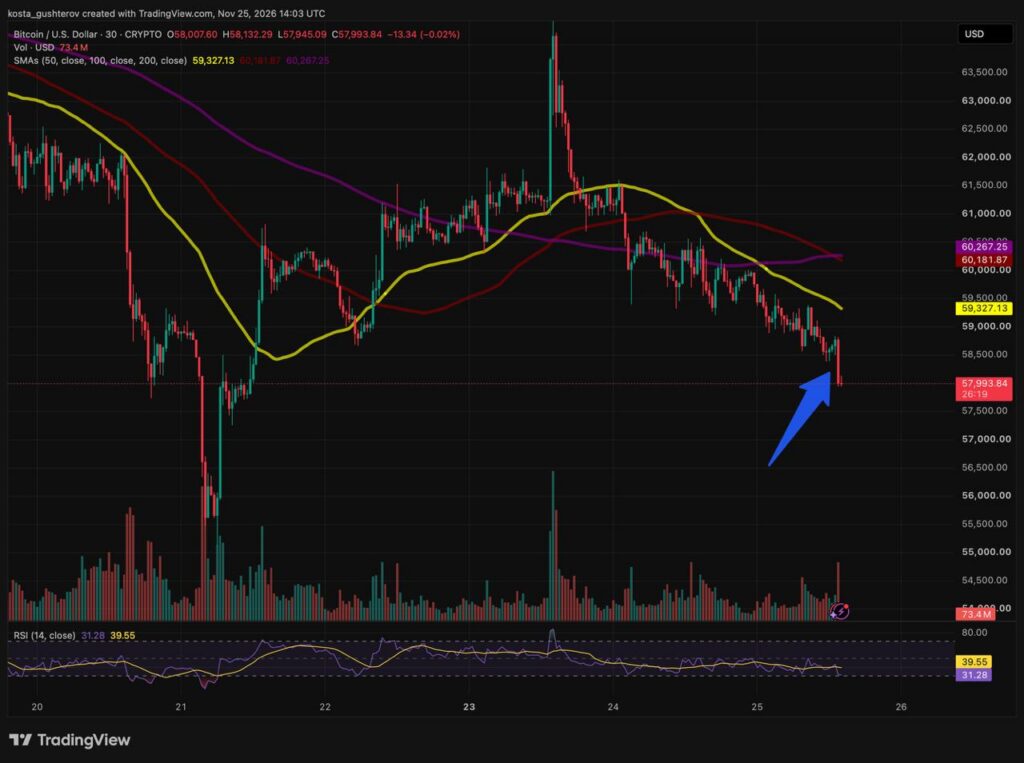
Bitcoin fell below $58,000 on Nov. 25, 2026, after the US Bureau of Economic Analysis released its October figures for income, spending and inflation. The clearer signal was in household spending: Americans had more income after inflation but bought slightly less. The timing of bitcoin’s decline does not establish that the report caused it.
When the figures came out at 8:30 a.m. Eastern time, bitcoin traded near $58,800. It fell to just above $58,000 over the next half hour and later touched $57,945, according to TradingView. The decline had started after a Nov. 23 spike above $63,500. Investors had also withdrawn $569.7 million from US spot bitcoin ETFs on Nov. 23.
Why annual inflation rose
The price index for personal consumption expenditures (PCE) rose 0.3% in October and 3.8% from a year earlier, both in line with forecasts. Core PCE prices also rose 0.3% for the month, matching September’s pace and the forecast. Only the annual core rate exceeded expectations, at 3.3% rather than 3.2%.
The annual figure rose in part because a smaller monthly increase of 0.2% in October 2025 dropped out of the 12-month calculation. The higher annual rate did not mean that monthly inflation had accelerated. Even before the release, Bitwise noted that federal funds futures implied a 93% chance of a December rate increase. That was a market expectation, not a Fed decision.

Households saved more of their income
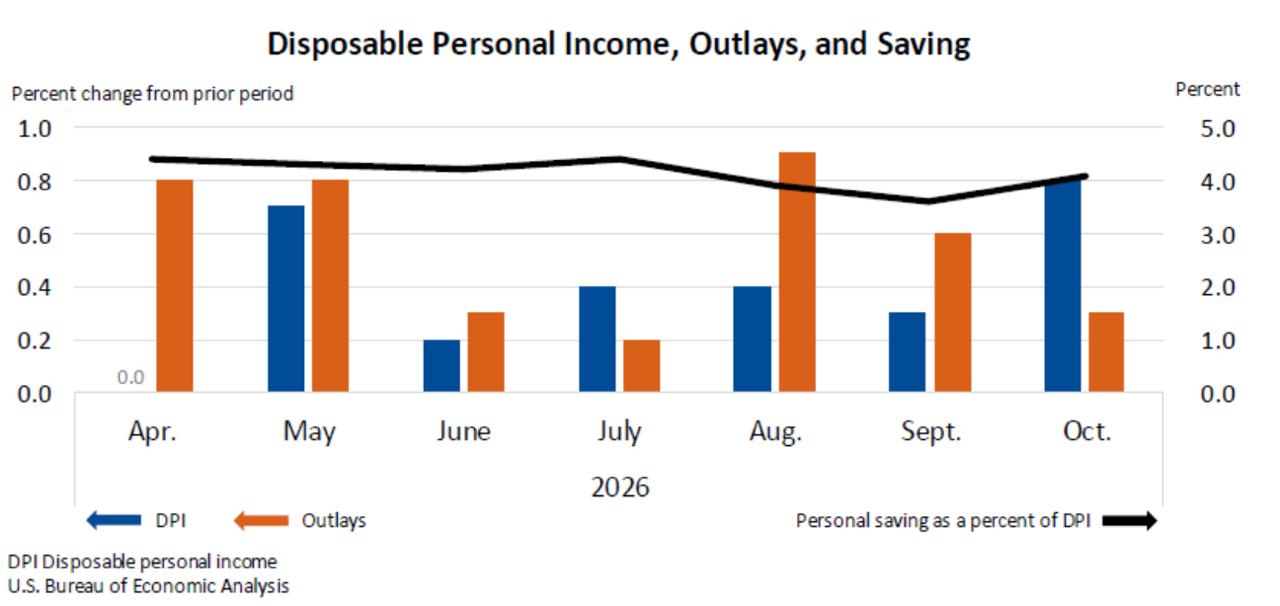
Disposable income rose 0.8% in October, or 0.5% after inflation. Consumer spending rose 0.3% in dollar terms but fell by less than 0.1% after inflation as households bought fewer goods. The personal saving rate rose to 4.1% from a revised 3.6% in September.

A one-time $90 Medicare Part B premium rebate went to about 20.8 million beneficiaries. By Coindoo’s calculation, it accounted for roughly a tenth of a percentage point of the half-point rise in the saving rate. Most of the increase would have remained without it.
At its Oct. 28 meeting, the Fed held its policy rate at 3.75%–4.00% and said “domestic spending has been resilient.” Revised figures showed real spending grew just 0.1% in September before slipping in October. Those two months are not enough to establish a trend, but October was the last PCE reading available before the Fed’s Dec. 9 vote. The November report was due Dec. 23.