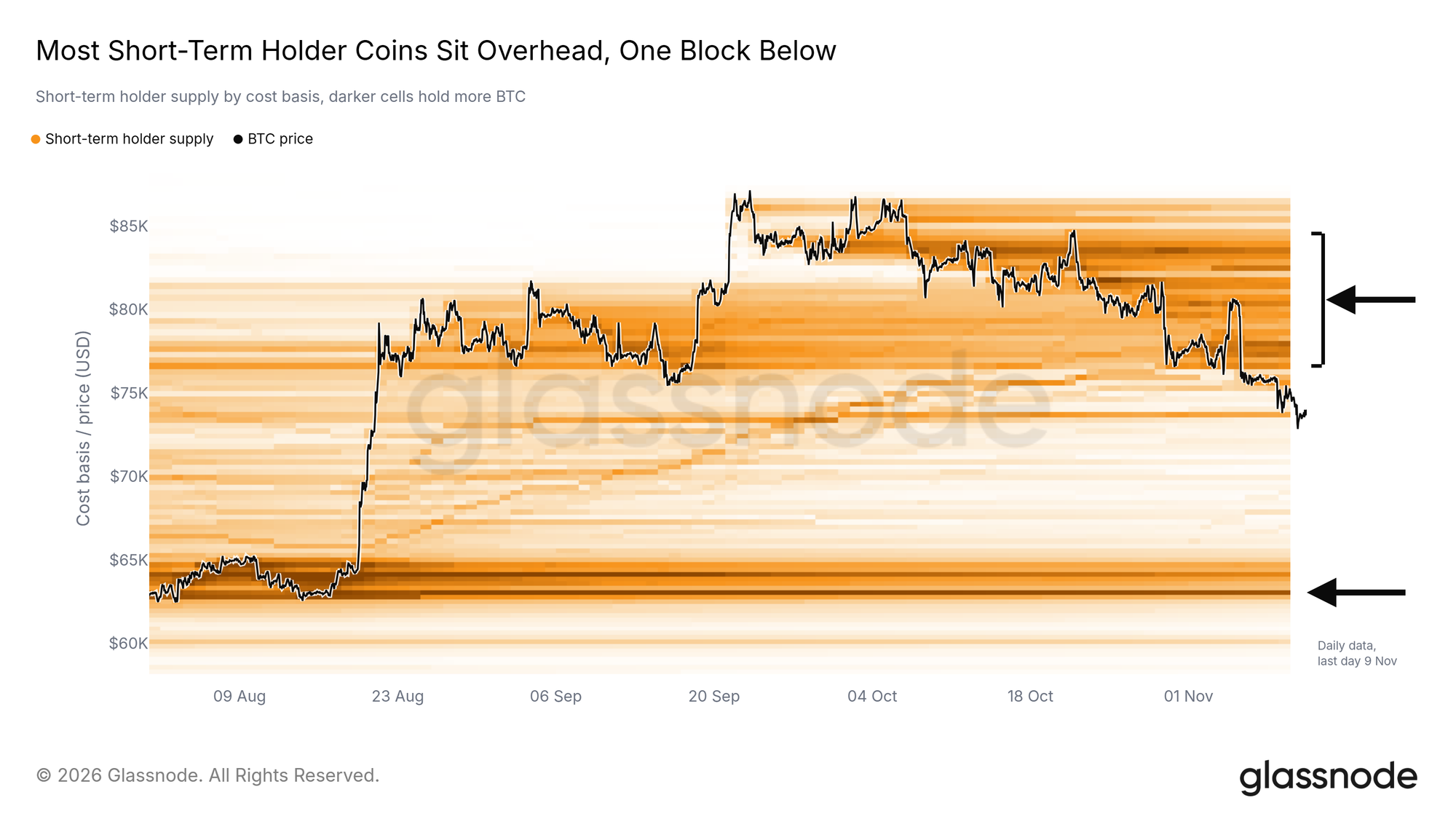
Originally reported November 12, 2026, at 09:20 UTC+8. In a Glassnode report translated by TechFlow, Bitcoin was trading near $74,000 after falling below the estimated $75,600 average cost basis of short-term holders—those who bought within the preceding 155 days. The central question was whether signs of buying beneath the market could offset weakening demand for now.
Recent buyers are under pressure
Glassnode estimated that about 35% of short-term holders’ coins remained in profit, down from nearly all of them at September’s high. Roughly two-thirds of those coins had been bought above the prevailing price, across concentrations extending to $83,600. Holders seeking to exit at their purchase price could therefore add selling pressure to a rebound. Below the market, the report identified a concentrated cost-basis area at $62,000–$66,000.
Glassnode described the broader structure as intact: September had marked the first higher high since Bitcoin’s 2025 all-time high, and the price remained above June’s $58,500 low. That is a description of the pattern as of the report, not a guarantee it would hold.
Where demand looked weak
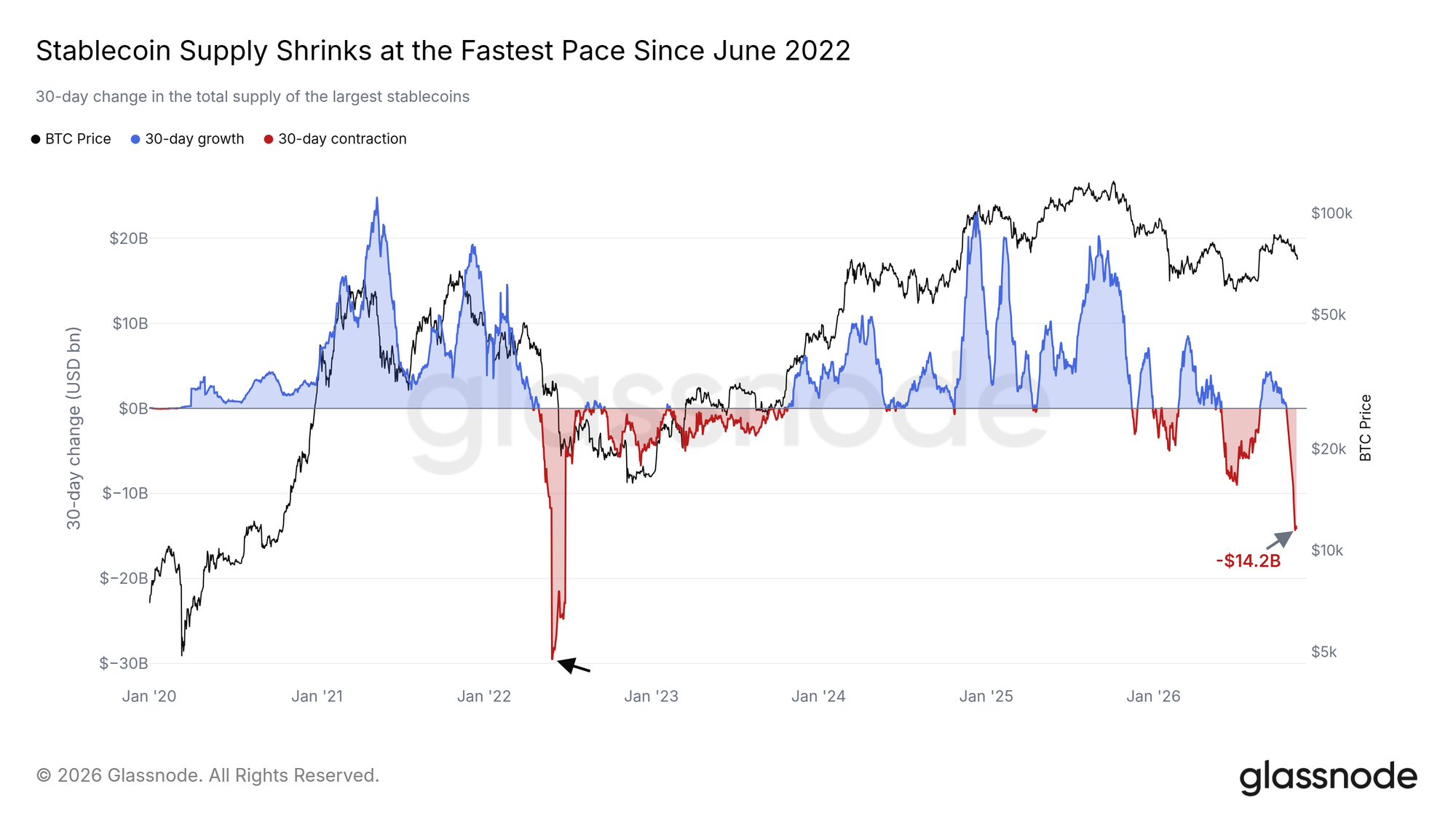
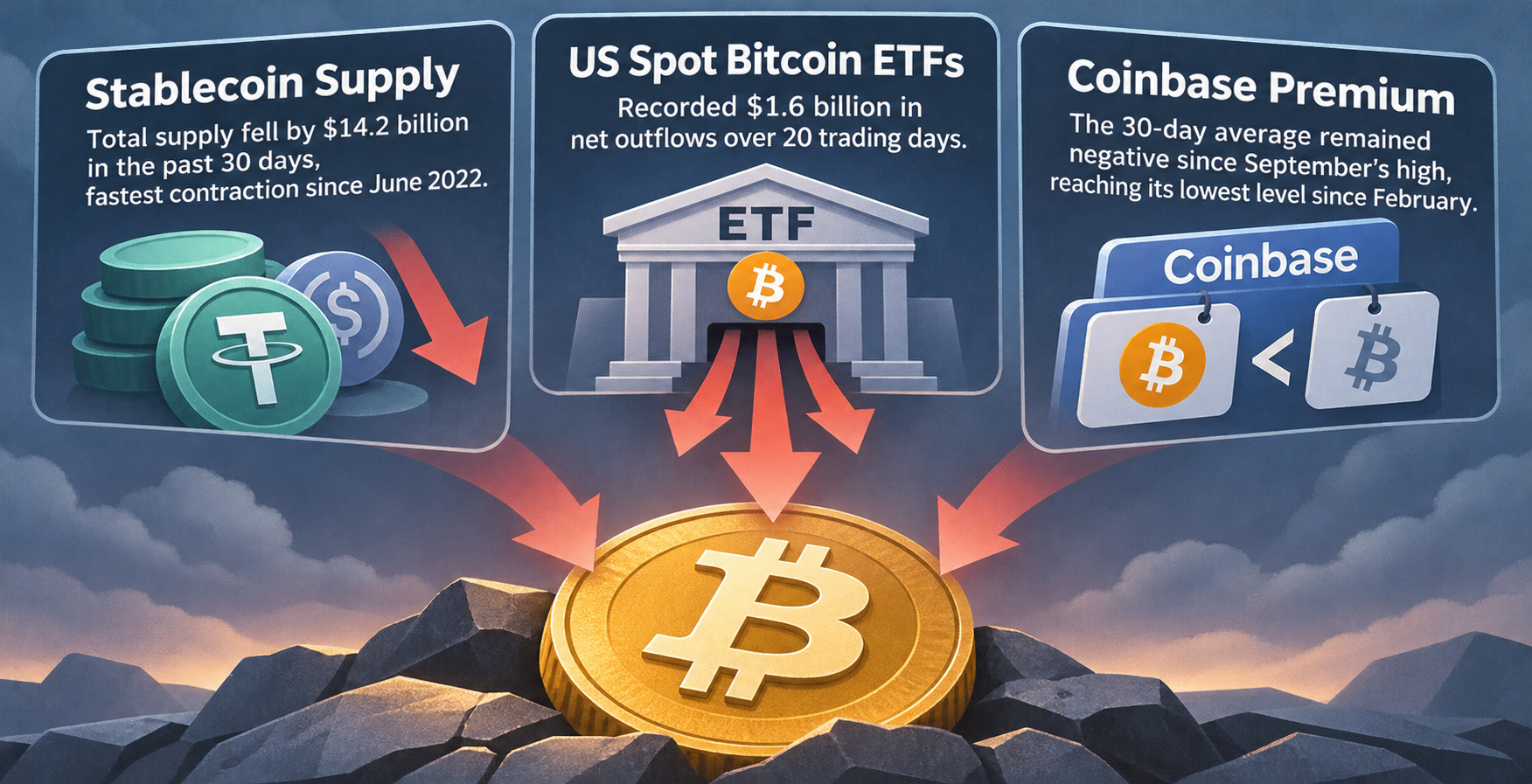
Over the preceding 30 days, total stablecoin supply had fallen by $14.2 billion, its fastest contraction since June 2022, according to the report. Glassnode interpreted this as a loss of funds available within the crypto market to buy assets. Supply change alone, however, does not establish when or whether that money would have bought Bitcoin. The report also noted that Tether was trading slightly below $1.
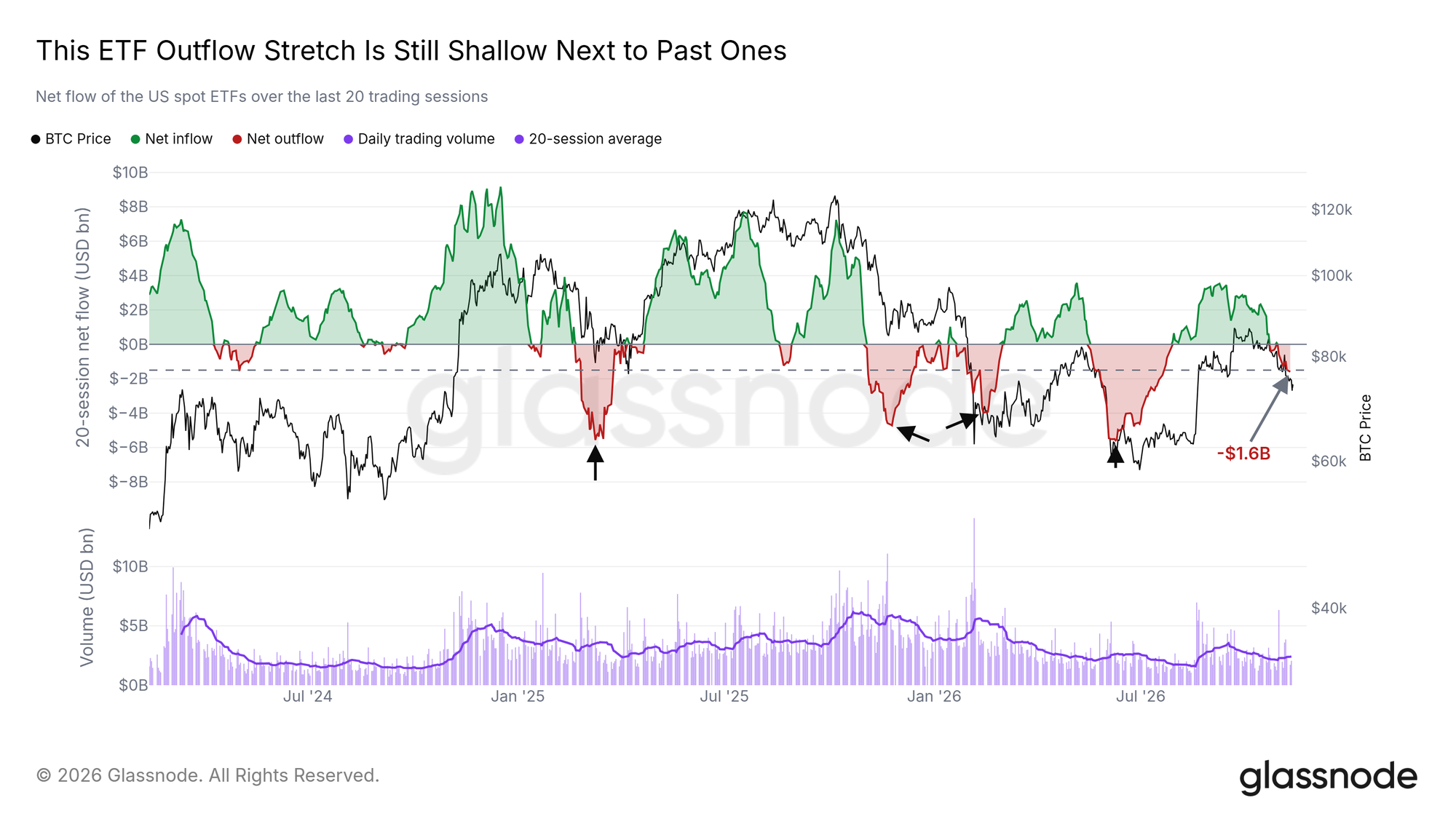
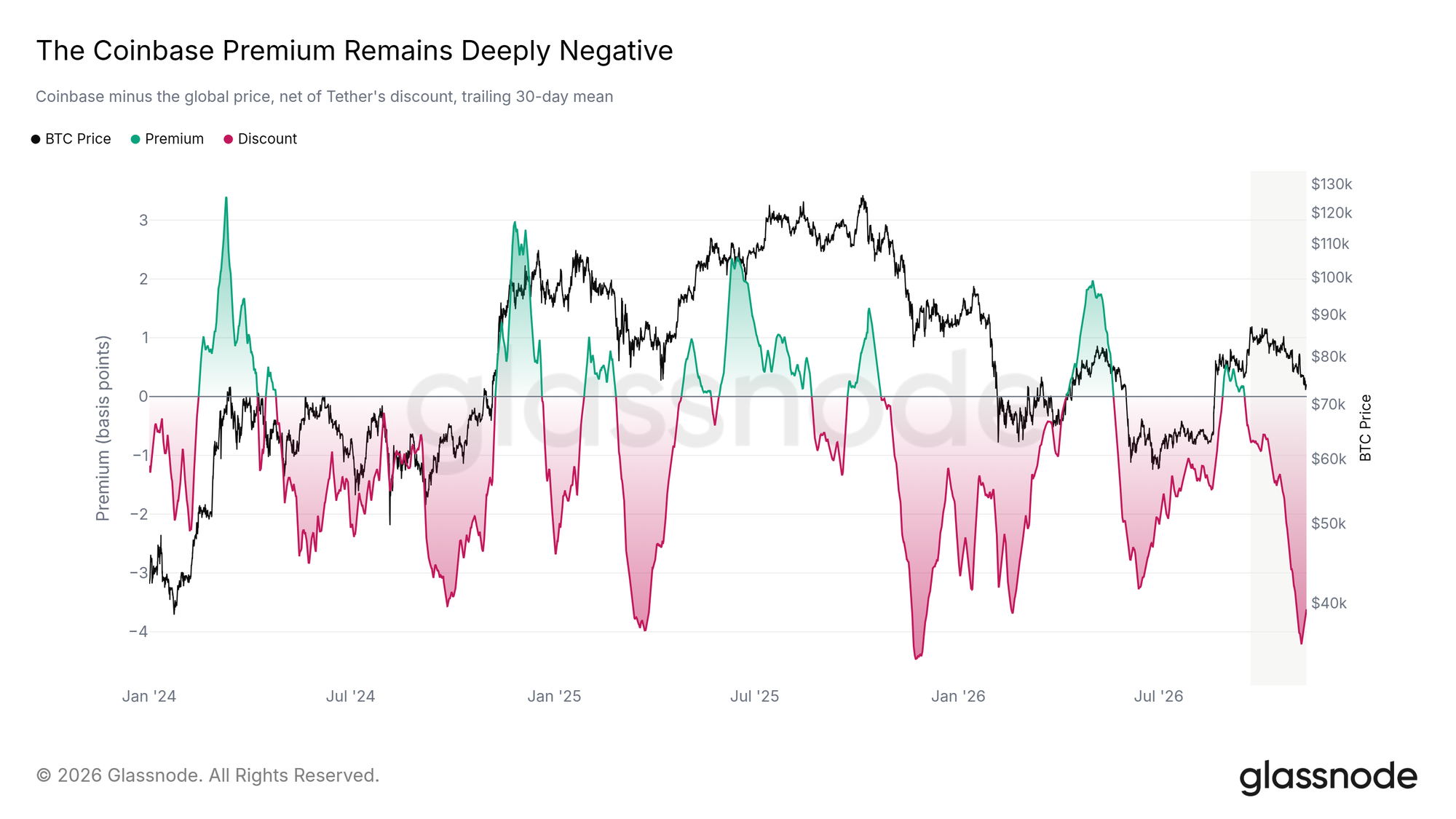
US spot Bitcoin ETFs recorded $1.6 billion in net outflows over 20 trading days. On November 9, outflows crossed Glassnode’s $1.5 billion threshold for what it calls a sustained outflow period, although the report said previous episodes had generally been deeper. Glassnode also found that its 30-day Coinbase premium measure had remained negative since September’s high and reached its lowest level since February. It said the measure accounted for the effect of Tether trading slightly below its peg.
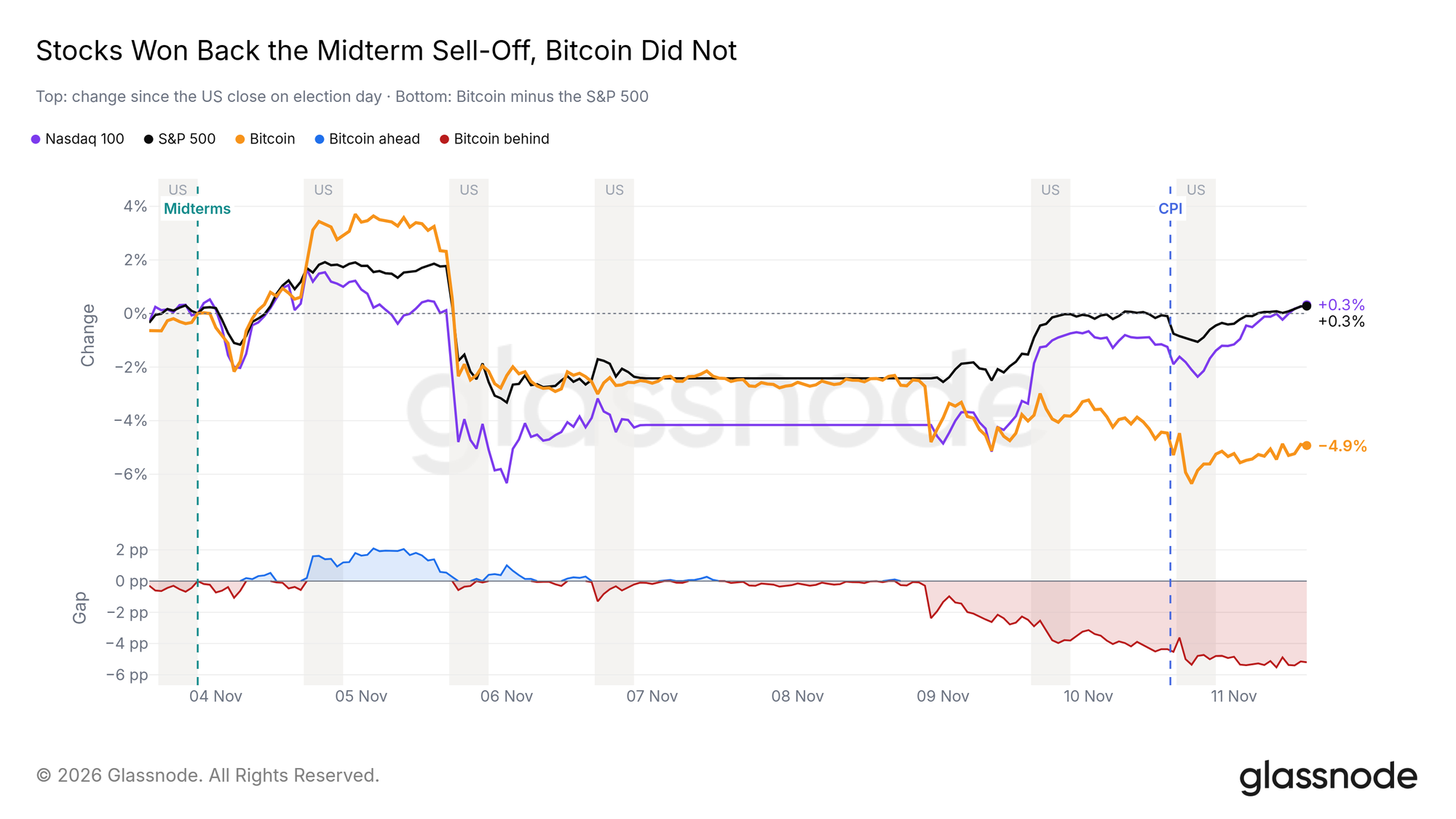
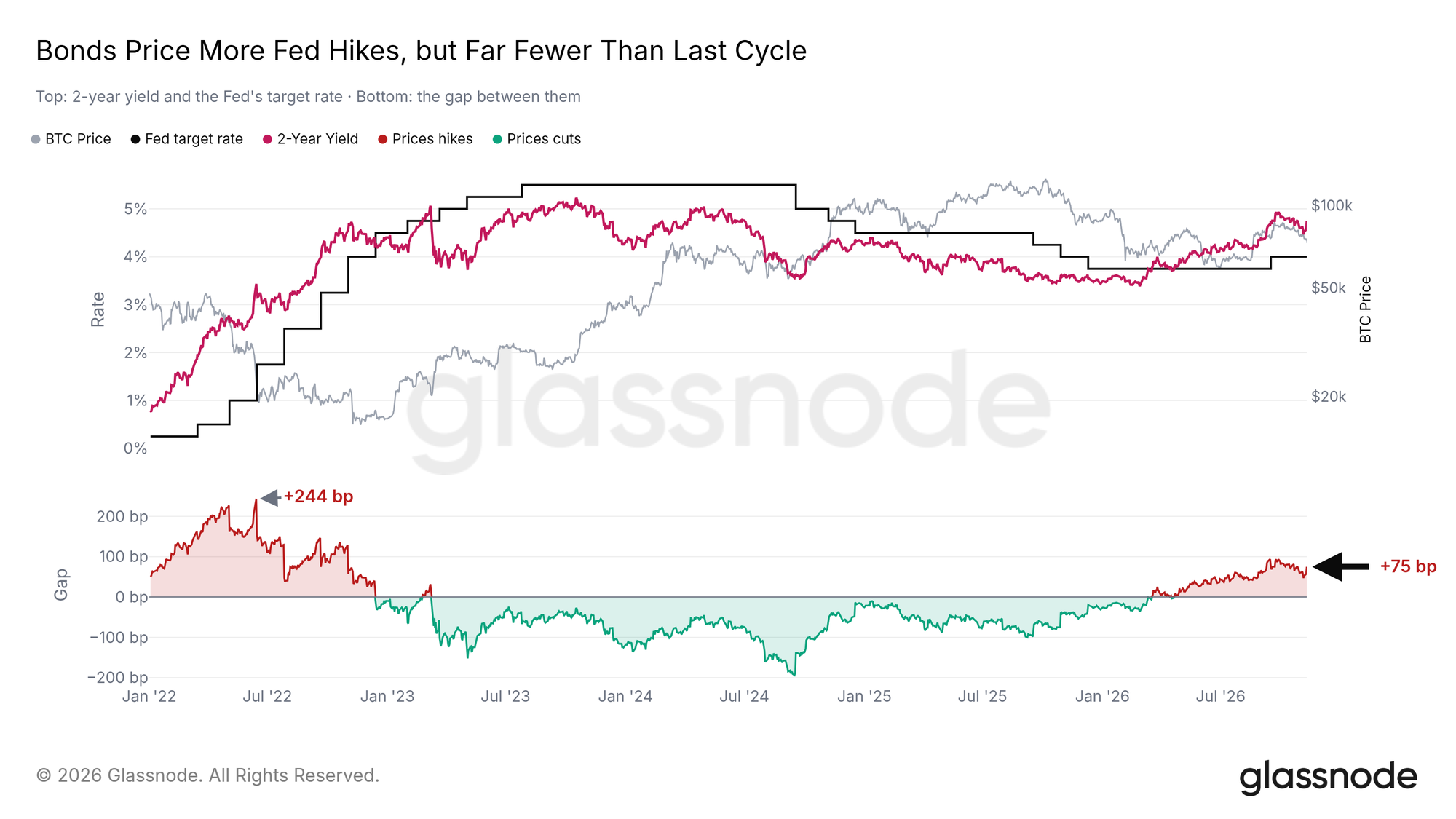
Bitcoin had also lagged US equities in the period examined. Glassnode said the S&P 500 and Nasdaq 100 had recovered their election-day closing levels after selling that began November 5, while Bitcoin remained down about 5% following another decline after the November 10 CPI release. Its election-day close was $77,800. As further context, the report put the two-year US Treasury yield at 4.75%, 75 basis points above the stated 4% Federal Reserve policy rate. That gap was narrower than the 244-basis-point gap it cited for June 2022 and had narrowed since late October.
What could cushion the decline—and what might not
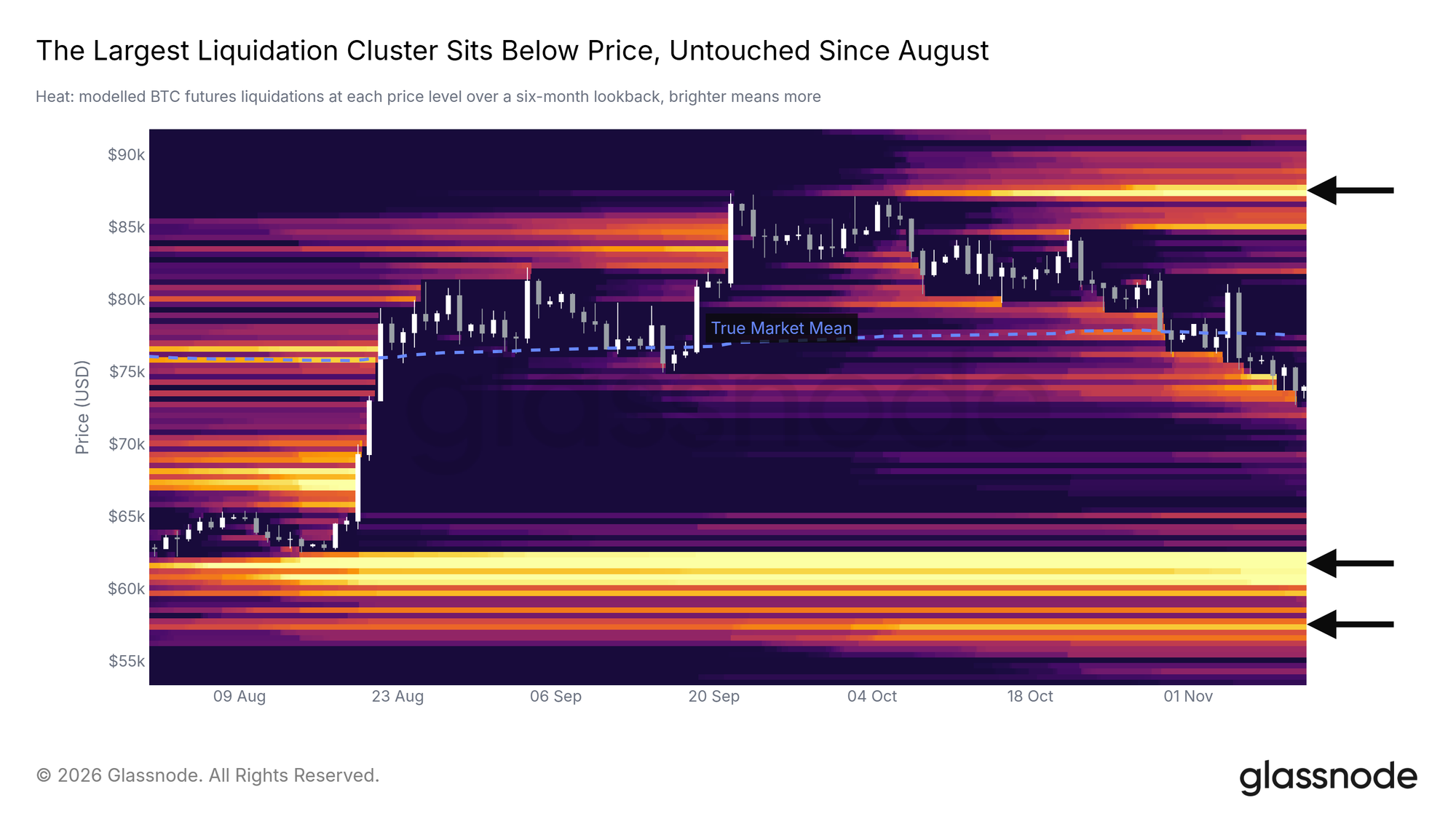
Glassnode said much of the long-position liquidation exposure near the prevailing price had been cleared. Its largest liquidation concentration over the prior six months lay lower, at $59,500–$62,600. Open interest had nevertheless returned to its September-high level despite a roughly 15% price decline; the report suggested traders might have added short positions. It identified a short-liquidation concentration near $87,500, but a liquidation map cannot predict that price will be reached.
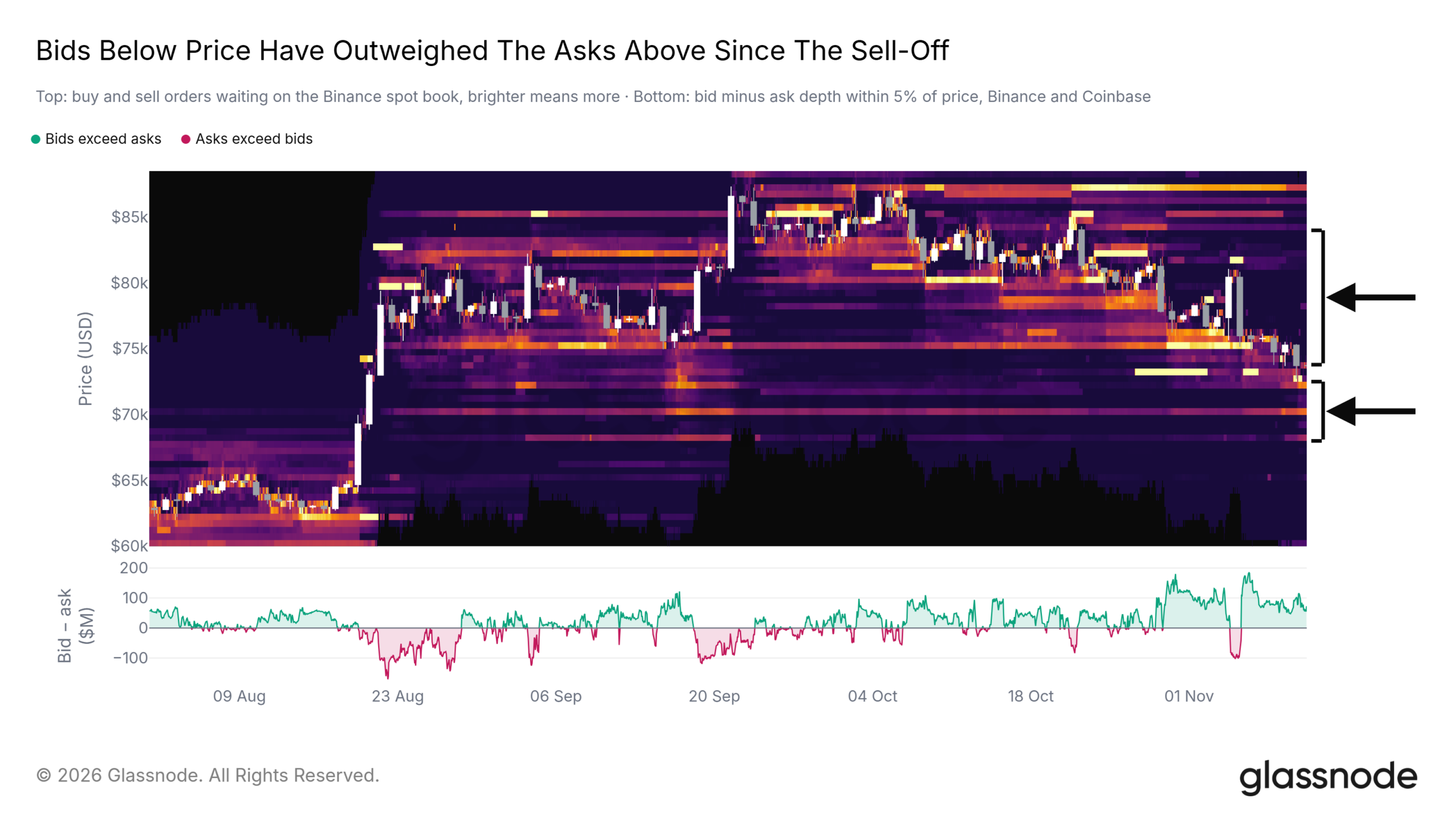
From the November 5 sell-off onward, displayed bids within 5% of the price exceeded asks in every hourly period examined on Binance and Coinbase, the report said. Its largest bid concentrations were at $68,000–$72,500. Displayed orders are not firm support: Glassnode noted that some bids had briefly been withdrawn during the early-November decline.
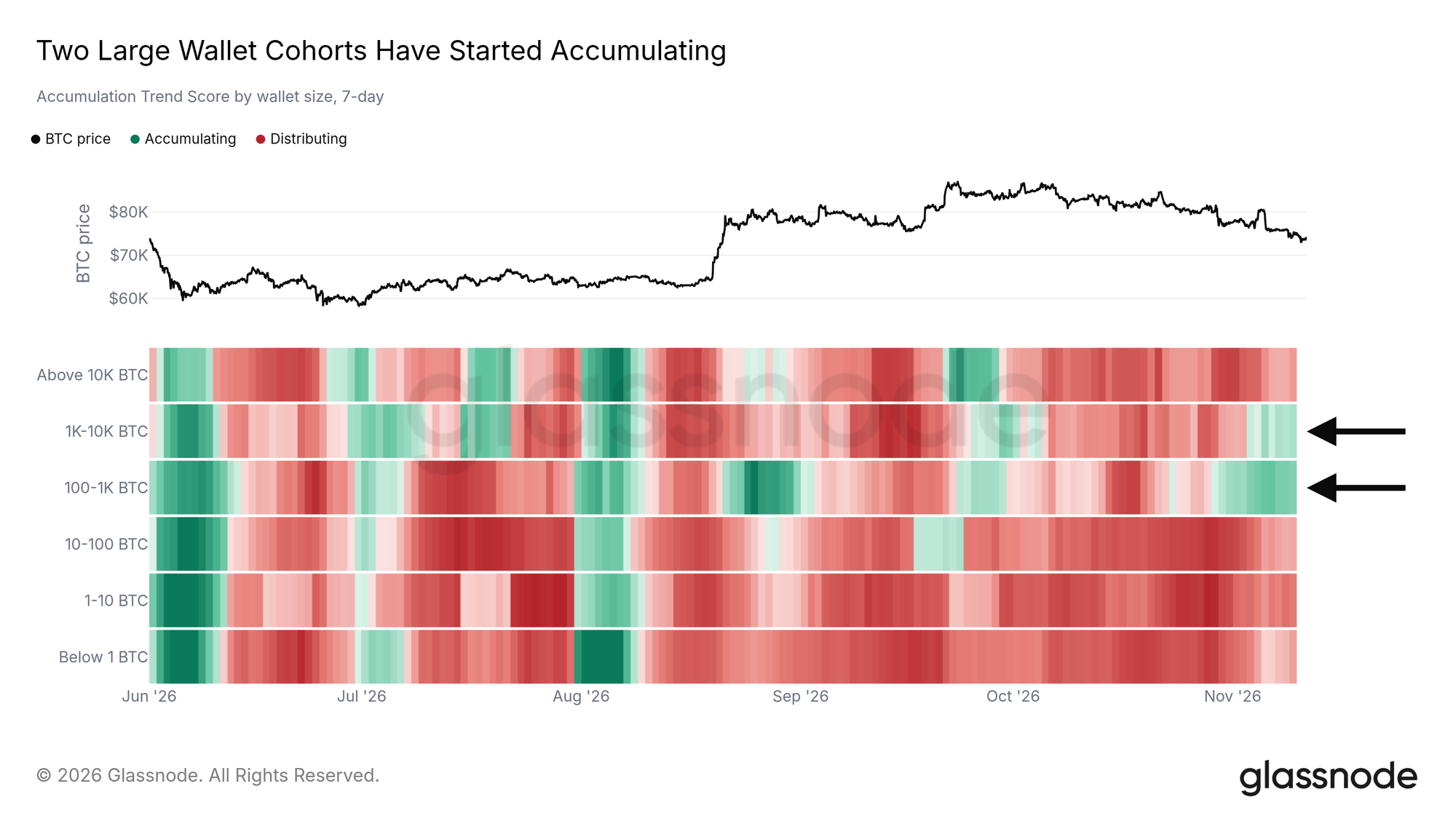
Two wallet-size groups—those holding 100–1,000 BTC and 1,000–10,000 BTC—had accumulation trend scores above 0.5 in the preceding week, after distributing through much of October. Other groups were still reducing holdings. Glassnode cautioned that a brief buying turn by the same two groups in late September had not lasted.
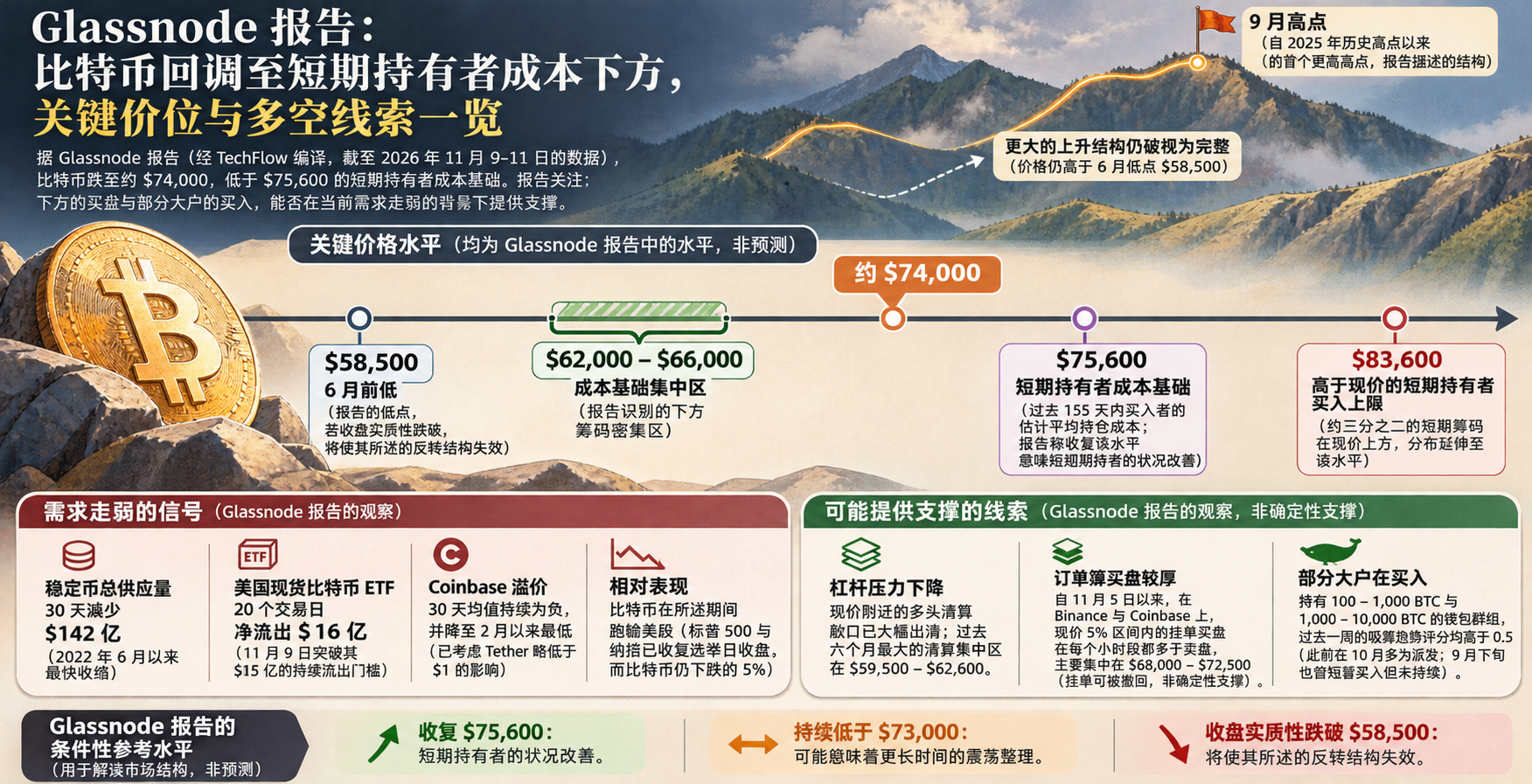
The trade-off in these readings is clear: bids and buying by some large-wallet groups offered possible support, while stablecoin supply, ETF flows and the Coinbase premium pointed to weak demand. Glassnode identified a recovery above $75,600 as a sign that short-term holders’ position was improving; it said a sustained move below $73,000 would imply a longer consolidation, while a meaningful close below $58,500 would invalidate the reversal pattern it had described. These are the report’s conditional levels, not forecasts.
Data timing: Price and derivatives data were current to November 11, 2026, at 11:00 UTC; order-book data to 09:00 UTC. ETF flows, stablecoin supply, cost-basis data and accumulation scores were current to November 9. Glassnode said its exchange-balance figures rely on an address-label database that may not capture all reserves where exchanges have not disclosed all their addresses.

Source: techflowpost.com (originally published 2026-11-12 09:20 UTC+8)