A November 23, 2026 report said Cross River Bank had launched its first bitcoin-backed loans with consumer lender LendingUSA. Eligible borrowers can take out $10,000 to $250,000 against bitcoin without selling it. According to The Block, this is the first time Cross River has originated bitcoin-secured loans itself.
The question that matters is how the pledge is measured, and what a lower bitcoin price does to that measure.
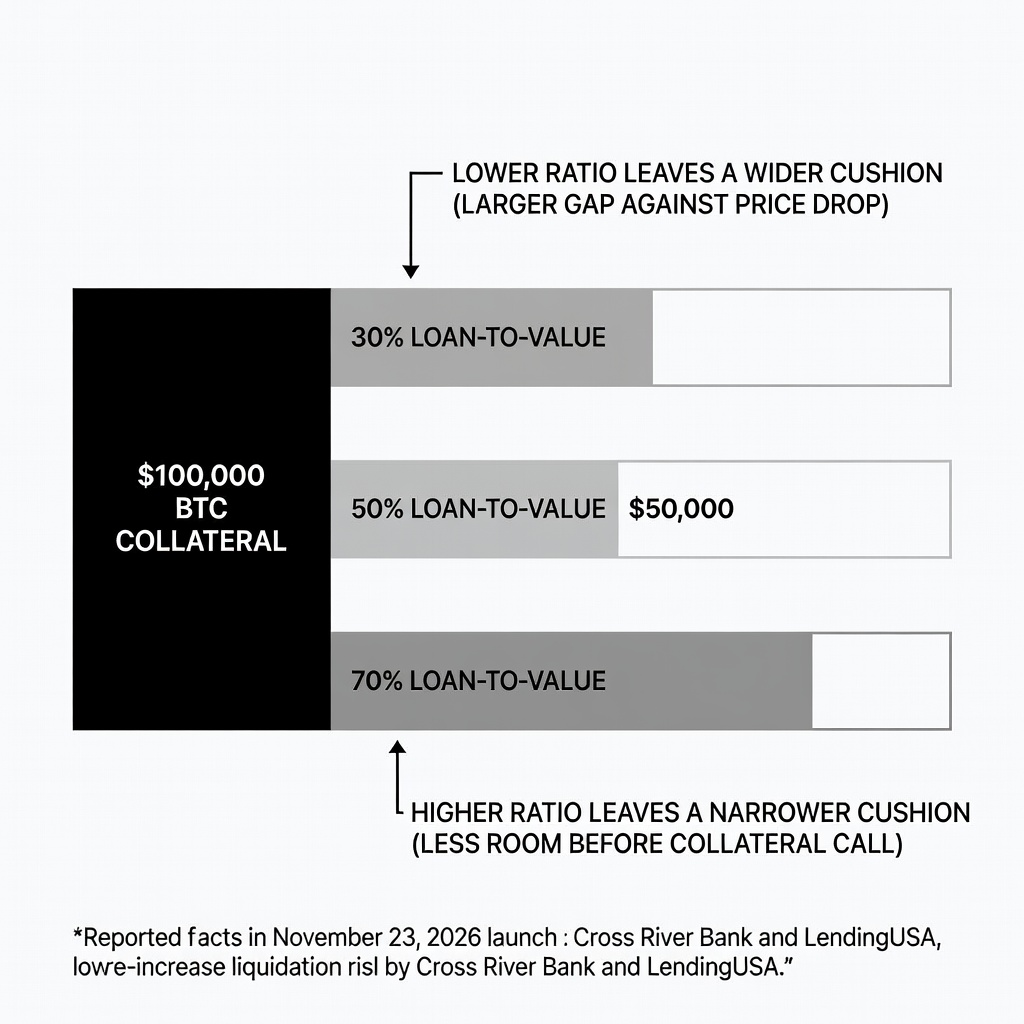
LendingUSA runs the application platform. Every loan is made by Cross River, a New Jersey state-chartered bank, according to LendingUSA. Borrowers choose a loan-to-value ratio of 30%, 50%, or 70%. LendingUSA defines the ratio as the loan balance divided by the value of the collateral. On that definition, a 50% loan against $100,000 of bitcoin is $50,000. A lower ratio leaves a larger cushion if the price falls, and it unlocks less cash for each bitcoin pledged. A higher ratio does the opposite.
Two repayment options are offered. On an interest-only loan, smaller monthly payments roughly cover interest, and the principal plus any remaining interest is due at the end of the term. On a loan with no monthly payments, the full balance plus interest is due at the end. LendingUSA says borrowers can repay early without penalties or fees.
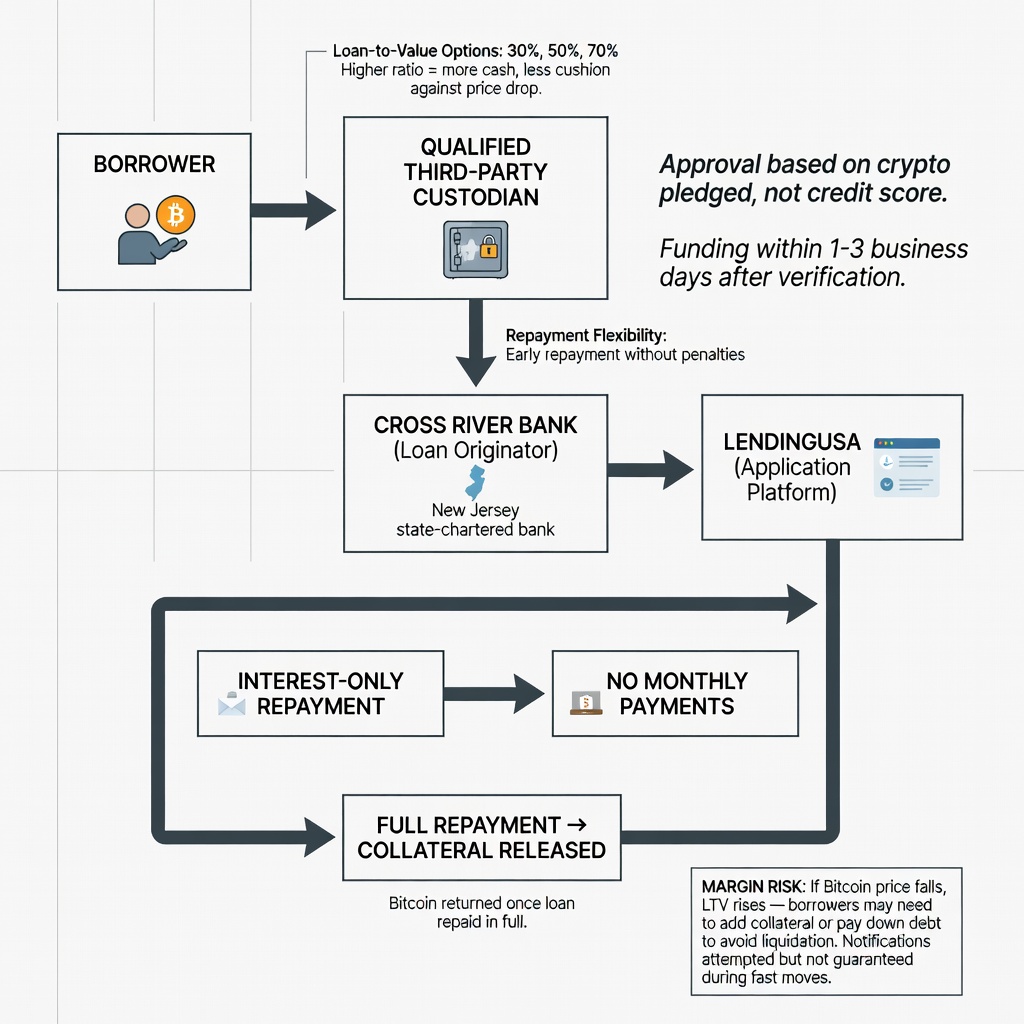
Applicants go through a soft credit check. LendingUSA says approval rests on the crypto being pledged rather than on a credit score, and that funding typically arrives within one to three business days after the collateral is verified. Rates and terms vary by applicant. The loan amount, interest rate, and term are disclosed once an application is received. The product page lists a maximum loan-to-value of 70%, and every loan on it is made by Cross River Bank.
A qualified third-party custodian holds the bitcoin for the life of the loan. Once the loan is repaid in full, the collateral is released back to the borrower, according to the company. The report describes that holder only as a qualified third-party custodian.
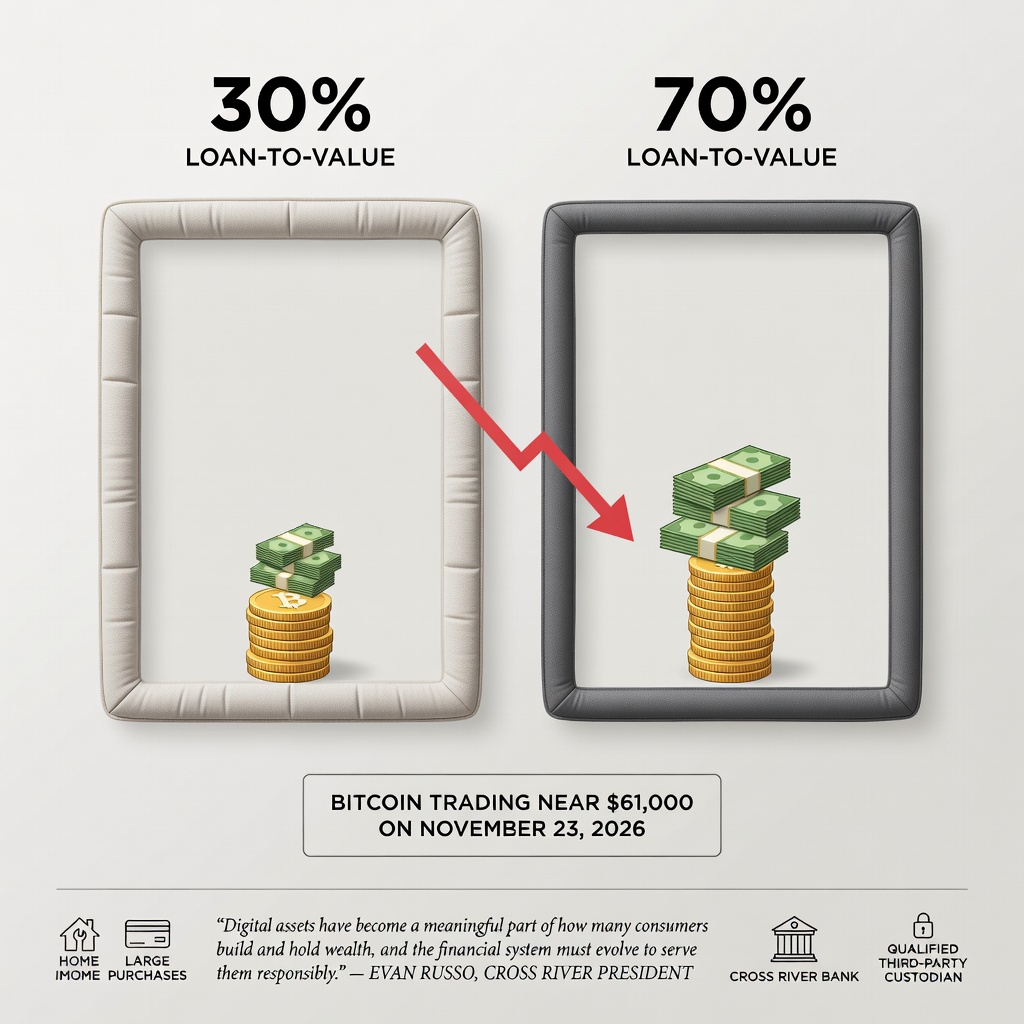
The limit is the price of the collateral. If the bitcoin’s value falls, the loan-to-value ratio rises, and borrowers may be asked to add collateral or pay down the debt to avoid liquidation. LendingUSA says it will try to notify borrowers first, but it cannot guarantee notice during fast price moves. On Monday morning, November 23, 2026, bitcoin was trading near $61,000. At that price, a borrower at the 70% tier had far less room before a collateral call than one at the 30% tier. The ratio does not steady bitcoin. It only sets how far the price can fall before the borrower must add coins or cash.
LendingUSA markets the loans for uses such as debt consolidation, home improvements, and large purchases. The company says it has served more than 200,000 borrowers across its lending business, and that the crypto product is its first expansion into digital asset-backed loans.
Cross River President Evan Russo described the launch as continuous with the bank’s existing work. “Digital assets have become a meaningful part of how many consumers build and hold wealth, and the financial system must evolve to serve them responsibly,” Russo said in a statement. “Cross River was built on the belief that innovation and trusted infrastructure go hand in hand,” he added. “Launching our first Bitcoin-secured lending program as the loan originator is a natural extension of that mission.”
The launch places a state-chartered bank in a lending market already moving toward more familiar credit products. In August 2026, Coinbase and Better Mortgage announced general availability of bitcoin-backed mortgages. In April 2026, Strike’s Jack Mallers announced lending proof-of-reserves and loans designed to withstand volatility. Neither of those companies has said how much bitcoin has been pledged so far, or which custodian holds the collateral.
The trade-off is the pledge itself. The borrower does not sell the bitcoin, but does not have the use of it until the loan is repaid in full. A lower loan-to-value leaves more room against a price drop and yields less cash. A higher one does the reverse, and a fast move may come without a guaranteed warning. The public description does not fix the rate or the term. Those are disclosed with the application.