What would a post-quantum signature change for a Bitcoin wallet? It could make keeping track of past signatures as important as protecting the private key.
In reporting published on November 13, 2026 (UTC+8), Decrypt examined SHRINCS, a proposed post-quantum signature scheme from Blockstream Research Director Jonas Nick and cryptographer Mikhail Kudinov. SHRINCS would let users choose between two kinds of signatures. It has not been adopted by Bitcoin.
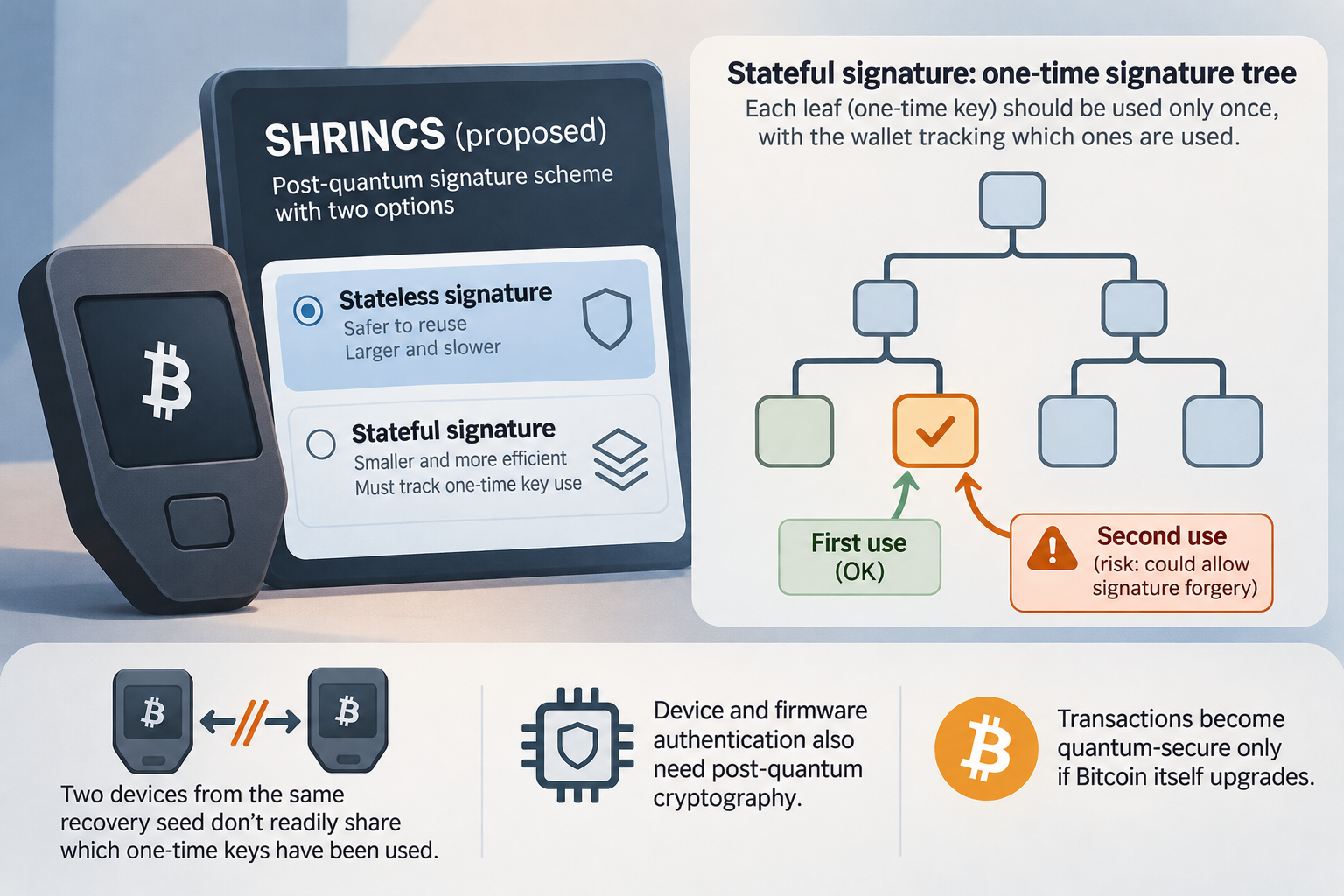
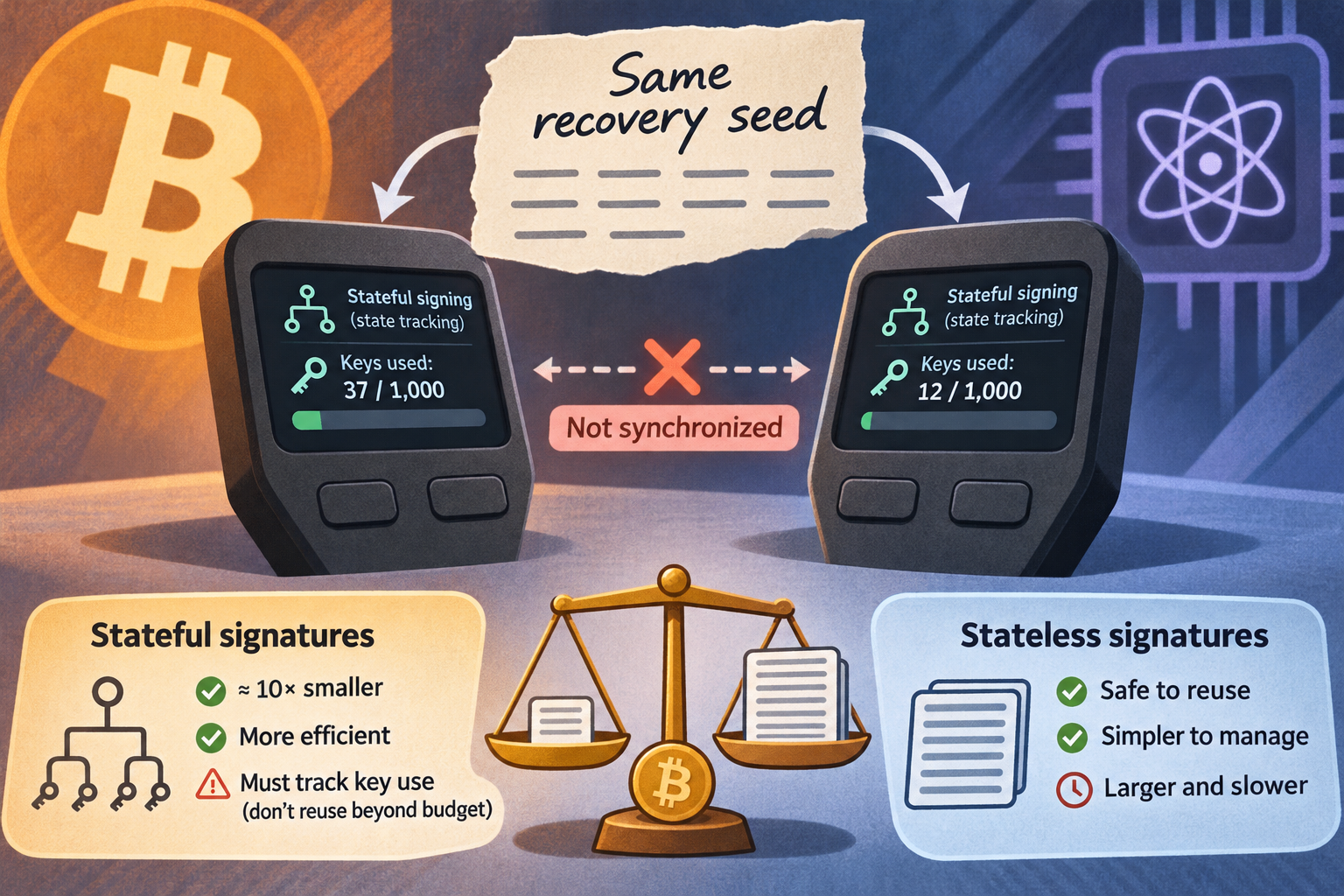
Stateless signatures can be reused safely, but they are larger and slower. Stateful signatures are smaller and more efficient, but a wallet must track how many times its one-time signing keys have been used. Reusing them beyond their signing budget could reveal enough information for someone else to forge a signature and steal funds.
That creates a practical problem for hardware wallets. Trezor CTO Tomáš Sušánka gave the example of two devices restored from the same recovery seed: they would not readily share a record of which signing keys had already been used. He said Trezor was considering making stateless signatures the default and placing the stateful option in advanced settings. The trade-off matters because, according to Sušánka, stateful signatures are 10 times smaller.
Changing Bitcoin’s transaction signatures would not, by itself, protect every part of a hardware wallet. Sušánka said device and firmware authentication would also need post-quantum cryptography. Decrypt reported that Trezor Safe 7 already supports such cryptography for wallet authentication, while transactions made with it would become quantum-secure only if Bitcoin itself upgraded.
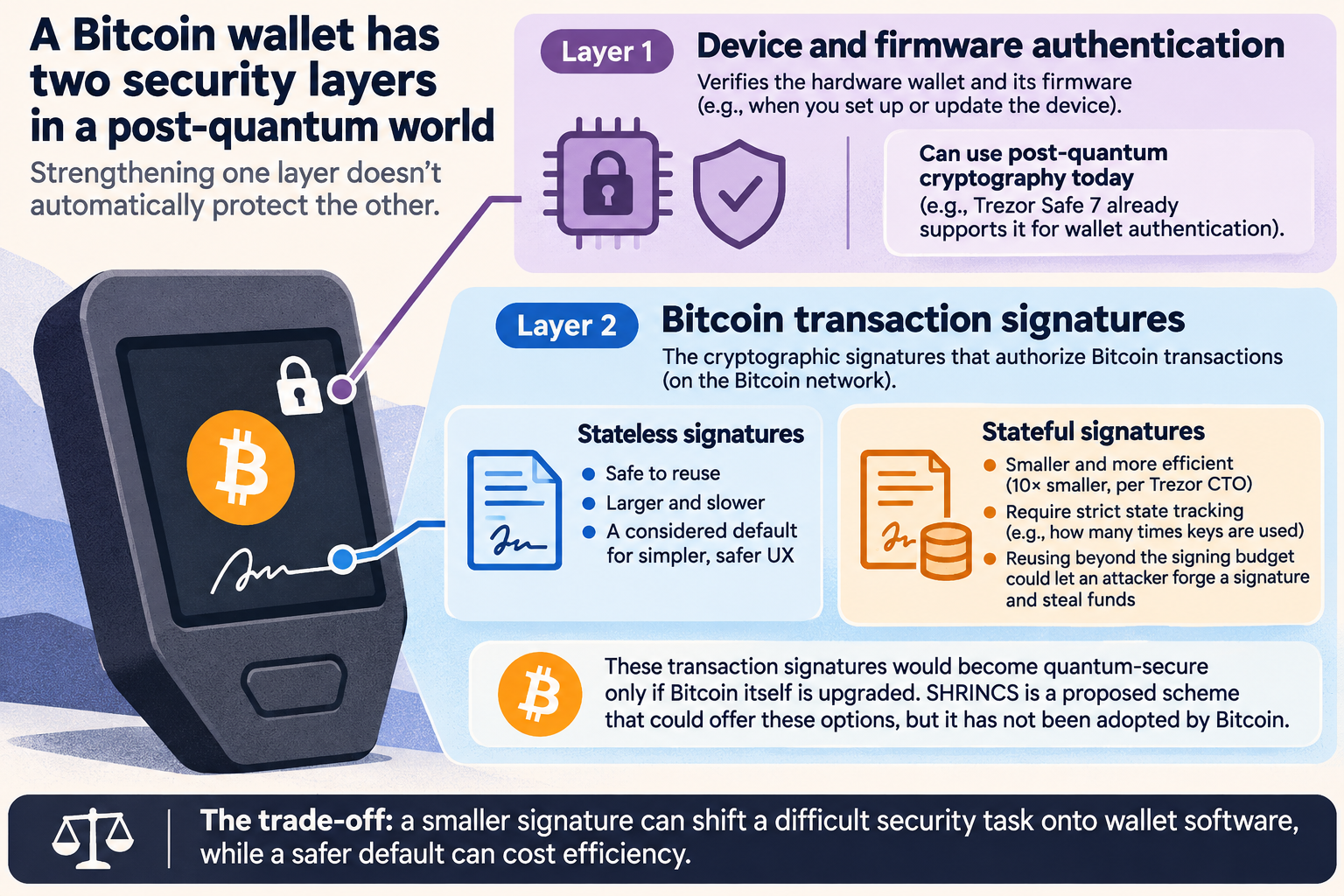
The limitation is clear: a smaller signature could shift a difficult security task onto wallet software, while a safer default could cost efficiency. Neither choice removes the need for a Bitcoin upgrade and compatible devices.
Source: decrypt.co (originally published 2026-11-13 04:36 UTC+8)